At first glance, many fly fishing lodges seem to promise the same thing.
Comfortable lodging. Good food. Access to fishable water. Guides. Transportation. Scenic photographs. A few words about hospitality and big fish. To someone still researching Patagonia from far away, the distinctions can look minor.
But once anglers begin planning seriously, one truth becomes impossible to ignore:
not all lodge experiences are built the same.
A boutique fly fishing lodge feels different because the entire structure of the trip changes. The difference is not only aesthetic, and it is not just about having fewer rooms or a smaller footprint. It is about how the operation works, how the guest is handled, how the fishing day flows, how much flexibility exists inside the trip, and how closely the lodge experience stays connected to the river instead of becoming a world of its own.
That distinction matters everywhere.
On a destination like Patagonia, it matters even more.
People do not travel this far south for something generic. They travel for water with identity, fish with weight, and a journey that feels worthy of the effort it took to get there. That is why the question is not simply whether a lodge is comfortable or well known.
The real question is: what kind of experience is the lodge designed to create?
And that is exactly where the boutique difference begins to show.
A boutique lodge is built around fewer guests
One of the most obvious differences is also one of the most important: scale.
A boutique lodge is usually designed around a smaller number of anglers, and that changes the whole operating logic. Fewer guests means fewer moving parts. Fewer moving parts means less internal friction. And less friction often leads to a cleaner, more responsive, more fishing-centered experience.
That matters in ways anglers feel immediately.
There is often less waiting.
Less crowding in the flow of the day.
Less sense of being one name inside a larger weekly machine.
More ability to adapt.
More clarity in communication.
More natural pacing from morning to evening.
This is not about criticizing larger operations. High-capacity lodges can work well for many travelers, especially those who enjoy a bigger social atmosphere. But the boutique model creates a different feeling because the scale itself changes how the trip is managed.
A smaller guest count often means the experience can remain more intentional.
The trip feels less standardized and more precisely held.
The fishing stays at the center
This is one of the clearest differences between a boutique lodge and a more operationally visible one.
In a boutique setting, the fishing usually remains the dominant focus.
That sounds obvious, but it is not always the case. In some travel models, the guest becomes very aware of the structure surrounding the trip: the volume of people, the timing pressure, the sense of rotation, the internal choreography required to keep everything moving. Even when that is done professionally, it can subtly shift the emotional center of the experience away from the fishing and toward the operation itself.
A boutique lodge often feels different because the operation recedes.
The guest notices the river more than the machinery around the river.
That is valuable on a destination such as the Río Gallegos, where anglers usually arrive with very specific dreams and expectations. They want the trip to feel centered on meaningful water, not on the infrastructure supporting the week. The best boutique experiences understand that. They organize everything around the fishing without making the organization itself the most noticeable part of the journey.
That quiet efficiency is one of the things people are often paying for without fully realizing it.
Guides and guests can build a stronger rhythm
Another important difference is relational.
In a boutique fly fishing lodge, the scale often allows better continuity between guest, guide, staff, and daily experience. That does not automatically make every interaction better, but it creates the conditions for a stronger rhythm to develop more naturally.
That rhythm matters more than people expect.
The more a guide understands the guest, the cleaner the day becomes.
The more the lodge team understands the guest, the easier the week becomes.
The more consistent the overall rhythm feels, the more fully the angler can commit his attention to the water.
Boutique lodges are often stronger at this because they do not have to spread their energy across as many simultaneous relationships. There is more room to notice preferences, adapt tone, recognize habits, and respond with precision.
Some anglers want a lot of technical input.
Some want space.
Some want warmth and conversation.
Some want calm and simplicity.
A boutique environment often makes it easier for the trip to respond to those differences in a way that feels natural rather than forced.
Flexibility becomes a real advantage
Patagonia is not predictable.
That is one of the reasons anglers love it.
Weather changes.
Wind shifts.
Light changes tone.
Energy levels change through the week.
Fishing moods change.
The emotional feel of a trip changes.
In an environment like that, flexibility matters.
A boutique lodge often feels different because it can respond more fluidly when conditions or needs change. A smaller operation can sometimes pivot more gracefully, communicate more quickly, and make adjustments with less internal drag. That flexibility may not always be dramatic or visible, but it becomes part of the quality of the trip.
A guest may feel it in how smoothly the day is organized.
In how cleanly the plan is communicated.
In how easy it is to adapt when something needs to shift.
In how little tension surrounds the practical side of the journey.
This is one of the hidden strengths of boutique fishing hospitality: the guest experiences more freedom because the structure around him is lighter and more responsive.
That can make a major difference across a full week of serious angling.
Boutique does not mean less professional
Some anglers hear the word boutique and imagine something casual, improvised, or less complete.
That is a misunderstanding.
A great boutique fly fishing lodge is not defined by being smaller in a simplistic sense. It is defined by being more deliberate. The professionalism is still there. The logistics are still there. The standards are still there. What changes is the way those things are expressed.
A boutique lodge often feels less corporate and more exact.
Less loud and more refined.
Less dependent on visible scale and more dependent on quality of execution.
That difference can be substantial.
When done well, a boutique operation feels highly professional without feeling impersonal. It delivers confidence without excess formality. It creates comfort without making the guest feel like he is moving through a hospitality system that has to keep performing its own size.
For many anglers, especially experienced travelers, that balance is one of the biggest marks of quality.
The details are easier to notice and easier to get right
Fishing trips are shaped by details.
Not only by the obvious details such as fish, guides, and water, but by everything around them: the timing of the day, the flow of communication, the comfort after a long session, the food at the right moment, the sense that nothing important is being overlooked.
A boutique lodge often stands out because details are easier to hold consistently.
When the operation is built around fewer guests, there is usually more room for attentiveness. That does not mean perfection. But it often means fewer missed signals, cleaner transitions, and a stronger likelihood that the guest feels the trip is being looked after in a specific rather than generic way.
This kind of precision becomes very valuable on a destination trip.
When someone travels all the way to Patagonia, he is not looking for the experience to be merely adequate. He is looking for it to feel worth the effort. The details help create that feeling. And boutique lodges often have an advantage here because their size allows the finer parts of the experience to remain visible and manageable.
The guest experience feels less standardized
This may be one of the most important differences of all.
A boutique fly fishing lodge often feels different because the guest experience feels less templated.
The trip still has structure.
It still has standards.
It still has a rhythm.
But it does not feel as if every day has been reduced to a repeating process that must absorb a large number of people with perfect uniformity. The guest feels more like a participant in a real trip and less like a unit moving through a polished weekly format.
That can be very hard to quantify, but anglers feel it.
They feel it in the tone of the place.
In the ease of interaction.
In the way the river and the lodge seem to belong to the same story.
In the way the week develops character instead of just progression.
On a river with the emotional gravity of the Río Gallegos, that matters immensely. Anglers do not usually come here because they want a generic premium experience. They come because they want something with identity.
A boutique lodge often protects identity better than a larger model can.
Food, hospitality, and the evening atmosphere often feel different too
The boutique difference is not limited to the river hours.
It also affects what happens before and after the fishing.
Meals can feel calmer.
The lodge atmosphere can feel more grounded.
Evenings may carry more ease and less social pressure.
Conversation tends to happen more naturally.
Recovery tends to feel more complete.
This matters because a fishing trip is lived as a full day, not only as a set of hours on the water. Anglers fish better when the entire structure of the trip supports them well. They also remember the trip more vividly when the atmosphere surrounding the fishing feels coherent.
A boutique lodge often does a very good job of preserving that coherence.
The day begins in one tone and ends in that same world.
Nothing about the trip feels disconnected from the river.
Why experienced anglers often begin preferring boutique lodges
This is something that shows up often in destination travel.
Less experienced anglers sometimes assume that bigger automatically means better.
More experienced anglers often become more selective.
After enough trips, many begin to value:
- better rhythm over more visible scale
- stronger atmosphere over louder presentation
- cleaner logistics over larger structure
- more personal attention over broader formality
- greater coherence over greater spectacle
That does not mean boutique is always the right answer for everyone.
It means many serious anglers come to appreciate what the model does especially well.
They realize that the quality of a trip is not measured only by the fish, nor by the size of the lodge, nor by how prominent the operation looks from the outside. It is measured by how fully the whole week supports the fishing experience they came to live.
That realization often leads them toward boutique environments.
Why Karku reflects that boutique difference so well
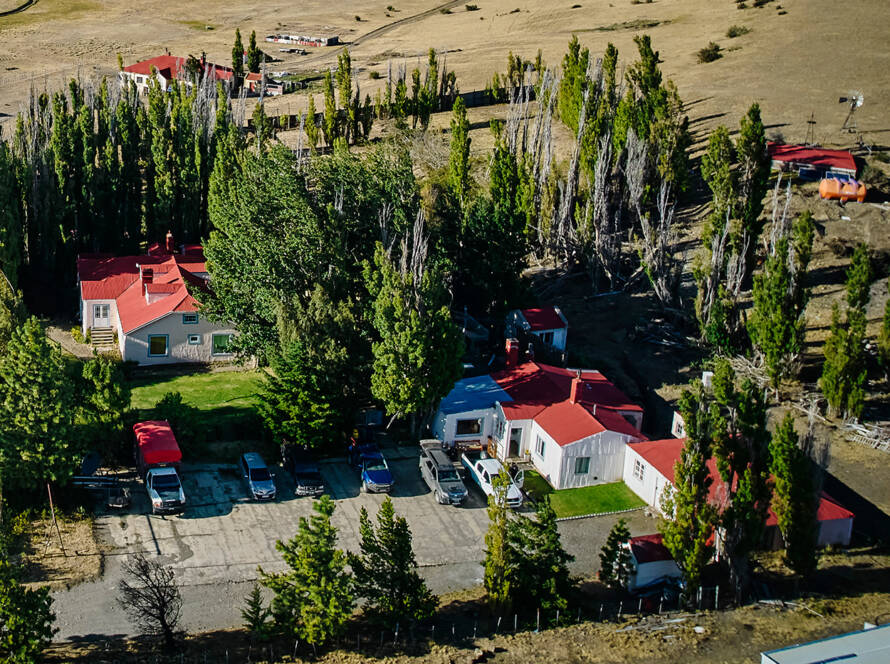
On the Río Gallegos, Karku expresses many of the qualities that make a boutique lodge feel distinct in the first place.
Its setting in the Laguna Colorada area, near the well-known Estancia Las Buitreras zone, places guests in a meaningful part of one of Patagonia’s most respected sea-run brown trout fisheries. But the difference is not only geographic. It is experiential.
Karku offers the river through a more boutique model.
That means the trip can feel more direct, more grounded, more responsive, and more centered on the fishing itself. The atmosphere allows the river to remain central. The structure supports the guest without overwhelming him. The experience feels less like passing through a system and more like entering a place where the fishing, the lodge, and the landscape are aligned.
For anglers who care about how a trip actually feels from day to day, that difference is not abstract.
It is one of the reasons the memory becomes stronger.
Final thoughts
What makes a boutique fly fishing lodge feel different is not simply the number of rooms or the size of the building.
It is the quality of the structure surrounding the fishing.
A boutique lodge often offers:
- a more focused guest scale
- stronger daily rhythm
- better room for flexibility
- more visible attention to detail
- less standardized atmosphere
- a cleaner relationship between the lodge and the river
All of that adds up.
For many anglers, especially on a destination as meaningful as Patagonia, the result is a trip that feels more personal, more coherent, and more satisfying in the ways that matter most.
Not because it tries to be bigger.
Because it understands the value of being more precise.
If you are looking for a Río Gallegos experience where the fishing remains central and the lodge supports the journey with greater focus and identity, discover Karku Fly Fishing Lodge and experience how a boutique approach can make Patagonia feel more connected, more refined, and more memorable from beginning to end.