For many anglers, getting to Patagonia is not a casual decision.
It takes planning, budget, travel time, and the kind of anticipation that builds over months, sometimes years. A trip this far south is rarely improvised. It is chosen carefully, often because the angler wants more than a vacation. He wants a true fishing journey. He wants the kind of experience that justifies the distance, the effort, and the dream that led him there in the first place.
That is exactly why combined fly fishing trips have become so appealing.
If you are already traveling to Patagonia to fish the Río Gallegos for sea-run brown trout, why stop there if the right itinerary can open the door to something even richer? Why limit the experience to one species, one rhythm, or one landscape when South America offers extraordinary variety within the same broader adventure?
A combined fly fishing trip in Patagonia allows anglers to do exactly that. It turns a single-destination plan into a more complete journey, one designed around multiple species, distinct environments, and a wider sense of what a great fishing expedition can be.
For the right traveler, that can make all the difference.
Patagonia is worth more than a single chapter
There is nothing small about a Río Gallegos trip.
On its own, it already represents one of the great fly fishing experiences in the world. Sea-run brown trout, open Patagonian country, hard wind, meaningful water, and the emotional charge of chasing migratory fish in a place with true identity—none of that needs embellishment. It is already a destination worthy of the journey.
But that is precisely why combined trips make so much sense.
Once an angler has committed to reaching these latitudes, the trip begins to take on a larger dimension. Patagonia stops feeling like a single pin on a map and starts to feel like a gateway. The question changes from “Should I go?” to “How much of this opportunity should I make of it?”
That is where combined itineraries become powerful.
Instead of returning home having lived one remarkable fishing experience, the angler can return having experienced several distinct worlds in the same broader journey. One day may be defined by sea-run brown trout on the Río Gallegos. Another by giant rainbow trout in the legendary waters of Strobel. Another by the raw pull of steelhead on the Río Santa Cruz. Another by the violent surface aggression of golden dorado in Corrientes (although the golden dorado are in Corrientes, Argentina, and it is not Patagonia, it is located in the northeast of Argentina; it is also a good option because your first stop will surely be Buenos Aires and there are good flight connection options).. Another by wild brook trout in quiet Patagonian water. Another by Chinook in dramatic country near Torres del Paine.
That kind of variety does more than add species.
It deepens the meaning of the trip.
More value from a long-distance journey
One of the most practical reasons to choose a combined fly fishing trip is also one of the most obvious: you are already investing heavily just to get there.
International travel to southern South America is not minor in cost, time, or energy. Flights, transfers, gear planning, vacation time, and logistics all add up. For many anglers, this is not the sort of trip they can repeat casually every season. That makes every decision around the itinerary more important.
A combined trip often creates better value from that effort.
That value is not simply financial, though that can be part of it. It is also experiential. If an angler is traveling all the way to fish Patagonia, it can make perfect sense to explore whether the journey can include more than one fishery and more than one style of fishing. In the right hands, that does not make the trip feel rushed. It makes it feel fuller.
The key, of course, is planning.
A good combined trip is not just a list of destinations thrown together to sound impressive. It is a carefully arranged journey that respects timing, species, travel flow, energy levels, and the character of each fishery. That is why thoughtful coordination matters so much.
Different species, different emotions
One of the best arguments for a combined trip is that no two species create exactly the same emotional experience.
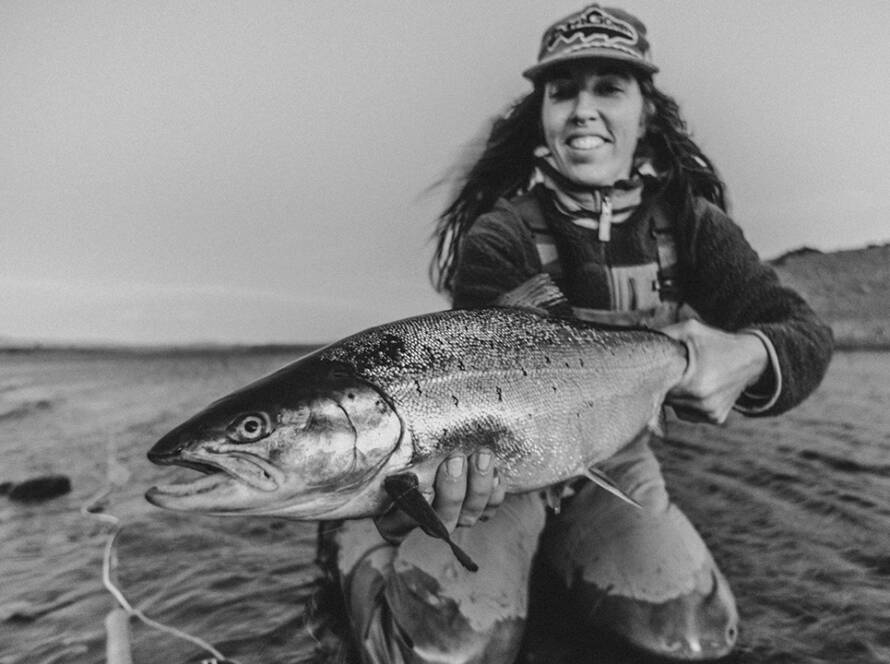
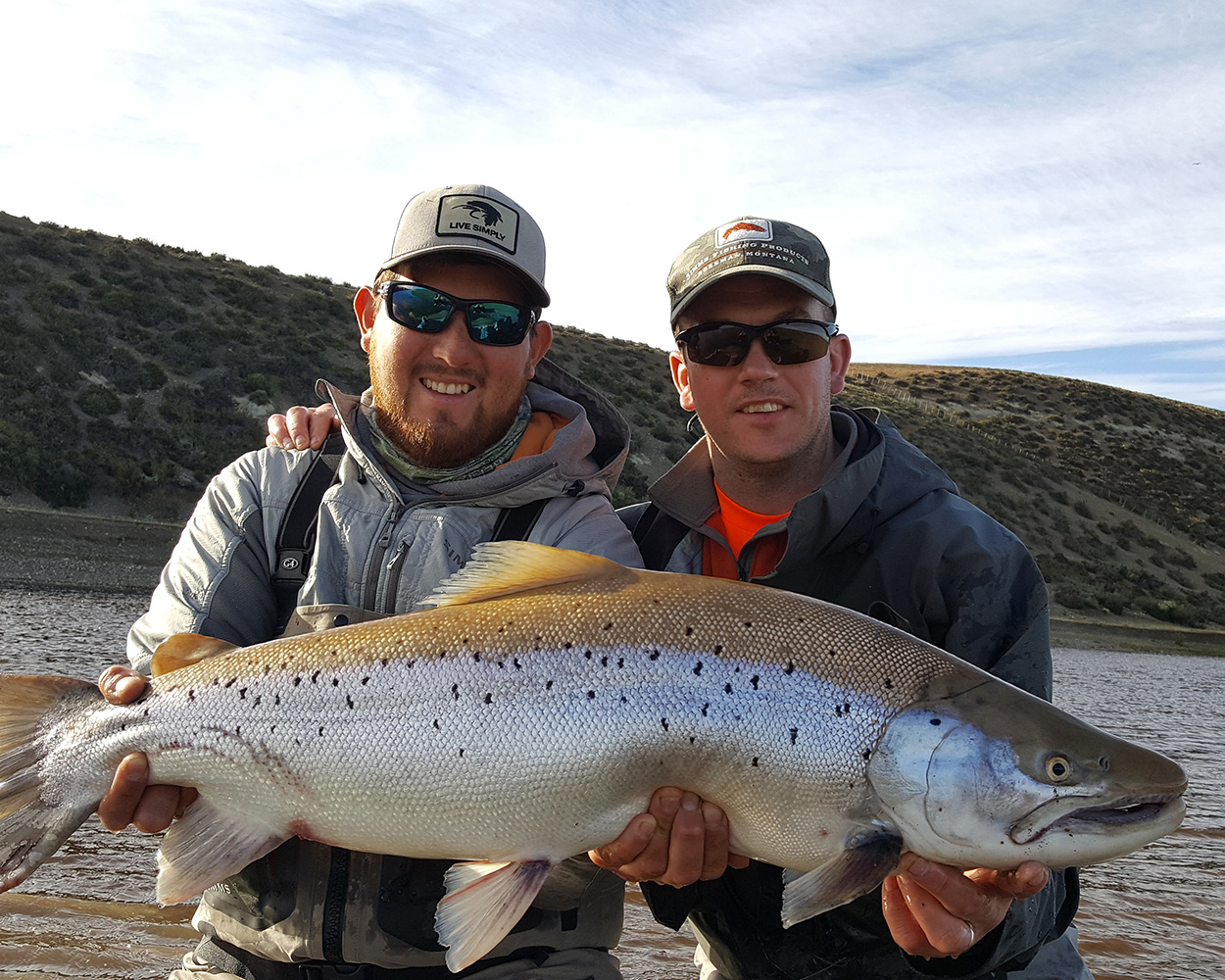
Sea-run brown trout on the Río Gallegos are one kind of obsession. They draw anglers into a rhythm of patience, swing, tension, weather, and the possibility of a fish that can make an entire day feel transformed in a second.
But combine that with another fishery, and the emotional landscape of the trip changes.
A trip to Strobel, often called Jurassic Lake, introduces a different kind of intensity. Big rainbow trout in famously clear water create a visual, technical, and often highly exciting experience, especially for anglers who love dry-fly opportunities, sight-fishing moments, and that unforgettable combination of size and visibility.
The Río Santa Cruz offers something else entirely. Steelhead there speak to anglers who are drawn to stronger water, long campaigns, and the satisfaction of pursuing a powerful migratory fish in a more demanding big-river setting.
Then there is golden dorado on the Paraná River in Corrientes, which shifts the mood completely. Warm water, aggressive takes, explosive strikes, and a far more tropical energy create a radical contrast with the wind and steppe of Patagonia. For many anglers, that contrast is part of the beauty.
Brook trout on the Río Coig offer a quieter kind of pleasure: remote water, wild fish, beautiful scenery, and a more intimate technical rhythm.
Chinook on the Río Serrano in Torres del Paine add yet another layer: dramatic landscape, strong fish, and the kind of battle that leaves a lasting physical and emotional impression.
A combined trip gives anglers access to this variety.
Not just more fishing, but more dimensions of fishing.
A trip that feels personal, not generic
One of the dangers of multi-destination travel is that it can become too packaged.
A trip starts to feel like something assembled for convenience rather than designed for the angler himself. That is exactly what a good combined fly fishing trip should avoid. The value lies in customization, not in forcing every traveler into the same route.
The best combined trips feel personal.
They begin with questions.
What species matter most?
How much time is available?
Is the angler looking for two contrasting experiences or several?
Does he want a stronger Patagonia emphasis, or does he want to widen the journey into a broader South American fishing experience?
Does he prefer technical trout water, migratory fish, aggressive warm-water predators, or a mix of all three?
The answers shape everything.
That is why combined trips work best when they are curated rather than mass-produced. What one angler sees as the perfect extension of a Río Gallegos trip may not fit another at all. One traveler may dream of sea-run brown trout followed by Jurassic Lake rainbows. Another may want Río Gallegos and Chinook in Chile. Another may want to combine Patagonia with dorado for two radically different energies in one unforgettable journey.
The itinerary should reflect the angler, not the other way around.
Logistics are the difference between an idea and a real trip
This is where many combined trip fantasies either become exciting or become exhausting.
On paper, it is easy to imagine adding another destination, another species, another country, another river. In reality, a successful combined trip depends on logistics. Timing matters. Transfers matter. Guides matter. Seasonal overlap matters. Travel flow matters. Trusted operators matter. If those pieces are not handled well, even a dream itinerary can become stressful.
That is why coordination is such a valuable part of the experience.
A properly designed combined trip should feel seamless from the guest’s point of view. The angler should be able to focus on fishing, recovery, anticipation, and the changing character of the journey—not on whether the next transfer is aligned, whether the right guide is waiting, or whether the destination combination actually makes sense in the season being booked.
This is one of the clearest reasons to choose a combined trip through a trusted base like Karku.
The point is not merely to suggest extra destinations.
It is to design the logistics well enough that the added complexity feels like added richness, not added friction.
Why combined trips are especially attractive for international anglers
For anglers coming from abroad, combined trips often make even more sense.
International travelers usually face the greatest planning burden. They have more at stake in flights, time off, baggage, and overall organization. They are also more likely to want a trip that feels complete, especially if it may be years before they return to South America.
That changes the calculation.
A local angler may be able to come back for a second species or a second destination more easily. An international traveler often wants to maximize the opportunity while remaining smart about time and logistics. A combined trip answers that need beautifully when it is built well.
It offers more reward from the same major effort.
It can also create a more memorable narrative. Instead of returning home with one excellent fishing chapter, the angler comes back with a full expedition story—one that moves across waters, species, climates, and landscapes while still feeling coherent because it was designed that way from the start.
For many serious travelers, that is the trip they really want.
More species, more scenery, more Patagonia
Another major strength of combined trips is that they reveal just how varied this part of the world can be.
A single-destination trip gives depth. A combined trip can give both depth and range.
That range matters because it expands not only the fishing, but the visual and emotional experience of the journey. Patagonia is not one visual note. South American fishing is not one rhythm. Combined itineraries allow anglers to experience more of that diversity in a way that feels intentional rather than random.
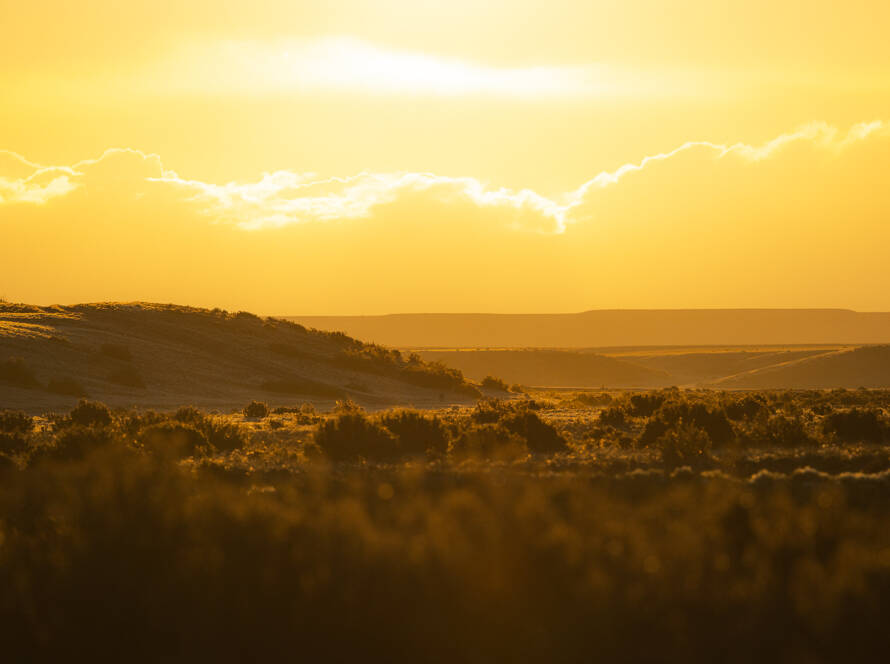
One part of the journey may be all wind, open steppe, migratory trout, and cold light.
Another may be high-country water, clear visibility, and giant rainbows.
Another may be glacier-fed current and long steelhead campaigns.
Another may be warm water, jungle-edge energy, and surface explosions from dorado.
Another may be remote brook trout in a quieter Patagonian setting.
Another may bring powerful Chinook in unforgettable Chilean scenery.
That kind of variety is difficult to match anywhere else.
And when it is tied together properly, it does not dilute the trip.
It elevates it.
Why Karku is a strong starting point for combined trips
A combined trip needs an anchor.
For many anglers, Karku provides exactly that.
The Río Gallegos already gives the journey weight, seriousness, and one of Patagonia’s defining sea-run brown trout experiences. From that strong base, the trip can extend outward with purpose. Instead of starting from uncertainty, the journey begins with a clear centerpiece and grows into something broader from there.
That makes Karku an ideal starting point.
Karku can help shape a trip around the timing of the Río Gallegos season and then advise on which additional species or destinations make the most sense alongside it. Some anglers may want the technical visual thrill of Strobel. Others may be drawn to steelhead, brook trout, Chinook, or dorado. The value lies in matching the right destination to the right guest at the right time, while keeping the logistics fluid and the overall experience coherent.
That is a very different proposition from simply referring someone elsewhere.
It is a curated fishing journey built around trust, planning, and a clear understanding of why the angler came south in the first place.
Who should choose a combined trip?
Combined fly fishing trips are not for everyone.
Some anglers want total immersion in one river, one species, and one rhythm, and there is great beauty in that. But for others, a combined itinerary is exactly the right choice.
It is especially appealing for:
- international anglers traveling a long distance
- travelers who want more value from a major expedition
- returning guests who want to build on a previous Patagonia trip
- anglers who enjoy contrasting species and tactics
- groups with broader fishing interests
- travelers who want one journey to include more than one kind of memory
For these anglers, a combined trip can feel less like an upgrade and more like the natural form the journey should take.
Final thoughts
A combined fly fishing trip in Patagonia makes sense because a journey this far south deserves to be considered carefully and lived fully.
If the timing is right, the species align, and the itinerary is built well, combining the Río Gallegos with other extraordinary fisheries can turn an already memorable trip into something far richer. It can add variety, deepen the sense of adventure, and give anglers a fuller experience of what Patagonia and South America can offer.
Sea-run brown trout may be the reason the journey begins.
But they do not have to be the only story.
With the right planning, a trip can also include giant rainbow trout, steelhead, golden dorado, brook trout, or Chinook—each adding its own landscape, rhythm, and emotional charge to the experience.
That is the real appeal of a combined trip.
Not just more fishing.
A better journey.
If you are traveling to Patagonia and want to make the most of the distance, the time, and the opportunity, discover Karku Combo Trips and start planning a custom fly fishing journey that goes beyond a single river, a single species, or a single chapter of South America.