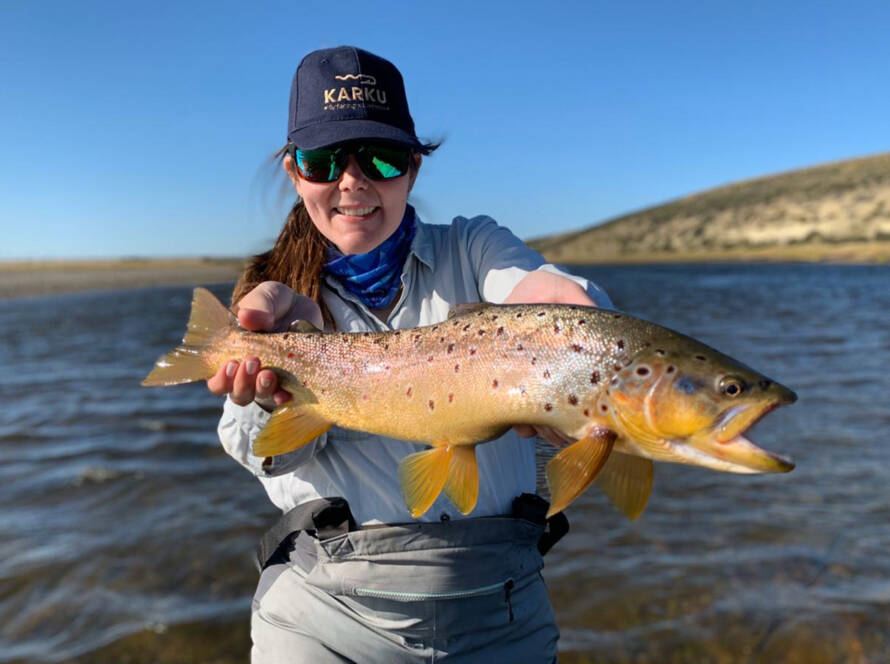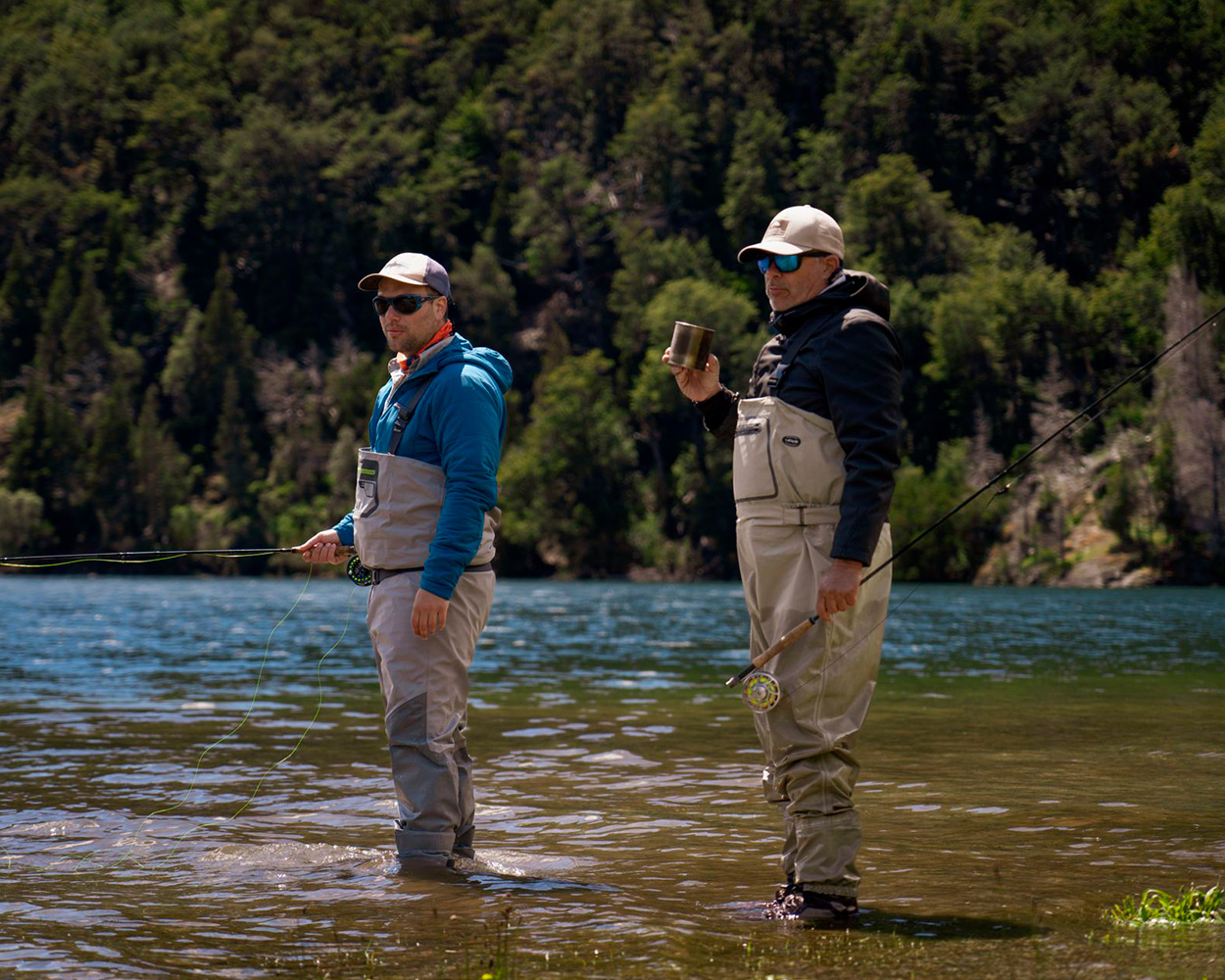
A Patagonia fly fishing trip is a major commitment.
For many international anglers, it involves long-distance travel, several days away from work and family, specialized equipment, and a guided lodge package that costs significantly more than an ordinary fishing weekend.
So the important question is not simply whether Patagonia is expensive.
It is:
What makes the experience worth investing in?
The answer is rarely one giant trout.
The real value comes from the combination of fishing access, professional guiding, time on productive water, logistics, preparation, location, and the opportunity to concentrate almost completely on fishing for several consecutive days.
Understanding those elements makes it much easier to judge whether a Patagonia trip is worth it for you.
You are buying access to water, not simply a room
The accommodation may be the most visible part of a lodge package, but anglers travel to Patagonia primarily for the fishery.
Access matters.
Depending on the operation, guests may fish:
- controlled river sections
- estancia water
- rotating beats
- limited-access pools
- remote sections that would be difficult to reach independently
That access can be one of the most valuable parts of the entire trip.
An angler traveling thousands of miles does not want to spend the week trying to understand where fishing is permitted, how to reach productive water, or whether another group has already occupied a section.
A well-organized lodge removes much of that uncertainty.
You arrive ready to fish.
Local guides compress years of learning into one week
A visiting angler sees the river for the first time.
A local guide may have seen the same pool at dozens of different water levels, wind directions, temperatures, and light conditions.
That difference matters.
A guide can help determine:
- which water deserves attention
- where a fish may be holding
- how deep the fly should travel
- which casting angle makes sense
- when to change fly size or profile
- how quickly to move through a pool
- when staying longer is worthwhile
Without that knowledge, an angler might spend valuable hours learning through trial and error.
Professional guiding turns local experience into decisions.
That is part of what the lodge fee buys.
Several consecutive fishing days create better opportunities
Destination fishing becomes more valuable when the angler has enough time to experience changing conditions.
One afternoon may be difficult.
The next morning may produce completely different water, light, and fish behavior.
A full fishing week gives the angler time to:
- learn the river
- improve casting
- adjust to local techniques
- experience several weather patterns
- fish different sections
- understand how conditions affect the fishery
This is especially important when targeting migratory fish.
A short visit can give only a snapshot.
Several consecutive days allow the experience to develop.
The logistics are already solved
Traveling independently through remote Patagonia can require considerable planning.
A lodge program typically removes many operational problems from the fishing day.
Instead of thinking about:
- where to drive
- where fishing access begins
- which road is usable
- where to eat
- how to organize the next day
- what section to fish
the guest can concentrate on the river.
Transfers, meals, daily transportation, guides, and accommodation are organized around the fishing schedule.
That convenience is easy to underestimate until you imagine recreating the same week independently.
The value is not luxury for its own sake.
It is time saved and uncertainty removed.
You can prepare specifically for one fishery
Destination fishing becomes much more rewarding when the trip has a clear objective.
For the Río Gallegos, that objective is sea-run brown trout.
Instead of packing for every possible kind of fishing, an angler can prepare around:
- appropriate rods
- line systems
- flies
- leaders
- wind
- water conditions
- casting technique
The lodge can help refine those choices before arrival.
That preparation improves the trip because the angler begins with equipment and expectations suited to the river rather than trying to solve everything after reaching Patagonia.
Patagonia offers fisheries that are difficult to reproduce elsewhere
Value also depends on rarity.
An angler can find excellent trout fishing in many countries.
But certain combinations are much harder to replicate:
- sea-run brown trout in broad Patagonian rivers
- giant rainbow trout in exposed southern stillwaters
- steelhead in remote Santa Cruz
- trout fishing across landscapes with very low population density
That does not automatically make Patagonia better than every local fishery.
It makes it different.
For someone specifically interested in sea-run brown trout, the Río Gallegos offers a type of fishing that cannot simply be recreated on a weekend close to home.
That rarity is part of the investment.
The environment changes the experience
A fishing trip is affected by more than the fish.
Southern Patagonia adds:
- vast open steppe
- strong wind
- dramatic weather
- long summer daylight
- wildlife
- remote landscapes
- very little urban distraction
For many anglers, these elements make the fishing feel more concentrated.
There is a difference between fishing a familiar river for a few hours and spending a week immersed in a landscape where most of the daily schedule revolves around the water.
That environment does not guarantee better fishing.
It does make the trip difficult to confuse with an ordinary vacation.
Improvement can be part of the return
A good destination trip can also change how an angler fishes after returning home.
Several days with experienced guides may improve:
- casting in wind
- line control
- swing management
- reading current
- fly selection
- patience
- fish-fighting technique
Those skills do not disappear when the trip ends.
For anglers who take the learning seriously, part of the value travels home with them.
This is particularly relevant for someone fishing sea-run brown trout for the first time.
The week can become an intensive course in a style of fishing that would otherwise take much longer to understand.
The trip becomes more valuable when it matches your priorities
Not every angler needs the same Patagonia experience.
One traveler may prioritize luxury accommodations.
Another may care most about:
- fishing access
- experienced guides
- fewer guests
- direct communication
- long days on the water
- a simple, comfortable lodge
Neither set of priorities is wrong.
A trip feels worth the investment when the package spends its resources on the things the guest actually values.
This is why choosing purely by reputation or price can lead to the wrong lodge.
Before booking, identify your top three priorities.
Then compare operations around those priorities.
Catch numbers should not be the only measure
It is natural to think about fish numbers when evaluating an expensive fishing trip.
But wild fisheries are not predictable enough for a responsible lodge to guarantee a particular result.
Water levels change.
Weather changes.
Migratory fish move.
Anglers perform differently.
A better evaluation asks whether the operation gives you:
- good access
- competent guides
- appropriate preparation
- enough fishing time
- realistic expectations
- professional logistics
Those factors create opportunity.
The fish still decide what happens next.
If the only acceptable outcome is a specific number or size of trout, any wild-fish destination carries risk.
If the objective is to fish a serious river properly for several days, the value becomes easier to judge.
A smaller operation may concentrate value differently
Some anglers want extensive luxury and resort-style service.
Others would rather see more of the experience concentrated around fishing, personal attention, and a quieter lodge environment.
Karku follows the second model.
The Río Gallegos and its sea-run brown trout are the center of the trip, supported by local guides, direct preparation, accommodation, meals, and the logistics required to fish the river effectively.
That approach is particularly well suited to anglers who care more about the fishing experience than accumulating amenities they may barely use.
Ask one question before booking
Before paying for any Patagonia fishing trip, ask yourself:
If I remove the trophy photos, would I still want this experience?
Would you still want:
- the river
- the guides
- the landscape
- the fishing style
- the travel
- the learning
- several days dedicated almost completely to fishing?
If the answer is yes, you are probably evaluating the trip for the right reasons.
Final thoughts
A Patagonia fly fishing trip becomes worth the investment when the value is spread across the entire week rather than concentrated in one fish.
You are paying for access.
For local knowledge.
For time.
For organization.
For a fishery that is difficult to reproduce elsewhere.
And for the opportunity to spend several uninterrupted days becoming better at fishing it.
For anglers whose priority is sea-run brown trout on the Río Gallegos, Karku Fly Fishing Lodge offers a small-scale, fishing-focused experience designed around the river rather than unnecessary complexity. Contact Karku to discuss available dates, trip structure, and whether the experience matches what you want from Patagonia.