Two Patagonia fly fishing lodges can have very different prices and still both offer good value.
The mistake is assuming that the less expensive option is automatically the better deal—or that the most expensive lodge must provide the best fishing.
Neither is necessarily true.
A lodge rate reflects a combination of fishing access, guide ratio, accommodation, group size, logistics, hospitality, location, and the level of service built around the trip.
For international anglers, the best comparison is therefore not:
Which lodge costs less?
It is:
What am I actually receiving for the price, and which parts of that experience matter most to me?
Here is a practical way to compare Patagonia fly fishing lodge prices without letting the headline number make the decision for you.
Compare the fishing first
A fishing lodge should be evaluated first as a place to fish.
Before comparing rooms, food, or amenities, ask what access each lodge provides.
Consider:
- Which river or fishery will you fish?
- How much water is available?
- Is access private, controlled, or shared?
- How many anglers use the same water?
- Are different sections rotated during the week?
- How much driving is required each day?
For many serious anglers, access to productive water may be worth considerably more than additional luxury at the lodge.
A beautiful property does not compensate for fishing that does not match your goals.
Look at the guide-to-angler ratio
Guiding represents a significant part of the value of a destination fishing trip.
Two packages may appear similar until you discover that one offers two anglers per guide while another accommodates larger groups or charges separately for private guiding.
Ask:
- How many anglers fish with each guide?
- Is guiding shared or private?
- Do guides rotate during the week?
- How much individual instruction is available?
- Is the guide ratio included in the published rate?
An experienced guide who knows the water intimately can have a much greater effect on the fishing week than many visible lodge amenities.
Count actual fishing days
Do not compare packages based only on the number of nights.
A seven-night package does not necessarily mean seven full days of fishing.
One operation may include six complete guided days. Another may lose substantial fishing time to arrival, departure, or transfers.
Compare:
Fishing hours, not just nights.
Also ask whether:
- fishing begins on arrival day
- departure day includes fishing
- long daily transfers reduce time on the water
- lunch is taken on the river or requires returning to the lodge
These details can substantially change the effective value of a package.
Understand what the rate includes
A lower advertised price can become less attractive after several additional expenses are added.
Compare the same categories for every lodge:
- accommodation
- meals
- beverages
- airport transfers
- daily fishing transportation
- licenses
- laundry
- fishing equipment
- flies
- gratuities
- taxes or fees
Not every lodge should include everything.
The important point is knowing what the final structure looks like before comparing one rate with another.
Consider group size
A lodge hosting six anglers creates a different experience from one accommodating twenty.
Neither format is inherently better.
Larger operations may provide more facilities, social activity, and extensive staff.
Smaller lodges may offer:
- quieter common spaces
- more direct communication
- fewer guests sharing the fishing program
- greater familiarity between anglers, guides, and staff
- a more personal atmosphere
If group size matters to you, it should be part of the price comparison.
You are paying for the experience around the fishing as well as the fishing itself.
Decide how much luxury matters to you
Patagonia offers everything from practical fishing lodges to sophisticated luxury properties.
Premium accommodations may include:
- larger rooms
- architectural design
- extensive wine selections
- elaborate cuisine
- spa facilities
- concierge-style service
- more extensive common areas
Those features have real value for travelers who want them.
But an angler who expects to spend most daylight hours on the river may prefer a comfortable lodge where a greater share of the experience is centered on fishing rather than luxury.
There is no correct answer.
The important thing is not paying for priorities that are not yours.
Factor in location and transfers
A lodge can appear less expensive until the cost and complexity of reaching it are added.
Ask:
- Which airport should you fly into?
- Is the final transfer included?
- How long is the transfer?
- Is another domestic flight required?
- Is an overnight hotel necessary?
- Are charter flights involved?
For an international traveler, convenience has value.
A simple itinerary can reduce travel fatigue, missed connections, additional hotel nights, and the risk of losing part of the fishing week.
Look at the lodge’s specialization
Some operations offer broad Patagonia trout fishing.
Others are built around a very specific target.
A lodge focused on sea-run brown trout, for example, may invest heavily in access, guide knowledge, specialized tackle, vehicles, and understanding the movement of migratory fish.
If you are traveling specifically for one species, specialization can matter.
Ask whether the lodge is primarily designed around the fishing you actually want to do.
A less expensive general trout program is not necessarily better value if your real goal is to fish sea-run browns.
Compare flexibility and personal attention
Not every form of value appears on an amenities list.
For some anglers, direct access to the people organizing the trip matters enormously.
That may include:
- personalized pre-trip advice
- tackle recommendations
- help coordinating transfers
- understanding individual fishing experience
- dietary considerations
- group-specific planning
- assistance with additional destinations
Large premium operations may provide excellent service through professional teams.
Smaller lodges can sometimes offer a more direct relationship with the people responsible for the fishing week.
Consider which style you prefer.
Be careful with the phrase “all-inclusive”
“All-inclusive” can mean different things.
At one lodge it may cover nearly everything after arrival.
At another it may still exclude licenses, premium beverages, gratuities, flies, equipment, or certain transfers.
Always ask for the inclusions and exclusions in writing.
This avoids comparing two packages that look identical on the surface but are structured very differently.
Calculate value per experience, not just price per day
Dividing the total price by the number of nights gives only a crude comparison.
A better evaluation includes:
Fishing quality + access + guide time + accommodations + logistics + service + group size + personal priorities.
Imagine two hypothetical trips.
Lodge A
Lower rate, excellent fishing access, comfortable accommodation, small group, simple hospitality.
Lodge B
Higher rate, equally strong fishing, premium rooms, extensive food and wine program, additional staff and luxury services.
Neither is overpriced simply because one costs more.
The question is whether the additional elements of Lodge B are valuable to you.
That is a much more useful way to think about price.
Know what you are willing to compromise on
Before comparing lodges, choose your priorities.
For example:
Must have
- strong fishing access
- experienced guides
- small group
Would like
- private room
- excellent food
- easy transfer
Not important
- spa
- luxury architecture
- extensive wine program
Another traveler may build the list completely differently.
Once those priorities are clear, price comparisons become much easier.
Where a smaller lodge can make sense
A smaller lodge can be attractive when the angler values:
- fishing-focused days
- fewer guests
- direct communication
- personal attention
- comfortable rather than extravagant accommodation
- a quieter lodge atmosphere
That does not automatically make a smaller operation cheaper or better.
It simply represents another way of allocating value.
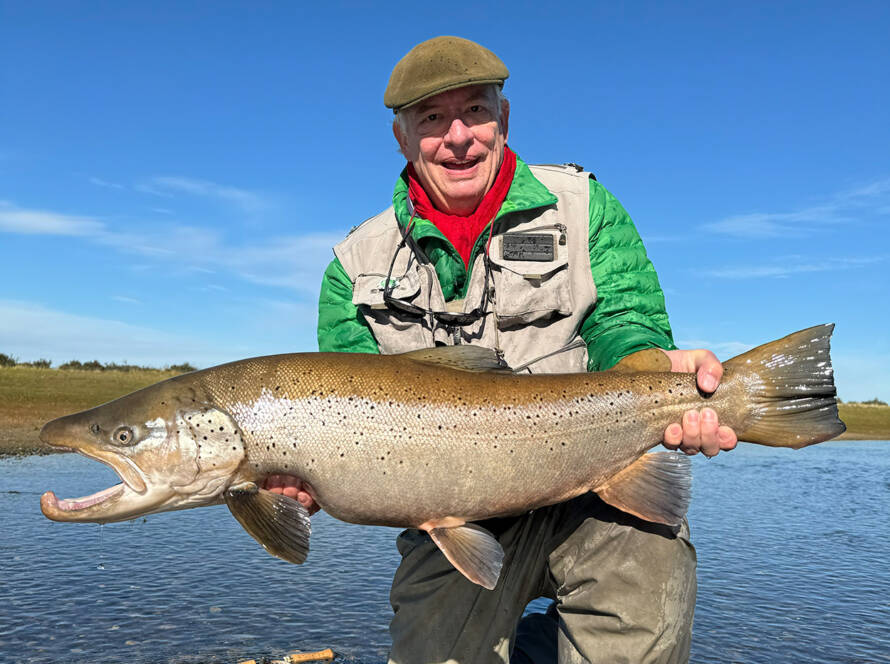
Karku follows this type of focused model on the Río Gallegos, with sea-run brown trout fishing at the center of the experience and a smaller-scale lodge environment surrounding it.
Current rates are provided directly according to dates, availability, group configuration, and the trip being planned.
Questions to ask before comparing the final numbers
Before choosing between two Patagonia lodges, ask both operations the same questions:
- How many full fishing days are included?
- How many anglers share each guide?
- What water will we fish?
- How many guests are at the lodge?
- Which transfers are included?
- What expenses remain separate?
- What type of accommodation is provided?
- How much daily travel is required to reach the fishing?
- What type of angler is the operation best suited for?
- What makes this particular fishery different?
Once those answers are clear, the rate becomes much easier to understand.
Final thoughts
Patagonia fly fishing lodge prices vary because Patagonia fishing experiences vary.
Some travelers want highly polished luxury.
Others care primarily about water, guiding, and a small group.
Some value convenience.
Others are willing to travel farther for a particular fishery.
The best lodge is therefore not necessarily the cheapest or the most expensive.
It is the operation where the things you value most are the things you are actually paying for.
For anglers comparing options for sea-run brown trout on the Río Gallegos, contact Karku Fly Fishing Lodge to discuss current availability, package structure, fishing access, and rates for your dates and group.