The terms sea trout and sea-run brown trout are often used as if they describe two different fish.
They do not.
Both refer to Salmo trutta, the same species as the brown trout found in rivers and lakes around the world. The difference is not taxonomy. It is life history.
A resident brown trout remains in freshwater.
A sea-run brown trout migrates to the ocean, feeds there, and later returns to freshwater.
That simple difference changes almost everything an angler notices: size, coloration, condition, behavior, tackle, and the way the fishery is approached.
For anyone planning a sea-run brown trout trip to Patagonia, understanding that distinction helps explain why rivers such as the Río Gallegos attract anglers from around the world.
Sea trout and sea-run brown trout are the same species
Scientifically, there is no separate “sea trout species.”
Both resident brown trout and sea trout are:
Salmo trutta
The term sea trout is especially common in Europe, particularly around fisheries in the United Kingdom, Ireland, Scandinavia, Iceland, and other Atlantic regions.
In Patagonia, anglers frequently use the more descriptive term:
sea-run brown trout
It immediately explains what the fish is: a brown trout that has adopted a migratory life strategy involving the ocean.
So when an angler from Europe talks about sea trout and an angler in Argentina talks about sea-run browns, they may be discussing essentially the same biological phenomenon.
What makes a brown trout become sea-run?
Not every brown trout living in a river will migrate to saltwater.
Within some populations, certain fish remain resident while others migrate.
The migratory fish move downstream, adapt physiologically to saltwater, enter marine environments, and take advantage of feeding opportunities that may allow substantial growth.
Later, they return to freshwater.
This behavior is known as anadromy: fish spend part of their lives in the sea but return to freshwater to reproduce.
Brown trout are unusually flexible in this respect.
The same species can produce:
- resident river trout
- lake-dwelling trout
- migratory freshwater trout
- sea-run trout
That adaptability is one of the reasons brown trout can produce such different fisheries.
Why does going to sea make such a difference?
The ocean provides a different feeding environment from a river.
Sea-run fish may gain access to abundant food and much more space to forage. As a result, some individuals return to freshwater significantly larger and heavier than many resident trout from the same general region.
That does not mean every sea-run brown trout becomes enormous.
There is considerable variation in age, time spent at sea, genetics, food availability, and individual growth.
But the marine phase creates the potential for the powerful, heavily conditioned fish that have made Patagonia’s sea-run brown trout fisheries famous.
Why do some sea trout look silver?
Anglers seeing a fresh sea-run brown for the first time may be surprised by its appearance.
Some fish entering freshwater can look remarkably silver.
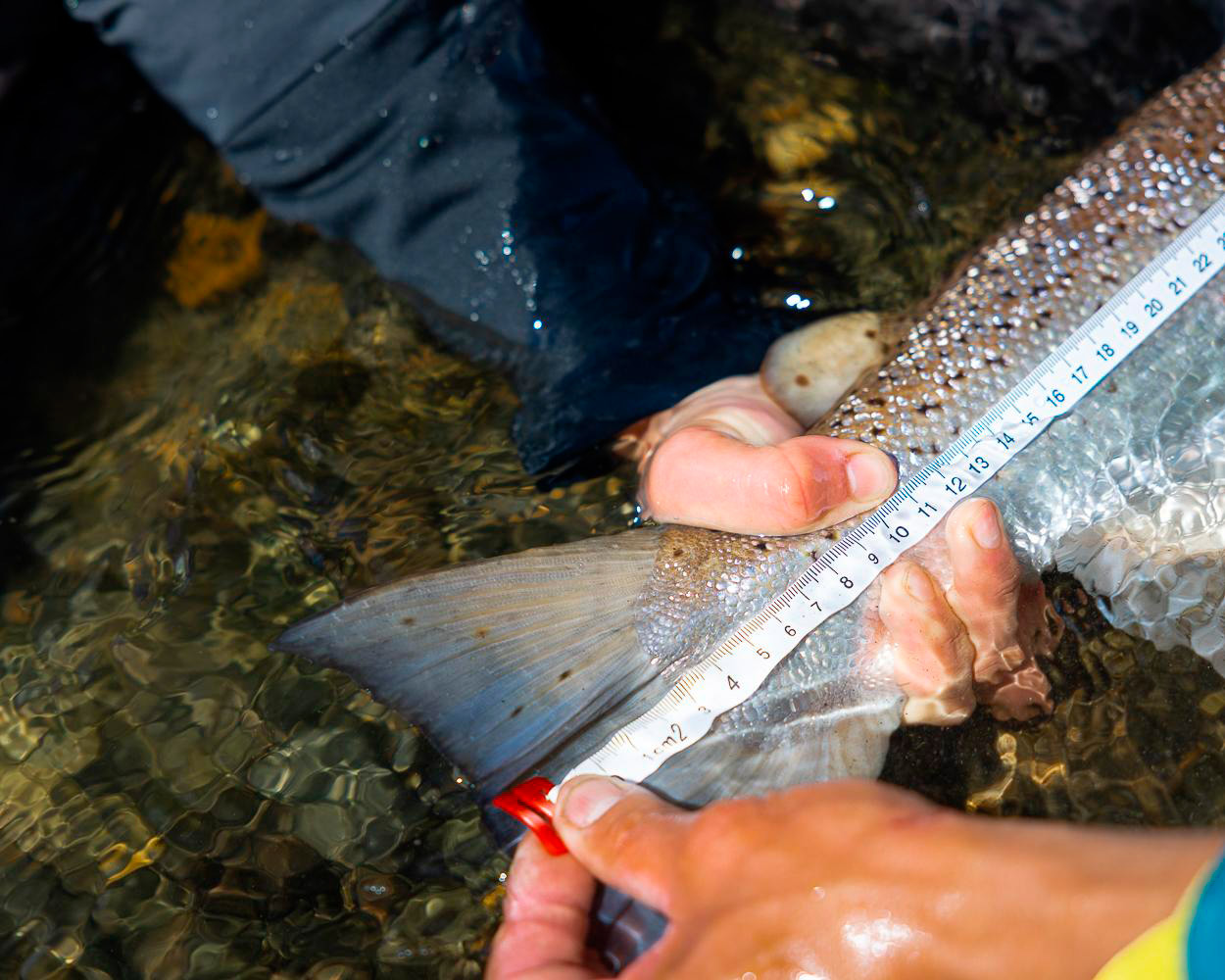
During preparation for life at sea, migratory trout undergo physiological and visual changes that help them adapt to the marine environment. Their coloration may become brighter and more silvery than the classic brown-and-gold appearance associated with resident trout.
After spending time in freshwater, their appearance can change again.
Fish may develop:
- darker coloration
- stronger brown tones
- more visible spotting
- spawning coloration
This is why photographs of sea-run brown trout can look surprisingly different even though every fish belongs to the same species.
Are sea trout the same as salmon?
No.
Sea trout and Atlantic salmon can share rivers and have similar migratory strategies, but they are different species.
Atlantic salmon are Salmo salar.
Brown trout and sea trout are Salmo trutta.
Both may migrate between freshwater and saltwater, which helps explain some of the confusion.
Their behavior, morphology, life cycles, and fisheries differ.
For anglers, identifying the species correctly matters because “anadromous” describes a migration strategy, not a particular species.
How are sea-run browns different from resident brown trout?
The fundamental biological difference is their migration history, but that creates several practical differences for anglers.
Size and body condition
Sea-run trout can return with the deep bodies and substantial weight associated with productive marine feeding.
Resident browns can also grow extremely large, particularly in productive lakes and rivers, so size alone does not prove that a fish is sea-run.
Movement
Resident trout may occupy relatively predictable territories or feeding areas.
Sea-run fish are moving through a river system as part of a larger migration.
Where they are holding today may depend on:
- water level
- river conditions
- migration timing
- temperature
- suitable resting water
This is one reason local knowledge becomes so valuable.
Feeding behavior
Anglers should not automatically approach a sea-run brown as though it were a resident trout rising regularly to aquatic insects.
Sea-run fishing frequently involves covering likely holding water and presenting the fly through areas where migratory fish may pause.
The angler often fishes the structure and current without seeing the trout first.
Why the Río Gallegos produces this style of fishing
The Río Gallegos flows across the southern Patagonian steppe and eventually reaches the Atlantic.
That connection allows brown trout to move between the river system and the marine environment.
For anglers, the result is a fishery based around intercepting returning sea-run browns in freshwater.
Rather than casting randomly across a broad river, guides look for areas where fish can travel or rest efficiently:
- deeper channels
- current transitions
- pools
- tails
- softer edges
- structured holding water
Water level can change which areas become productive.
Wind changes how those areas can be approached.
Light and clarity influence presentation.
The fish may be familiar biologically, but the fishing feels very different from targeting resident brown trout on a small stream.
Does sea-run mean the fish lives permanently in saltwater?
No.
That is an important distinction.
Sea-run brown trout use both environments.
They are born in freshwater and later migrate to the sea. They eventually return to freshwater, generally in connection with reproduction.
Some individuals can make the journey more than once during their lives.
The river and ocean should therefore not be thought of as separate habitats.
For these fish, they form parts of one connected life cycle.
Why do anglers value sea-run brown trout so highly?
Several factors come together.
First, there is the possibility of substantial fish.
Then there is their strength and condition.
But much of the attraction comes from uncertainty.
These are moving wild fish.
An angler may cover excellent water without a response and then encounter a single trout that transforms the entire session.
You are not necessarily watching a fish feed before making the cast.
You are reading the river, trusting the guide, controlling the presentation, and waiting for something unseen to react.
That combination gives sea-run brown trout fishing much of its character.
Is sea trout fishing in Europe the same as Patagonia?
Biologically, anglers are pursuing the same species and migratory life strategy.
Practically, the fisheries can be very different.
River size, climate, water type, fish size, regulations, fishing traditions, tackle, and techniques vary considerably between countries and individual rivers.
Patagonia adds its own characteristics:
- open steppe
- persistent wind
- large river pools
- strong sea-run brown trout
- remote fishing environments
- long summer fishing days
An experienced European sea-trout angler will recognize many principles but should still approach the Río Gallegos as a distinct fishery.
Local techniques matter.
What should first-time sea-run brown trout anglers expect?
Anglers familiar with resident trout should be ready to adjust.
Expect to spend more time:
- covering water systematically
- fishing without seeing the trout
- controlling swing speed
- adjusting depth
- casting in wind
- repeating good presentations
- waiting patiently between opportunities
Distance helps, but controlled presentation is more important than maximum casting range.
And because migratory fish are unpredictable, the quality of the opportunity often matters more than accumulating large catch numbers.
Final thoughts
Sea trout and sea-run brown trout are two names for the same fish: Salmo trutta.
What makes them distinctive is not a different species but a different life.
Some brown trout remain in freshwater.
Others migrate to the ocean, grow in the marine environment, and eventually return to the rivers where their lives began.
That migration creates the silvery appearance, strength, size potential, and unpredictable behavior associated with sea-trout fishing.
On the Río Gallegos, it also creates one of Patagonia’s defining fly fishing experiences.
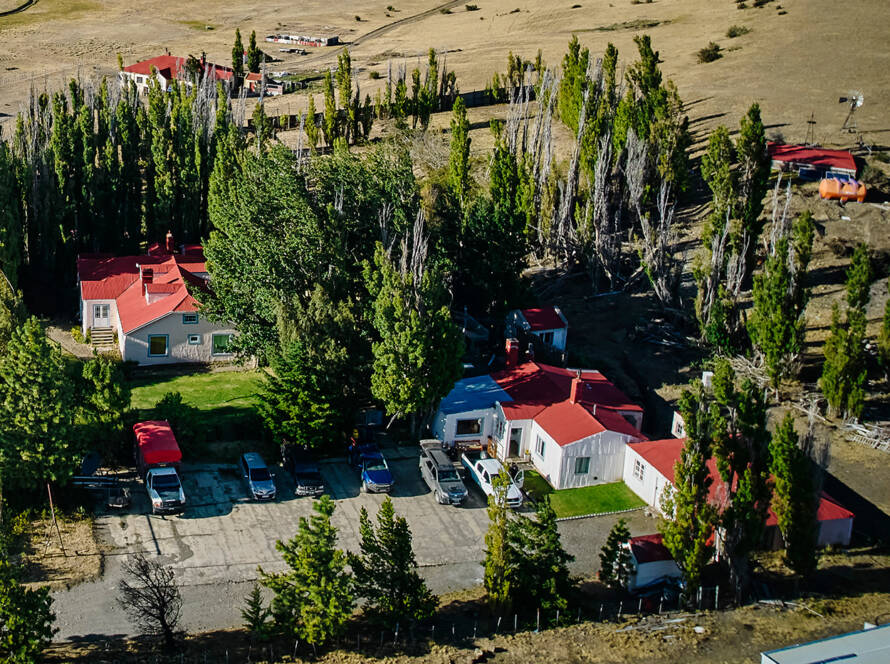
For anglers interested in experiencing these fish firsthand, Karku Fly Fishing Lodge provides a focused base on the Río Gallegos, with local guides who understand how migratory brown trout use the river under changing conditions. Contact Karku to discuss current dates, preparation, and your first—or next—sea-run brown trout trip.