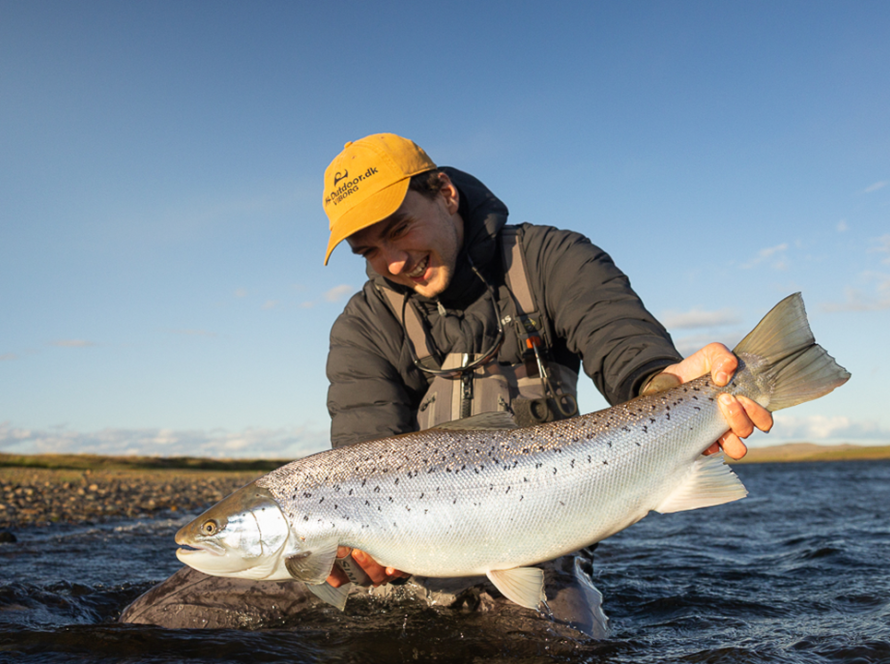
For anglers planning a sea-run brown trout trip to Argentina, two names appear again and again: Río Gallegos and Tierra del Fuego.
Both offer serious sea trout fishing. Both attract international anglers. Both can produce extraordinary brown trout.
But the trips are not structured in exactly the same way—and the price difference can be substantial.
Publicly advertised lodge packages show that Río Gallegos offers a relatively broad range of options, with some week-long programs beginning around the mid-USD 5,000s and others moving toward USD 10,000 depending on the operation and package.
At the premium end of the Río Grande market in Tierra del Fuego, some established sea trout lodges currently approach USD 13,000–15,000 per angler for a week.
That does not mean Río Gallegos is simply the “cheaper version” of Tierra del Fuego.
The more useful comparison is understanding why the two markets can be structured differently and what kind of experience each delivers.
Both destinations target the same fish
The central attraction is the same species:
sea-run brown trout — Salmo trutta.
These are brown trout that migrate between freshwater and the ocean before returning to rivers.
On both the Río Gallegos and Río Grande, anglers generally spend their days covering likely holding water, adjusting depth and presentation, managing wind, and waiting for encounters with migratory fish.
So the price difference is not explained by one destination offering “real” sea trout and the other something lesser.
Both are internationally recognized fisheries.
The differences appear in access, lodge history, demand, infrastructure, hospitality, and the way the fishing program is organized.
Río Gallegos offers a wider range of lodge models
The Río Gallegos market includes operations with noticeably different approaches.
Some are traditional estancia-based lodges.
Others operate with very small groups.
Some emphasize premium hospitality, while others keep the experience deliberately fishing-focused.
This produces more variation in price.
An angler can find programs built around:
- small lodge capacity
- private or controlled river sections
- two anglers per guide
- traditional estancia accommodation
- full-board service
- straightforward hospitality
- long days focused primarily on fishing
That diversity makes it possible to choose according to priorities rather than simply moving between different versions of the same luxury product.
Premium Río Grande fishing often occupies a higher price category
Tierra del Fuego, particularly the Río Grande, has some of the most internationally established sea trout lodges in the world.
Several have been operating for decades and have developed strong reputations among destination anglers.
At the premium end of that market, weekly prices can reach approximately USD 13,000–15,000 per angler.
Those rates may reflect several factors working together:
- internationally recognized fishing programs
- limited numbers of rods
- carefully managed beats
- single-room accommodation
- long-established guide teams
- sophisticated food and beverage programs
- extensive lodge staff
- high international demand
The angler is purchasing much more than access to a river.
The package may combine a famous fishery with a highly developed hospitality product.
Access to water matters in both destinations
One of the most important things to compare is how the river is managed.
A sea trout lodge may provide access to:
- both banks of certain sections
- private estancia water
- rotating beats
- restricted numbers of anglers
- dozens of named pools
The amount of water per rod can strongly influence the character of the fishing week.
A lodge accommodating relatively few anglers over a substantial section of river can offer considerable space even without presenting itself as a luxury property.
For the serious angler, that can be more important than additional amenities.
Group size can change the experience
Small-group fishing is common in both destinations, but capacity varies.
A six-angler operation and a lodge accommodating a larger group will naturally feel different.
Karku takes that idea particularly far, operating with only four rods per week and fishing more than 40 named pools on the Río Gallegos.
That creates a very specific type of experience:
- fewer guests
- direct communication
- a quieter lodge
- close interaction with guides and staff
- a fishing program centered strongly on the river
This is a structural difference rather than simply a price difference.
Accommodation influences how much of the budget goes to hospitality
Some anglers want the lodge itself to be a major part of the vacation.
Others are perfectly satisfied with a comfortable room, good food, a warm atmosphere, and everything necessary to recover before the next fishing day.
Premium Tierra del Fuego operations may place more emphasis on:
- private rooms
- extensive wine selections
- elaborate cuisine
- larger hospitality teams
- architectural refinement
- highly polished service
Those elements genuinely cost money to provide.
A more fishing-centered Río Gallegos lodge may allocate the experience differently.
The question becomes:
Do you want your investment concentrated primarily on fishing, or do you also want a high-end hospitality experience around it?
There is no wrong answer.
Transportation and access affect the total trip
The weekly lodge rate is only part of the comparison.
International anglers should also consider how they reach the fishery.
Both destinations generally require domestic travel after arriving in Argentina, followed by a lodge transfer.
Depending on the operation and itinerary, additional costs may include:
- domestic flights
- Buenos Aires hotel nights
- airport transfers
- fishing licenses
- gratuities
- equipment
- additional meals during travel
A slightly lower lodge rate does not automatically mean a lower total trip cost.
The full itinerary matters.
Fishing style should matter more than price alone
Both rivers are sea trout destinations, but they have their own character.
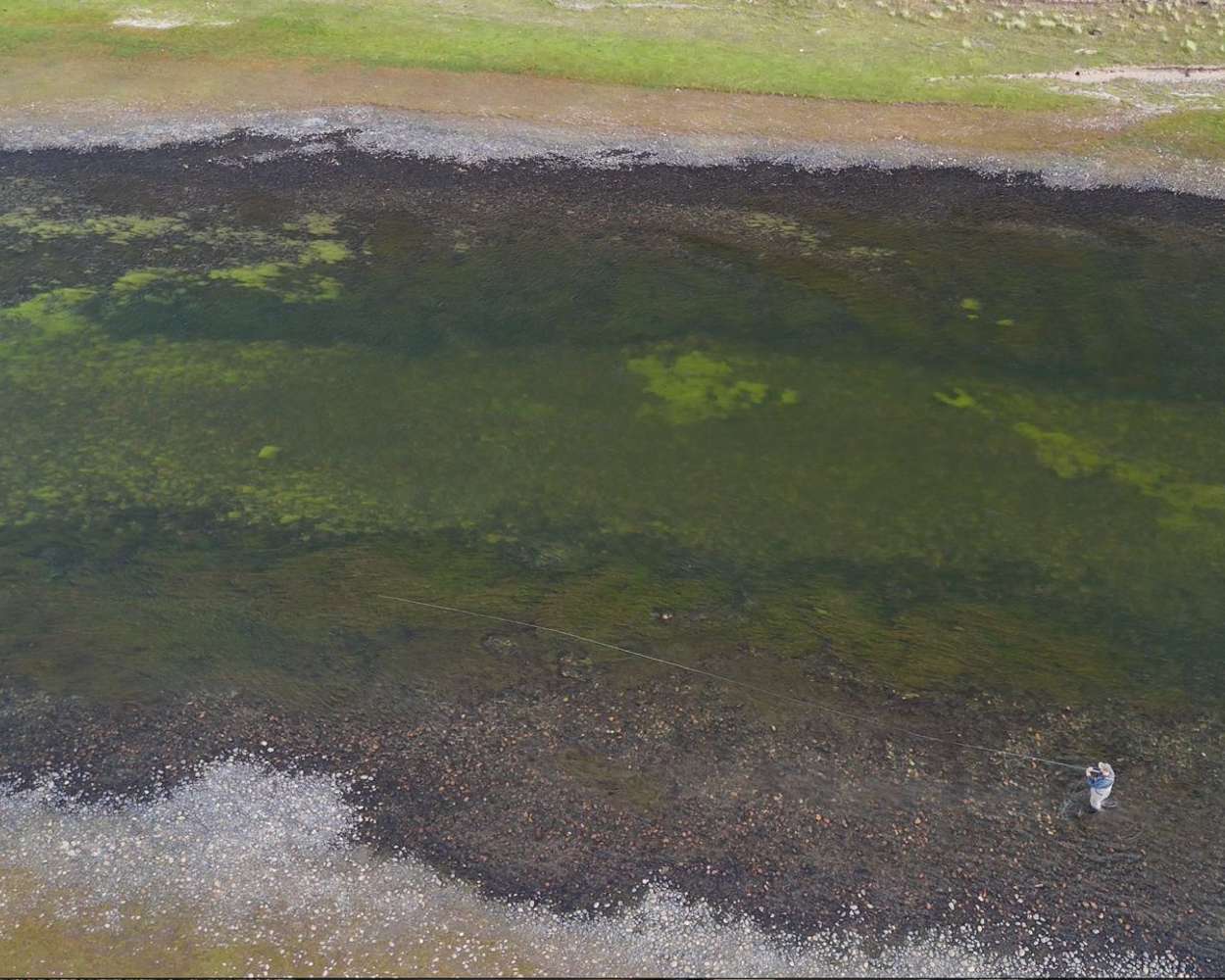
The Río Gallegos is a low-gradient river crossing open Patagonian steppe, with long pools and fishing that can involve both single- and two-handed rods depending on conditions.
The Río Grande has its own river structure, beat systems, fishing traditions, and long history as an international destination.
Rather than deciding according to reputation alone, consider:
- preferred river size
- casting style
- lodge capacity
- guide structure
- accommodation expectations
- desired level of hospitality
- total budget
- interest in combining the trip with other parts of Patagonia
A famous lodge is not necessarily the right lodge for every angler.
Is Tierra del Fuego automatically better because it costs more?
No.
Higher price can reflect scarcity, reputation, hospitality, demand, and operating structure.
It does not create a direct mathematical relationship with the quality of the fish an angler will catch.
Wild fish remain wild.
A premium lodge cannot guarantee a twenty-pound trout any more than a smaller lodge can.
What a well-run operation can provide is:
- good water
- experienced guides
- controlled access
- strong preparation
- enough fishing time
- professional logistics
The fish still determine the final result.
When Río Gallegos may make more sense
Río Gallegos can be especially attractive to anglers who value:
- sea-run brown trout as the main objective
- smaller lodge environments
- strong access to river water
- fishing-focused hospitality
- personal communication
- flexibility in how a Patagonia itinerary is built
It can also work particularly well for anglers who want to add another Santa Cruz experience, such as Jurassic Lake, El Calafate, or additional fishing within the province.
When a premium Tierra del Fuego lodge may make more sense
The higher-end Río Grande experience may be particularly attractive when the angler wants:
- one of the most established names in international sea trout fishing
- premium lodge service
- sophisticated food and wine
- highly structured beat rotations
- a long-established destination program
- a larger overall travel budget
For some anglers, those elements are central to the trip.
For others, they are secondary to the fishing itself.
Where Karku fits
Karku is deliberately small.
The lodge focuses on the Río Gallegos, operates with only four rods per week, and builds the experience around access to the river, local guiding, direct communication, and a close-knit lodge atmosphere.
It does not need to position itself as a discounted alternative to Tierra del Fuego.
It represents a different allocation of value.
Rather than publishing a static rate as the defining feature of the experience, Karku provides current pricing directly according to dates, availability, group structure, and the trip being planned.
Final thoughts
Río Gallegos and Tierra del Fuego both belong among Argentina’s major sea-run brown trout destinations.
The difference is not simply that one costs less and the other costs more.
The real comparison involves:
water access, lodge scale, guiding, hospitality, reputation, logistics, and personal priorities.
Río Gallegos offers a broad range of lodge models and can provide a highly focused sea trout experience without requiring the hospitality structure of the most expensive Tierra del Fuego operations.
Premium Río Grande lodges offer another proposition: internationally established fishing programs combined with a high level of service and exclusivity.
The right choice depends on which experience you want to pay for.
For anglers considering the Río Gallegos, contact Karku Fly Fishing Lodge to discuss current availability, trip structure, and rates for your dates and group.