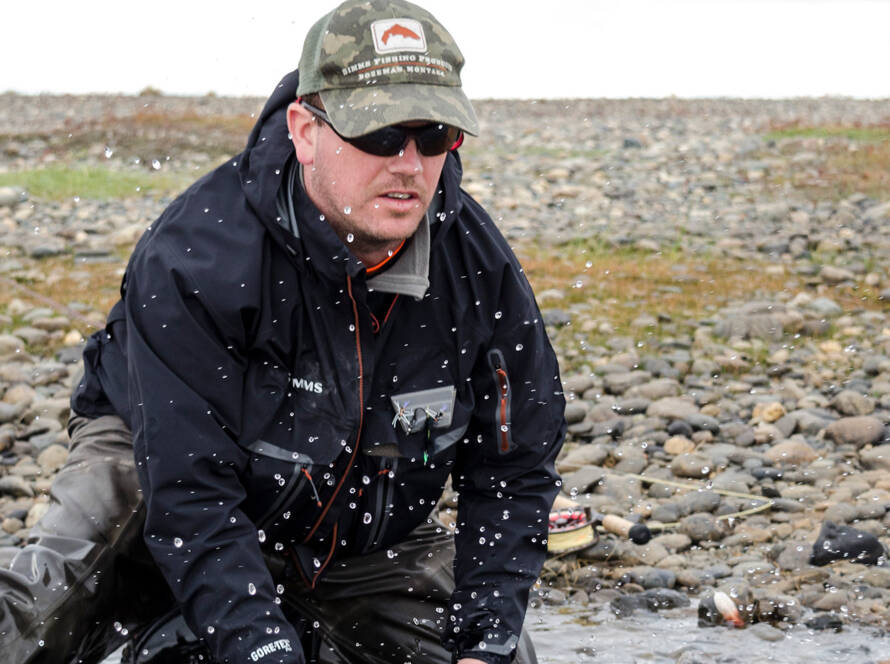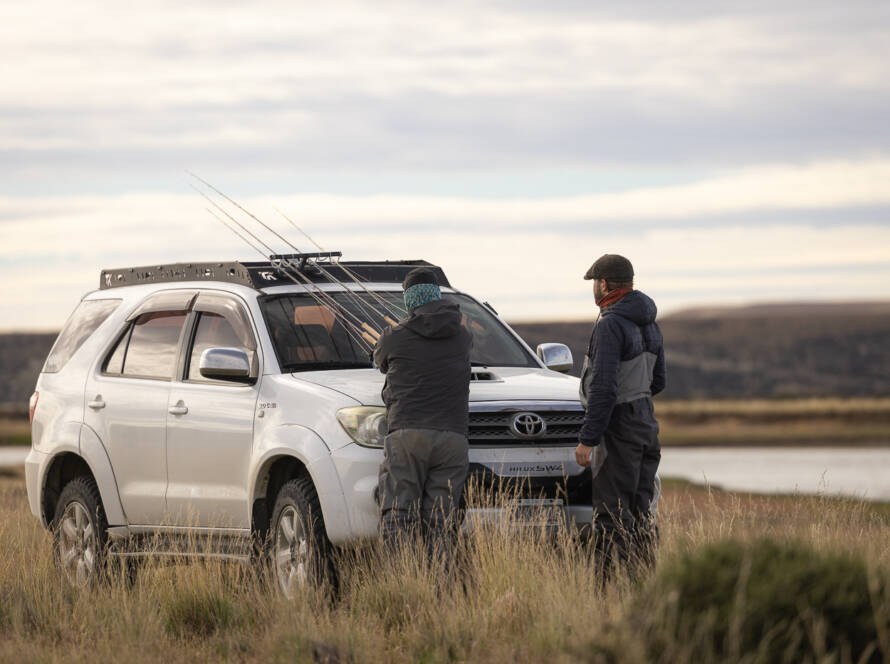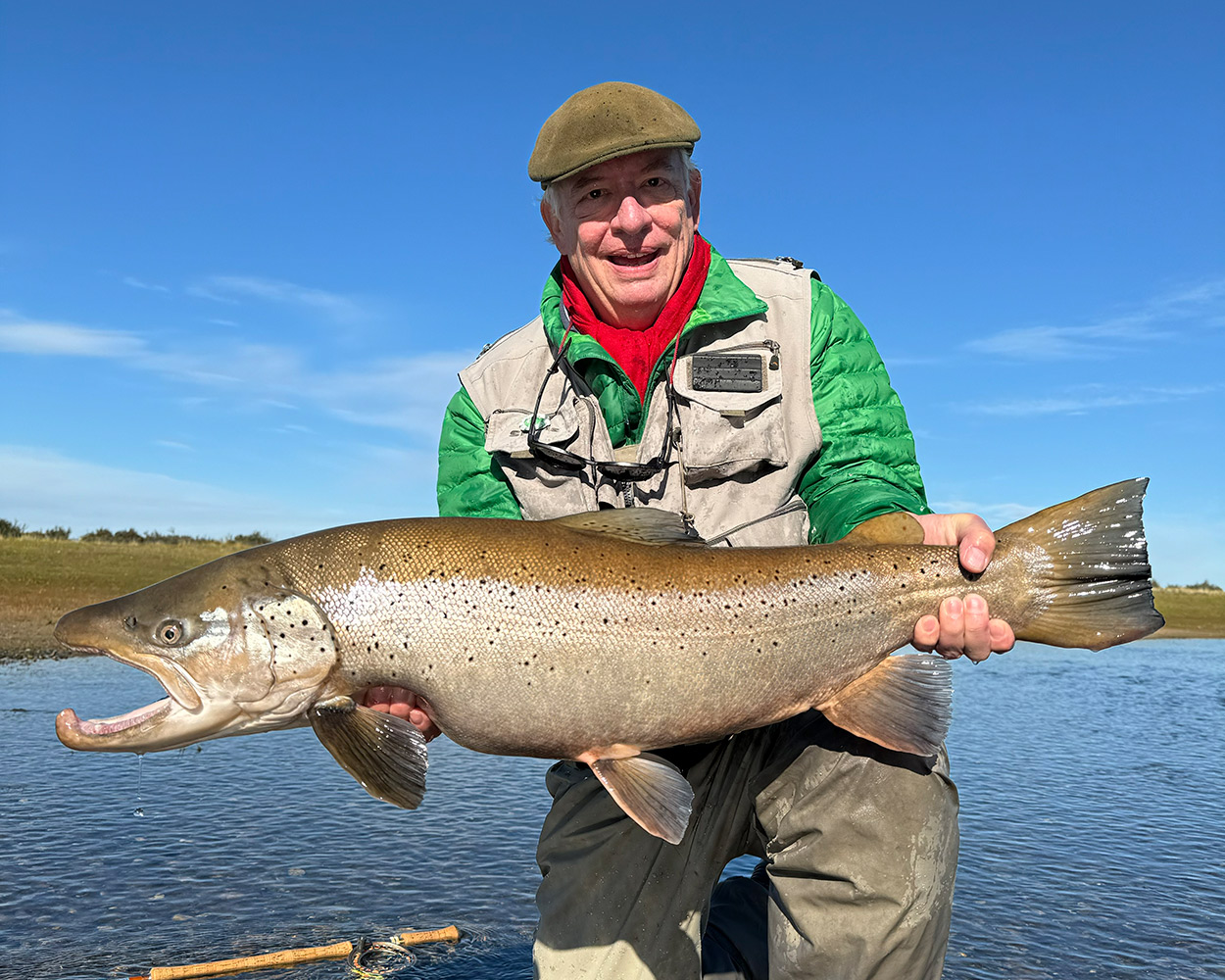
A Patagonia fly fishing trip does not have to work only for the person carrying the rod.
Many international anglers travel with a partner, spouse, friend, or family member who enjoys nature and travel but has little interest in spending six days fishing. The challenge is designing the trip so the angler can fully experience the river while the non-angler still feels that traveling to southern Patagonia was worthwhile.
The solution is usually not trying to make a fishing lodge behave like a resort.
A better approach is to build the journey in layers: protect the fishing week, add shared experiences before or after it, and choose activities that make geographic sense around Río Gallegos and southern Patagonia.
Start by accepting that the fishing week has a clear purpose
If the primary reason for traveling is sea-run brown trout on the Río Gallegos, the fishing portion of the itinerary should remain focused.
That means the angler may spend long days on the river, leaving limited time for sightseeing during the fishing week itself.
For a non-angler, that reality should be clear before booking.
The Río Gallegos region is remote. It is not a destination where a partner can expect an endless schedule of shops, restaurants, spas, and organized excursions immediately outside a fishing lodge.
Its appeal is different:
- open landscapes
- wildlife
- silence
- photography
- local culture
- the Patagonian steppe
- the Atlantic environment around Río Gallegos
For some non-anglers, that sounds perfect.
Others may prefer to join only part of the fishing itinerary and spend more time exploring elsewhere.
Both options can work.
Build shared travel days around the fishing
One of the simplest ways to make the trip enjoyable for everyone is to separate the fishing week from the shared travel experience.
For example:
Option 1: Fishing first, sightseeing after
Spend the fishing week on the Río Gallegos, then add several days together in southern Patagonia.
This works especially well because the angler can focus completely on the river without feeling that a partner is waiting for the fishing to finish.
Option 2: Explore first, fish second
Visit a nearby destination together before the lodge week.
The shared portion of the vacation happens first, and the fishing becomes the second chapter.
Option 3: A short local extension
If time is limited, add only one or two days around Río Gallegos.
This can provide enough variety without creating another complicated travel itinerary.
The best structure depends on how many total days are available.
Río Gallegos offers useful options for non-anglers
A traveler does not need to cross Patagonia to find something different from fishing.
Around Río Gallegos, possible interests include:
- the waterfront and estuary
- birdwatching
- wildlife photography
- regional history
- estancia culture
- coastal landscapes
- nearby natural areas
The estuary is particularly interesting because it shows another side of the same river system the angler has traveled to fish.
Farther from the city, places such as Laguna Azul and Cabo Vírgenes can add volcanic scenery, wildlife, Atlantic coastline, and a stronger sense of the geography of southern Santa Cruz.
These experiences are especially useful for someone who enjoys nature but does not want to fish.
Do not promise a daily activity program that does not exist
This is important when planning a couple’s trip.
A remote fishing lodge should be evaluated honestly.
Before booking, ask:
- Is the non-fishing guest comfortable spending quiet time at the lodge?
- Is independent transportation available?
- Are nearby excursions practical during the fishing week?
- Does the guest enjoy photography, reading, walking, wildlife, or remote landscapes?
- Would it make more sense to spend fewer nights at the fishing lodge?
There is nothing wrong with deciding that a non-angler should not spend the entire fishing week at the lodge.
Sometimes the better trip is for the couple to share the travel before and after the fishing while the angler experiences the river independently.
The goal is not to force everyone into the same schedule.
It is to create a trip that works for both people.
El Calafate can become the larger shared extension
For couples who want a stronger tourism component, El Calafate is one of the most logical additions to a Río Gallegos fishing trip.
It should be treated as a separate destination rather than a quick excursion.
The major attraction is the glacier environment associated with Los Glaciares National Park, including the famous Perito Moreno Glacier.
For a non-angler, this changes the trip completely.
The vacation becomes:
sea-run brown trout + glaciers + southern Patagonia travel
rather than simply one week centered around fishing.
This is particularly useful when one traveler is passionate about fly fishing and the other is more interested in landscapes, photography, nature, or general travel.
El Chaltén works when hiking is a major priority
If both travelers enjoy hiking, additional time can be added beyond El Calafate toward El Chaltén.
This makes more sense on a longer itinerary.
The attraction here is not fishing but trekking and the mountain landscapes around the Fitz Roy area.
A couple could therefore create three clearly different stages:
Río Gallegos
Fishing and Patagonian steppe.
El Calafate
Glaciers and tourism.
El Chaltén
Hiking and mountain scenery.
That produces a much broader Patagonia experience without sending the travelers toward Patagonia Norte.
Think about what the non-angler actually enjoys
“Non-angler” is not a travel preference.
It simply tells you what that person does not want to do.
The more useful questions are:
Does the person enjoy hiking?
Wildlife?
Photography?
Food?
History?
Remote landscapes?
Relaxing in quiet environments?
Road trips?
Birdwatching?
Luxury travel?
The answers should shape the itinerary.
Someone interested in wildlife may enjoy Cabo Vírgenes and the Río Gallegos estuary.
A serious hiker may value El Chaltén far more.
Someone primarily interested in iconic landscapes may prefer El Calafate.
Another traveler may simply enjoy staying at a quiet lodge, reading, walking, and sharing dinner at the end of each fishing day.
There is no universal non-angling itinerary.
How much extra time should you add?
For most couples, three basic structures make sense.
7–9 days
Keep the trip concentrated around Río Gallegos.
Add one or two local days before or after the fishing week.
10–12 days
Combine the fishing week with El Calafate.
This gives the trip a substantial shared tourism component without becoming overly complicated.
13–15 days
Add El Calafate and potentially El Chaltén or another southern Patagonia extension.
At this length, the journey becomes a broader Patagonia vacation with fly fishing as one important component.
The mistake is trying to fit all three formats into a short trip.
Patagonia rewards time.
What couples should discuss before booking
Before committing to the trip, answer a few practical questions together:
- How many days will be devoted exclusively to fishing?
- Does the non-angler want to stay at the lodge?
- How much independent activity is realistic during those days?
- Which shared experience matters most after fishing?
- How much additional driving or flying are both travelers comfortable with?
- Is the priority relaxation, hiking, wildlife, glaciers, or sightseeing?
Making those decisions early prevents the fishing from feeling like it dominates someone else’s vacation.
Where Karku fits
Karku is primarily a fly fishing experience centered on the Río Gallegos.
For couples or groups with mixed interests, the most useful approach is to discuss the complete itinerary rather than assuming everyone must follow the same schedule.
A fishing week at Karku can remain focused on sea-run brown trout while additional days around Río Gallegos, El Calafate, or other southern Patagonia destinations create the shared travel component.
That separation often produces a better experience for everyone.
Final thoughts
A successful Patagonia trip for anglers and non-anglers does not require both travelers to enjoy the same activities.
It requires a good itinerary.
Protect the fishing week.
Be realistic about what a remote lodge can provide to a non-angler.
Use Río Gallegos and its surroundings for shorter additions.
Add El Calafate or El Chaltén when there is enough time for a genuine second destination.
Most importantly, build the trip around the interests of both travelers rather than trying to turn every day into a compromise.
For couples or groups considering a sea-run brown trout week on the Río Gallegos, contact Karku Fly Fishing Lodge to discuss fishing dates and how the trip can fit into a broader southern Patagonia itinerary.