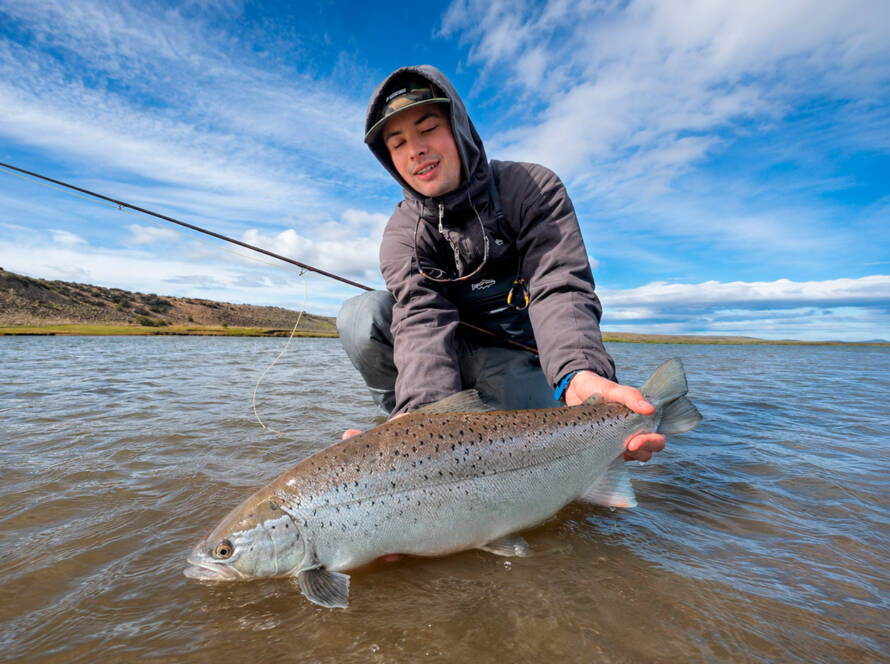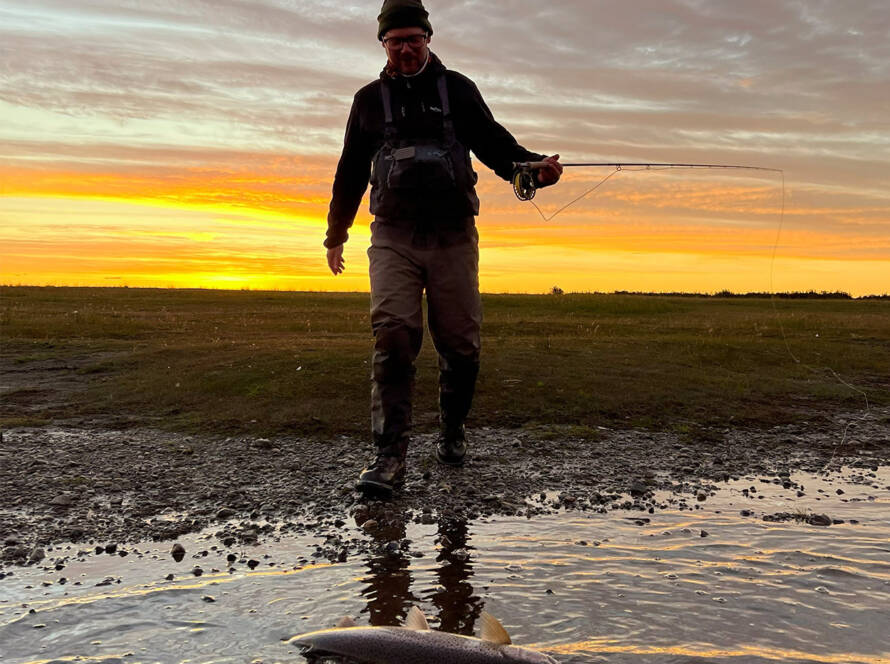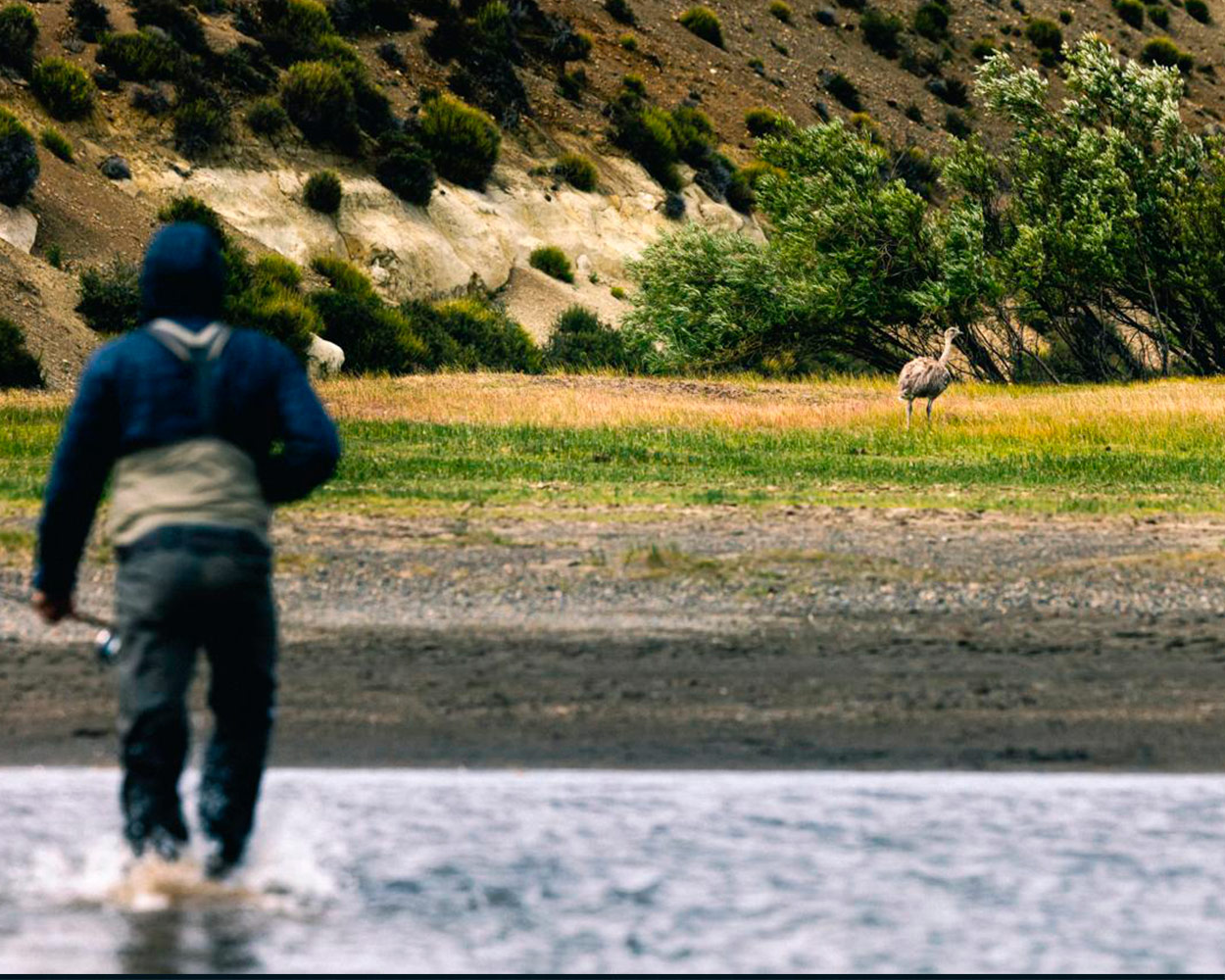
A week of sea-run brown trout fishing on the Río Gallegos may be the main reason for traveling to southern Patagonia, but it does not have to be the only experience.
For international anglers, adding one or two days before or after the fishing week can make the journey feel more complete without turning it into a complicated multi-region itinerary.
The key is staying geographically realistic.
Patagonia is enormous. Attractions that look relatively close on a map can require many hours of travel. For anglers fishing the Río Gallegos, the most practical additions are those around the city, the southern Santa Cruz coast, and nearby landscapes such as Laguna Azul and Cabo Vírgenes.
Here are some of the best options.
Explore the Río Gallegos waterfront and estuary
The Río Gallegos estuary is one of the easiest places to explore before or after a fishing week.
The city sits beside a large tidal environment where the river meets the Atlantic, creating a landscape very different from the inland pools anglers fish farther upstream.
A walk along the waterfront offers an opportunity to slow down after traveling and understand another part of the same river system.
Depending on the time of year, the estuary can also be interesting for birdwatching. Southern Patagonia is an important area for resident and migratory birds, and the mudflats, shoreline, and wetlands around Río Gallegos provide feeding habitat for numerous species.
This makes the estuary particularly useful for anglers traveling with partners who are interested in wildlife or photography.
Visit Laguna Azul
Laguna Azul is one of the most accessible natural excursions from Río Gallegos.
The lake occupies an old volcanic crater surrounded by open Patagonian landscape, creating a dramatic contrast with the steppe and river country associated with the fishing week.
It works well as a half-day or relaxed day trip.
Visitors can walk around the area, photograph the volcanic terrain, and experience a landscape that feels very different from the Río Gallegos despite being relatively close to the city.
For travelers who only have one additional day, Laguna Azul can be a much more practical choice than trying to reach one of Patagonia’s distant mountain destinations.
Cabo Vírgenes: reach the edge of the continent
Cabo Vírgenes is one of the most interesting excursions in the Río Gallegos region.
Located on the Atlantic coast southeast of the city, it combines wildlife, history, and the feeling of reaching an unusually remote corner of Patagonia.
The area is known for its Magellanic penguin colony during the appropriate season, as well as its lighthouse and wide coastal landscapes.
It also marks the traditional starting point of Argentina’s famous Ruta 40.
For anglers who have spent the previous week focused on river pools, wind direction, flies, and sea-run brown trout, Cabo Vírgenes provides a completely different perspective on southern Patagonia.
The Atlantic becomes part of the story.
That is particularly appropriate after fishing the Río Gallegos, since the sea is also part of the life cycle of the fish anglers have traveled to pursue.
Discover the landscapes around Punta Loyola
Punta Loyola lies near the mouth of the Río Gallegos and offers another view of the region’s relationship with the Atlantic.
The surrounding landscape is broad, exposed, and distinctly southern Patagonian.
It is not a conventional tourism destination filled with attractions. Its value comes from geography.
For travelers interested in photography, coastal landscapes, industrial history, or simply understanding where the Río Gallegos eventually reaches the ocean, the area can provide an interesting short excursion.
It also helps put the fishing into geographic context.
Upstream, anglers encounter the river as freshwater trout habitat.
Here, it becomes part of a much larger coastal system.
Look for Patagonia wildlife beyond the river
Fishing days naturally keep attention focused on the water.
Extra time allows visitors to pay more attention to the animals living across the surrounding steppe and coast.
Possible sightings in southern Santa Cruz can include:
- guanacos
- rheas
- foxes
- flamingos
- waterfowl
- shorebirds
- birds of prey
- Magellanic penguins in coastal areas during their seasonal presence
Wildlife encounters are never guaranteed, but even the drive between destinations can become part of the experience.
This is one reason exploring close to Río Gallegos can be more rewarding than immediately flying somewhere else.
The landscape that surrounds the fishery has its own character.
Experience estancia country
The history of southern Santa Cruz is closely connected to estancias, sheep farming, wool production, and the settlement of the Patagonian steppe.
For international visitors, spending time around an estancia can help explain the enormous ranch landscapes they see while traveling to and from the river.
Depending on availability, experiences may include traditional meals, rural history, livestock operations, local architecture, and a closer look at life in an environment shaped by distance and weather.
This can be especially worthwhile for non-fishing companions who want a cultural experience rather than another outdoor activity.
Spend time in Río Gallegos itself
Río Gallegos is often treated only as the airport gateway to the fishing.
That misses part of the experience.
A free afternoon can be used to explore the city center, waterfront, cafés, regional history, or museums before continuing the journey.
For international anglers, it is also a useful opportunity to reorganize luggage, recover after long flights, purchase anything forgotten, or simply enjoy a slower day before several intensive fishing sessions.
Not every extra day needs to become another expedition.
Sometimes the best addition to a demanding fishing trip is simply having enough time not to rush.
How many extra days should you add?
For activities around Río Gallegos itself, one or two additional days can already add meaningful variety.
A simple structure might be:
One extra day
Choose one:
- Río Gallegos waterfront and estuary
- Laguna Azul
- a local wildlife or estancia experience
Two extra days
Combine:
- one nearby excursion
- one longer coastal day toward Cabo Vírgenes
This keeps the itinerary compact and minimizes additional travel.
Destinations such as El Calafate, El Chaltén, or Torres del Paine can certainly be combined with a Río Gallegos trip, but they should be treated as separate extensions rather than nearby activities.
What about a non-fishing companion?
These nearby experiences also make a Río Gallegos fishing trip easier to integrate into a couple’s vacation.
A partner who does not fish may be interested in:
- birdwatching
- photography
- wildlife
- regional history
- coastal scenery
- estancia culture
However, it is important to set realistic expectations.
The Río Gallegos region is remote and sparsely populated. It is not a resort destination with dozens of organized activities available every day.
Its appeal is precisely the opposite: open landscapes, wildlife, distance, and a strong sense of southern Patagonia.
For couples wanting a broader tourism component, a few days in Río Gallegos can then be combined with El Calafate, El Chaltén, or southern Chile after the fishing week.
Keep the itinerary geographically sensible
One of the easiest mistakes when planning Patagonia is trying to include too much.
Distances are large.
A destination that appears to be in the same general region may require an entire travel day.
For anglers coming primarily to fish the Río Gallegos, the most efficient strategy is:
Fish first. Explore locally. Add a larger extension only when there is enough time to enjoy it properly.
That approach protects the fishing week while still allowing the traveler to experience more of southern Patagonia.
Final thoughts
The Río Gallegos is more than a route between an airport and a fishing lodge.
The surrounding region offers volcanic landscapes, Atlantic coastline, wildlife, estancias, birdlife, and a deeper look at the environment that shapes southern Patagonia.
Laguna Azul can fit into a relatively short excursion.
Cabo Vírgenes deserves a full day.
The estuary and waterfront can be explored without building another major travel segment into the itinerary.
And for anglers with more time, these nearby experiences can become the beginning of a longer journey toward El Calafate, El Chaltén, or Torres del Paine.
For guests planning a sea-run brown trout week with Karku Fly Fishing Lodge, adding a small amount of time around Río Gallegos can make the trip richer without making it unnecessarily complicated.
Contact Karku to discuss your fishing dates and how additional days in southern Patagonia could fit naturally before or after your week on the river.