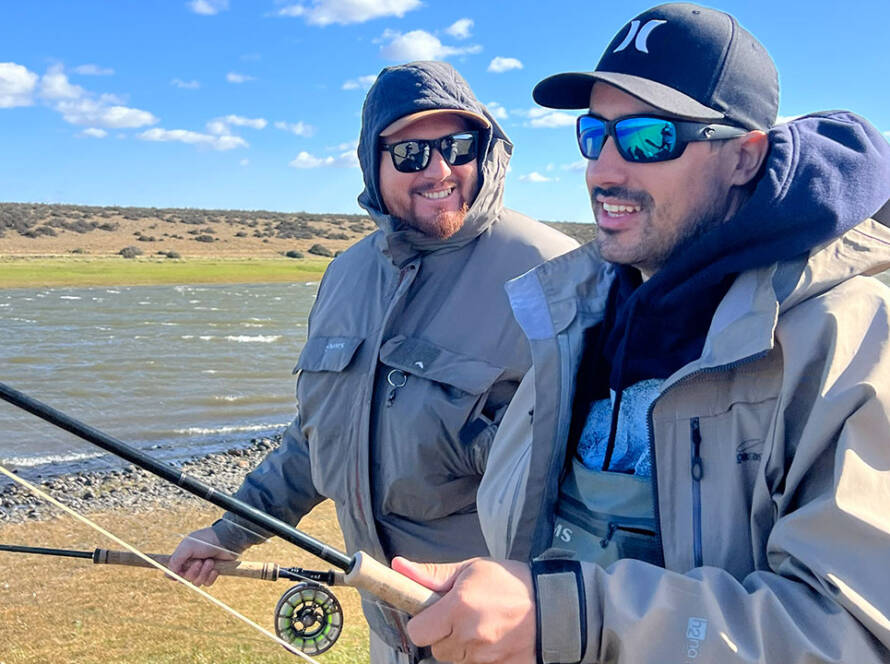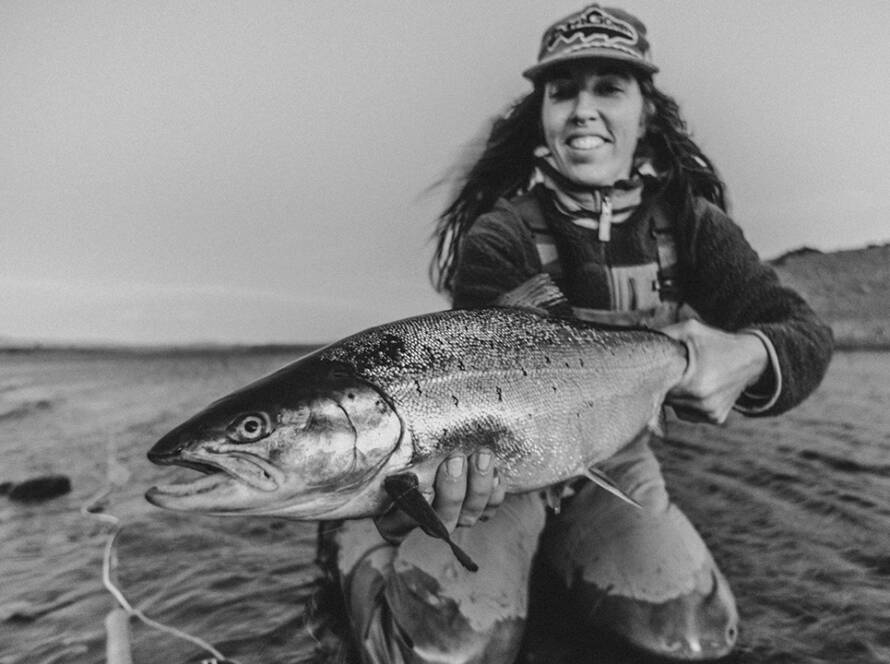
There’s a moment when every angler begins to dream of Patagonia.
Maybe it’s after hearing the stories — about endless rivers, the wind that never stops, and trout so powerful they seem carved from the landscape itself.
Or maybe it’s because Patagonia feels like one of the last truly wild places on Earth — a destination that humbles you, inspires you, and rewards those willing to travel to the edge of the world in pursuit of something unforgettable.
Planning a fly fishing trip to Patagonia is more than organizing an adventure — it’s preparing for an encounter with nature at its purest. And whether your goal is to catch a sea-run brown trout in the Río Gallegos or simply to stand alone under its vast skies, the journey begins long before you tie your first fly.
1. Understanding Patagonia
Patagonia is not a single place — it’s a state of mind.
Stretching across southern Argentina and Chile, it’s a region of contrasts: turquoise lakes surrounded by snowy peaks, golden grasslands that seem to go on forever, and rivers that hold stories older than memory.
For anglers, Patagonia offers something unique: space.
Rivers so wide you can wade for hours without seeing another person. Wind that tests your patience and your casting technique in equal measure. Fish that are wild, strong, and free.
The diversity is astonishing. In northern Patagonia, you’ll find clear, freestone rivers perfect for dry-fly fishing. Farther south, near Río Gallegos, the focus shifts to sea-run brown trout — powerful fish that migrate from the Atlantic into freshwater, creating some of the most thrilling fly fishing on the planet.
2. When to Go
The Patagonian fly fishing season runs from November to April, covering the region’s summer and early autumn. But not all months are created equal.
- Early Season (Nov–Dec): Rivers are full and energetic. The scenery is vibrant, and the first sea-run trout arrive from the ocean. Perfect for those who want to experience Patagonia at its most alive.
- Mid Season (Jan–Feb): Days are long, weather is mild, and trout are active. Nymphs perform beautifully.
- Late Season (Mar–Apr): The magic months. Larger fish move upriver, the wind softens, and the golden tones of autumn turn the steppe into a painting.
If you want consistent fishing and ideal light for photography, aim for January through March.
3. Choosing the right river
Patagonia is vast — and not all rivers are equal when it comes to fly fishing.
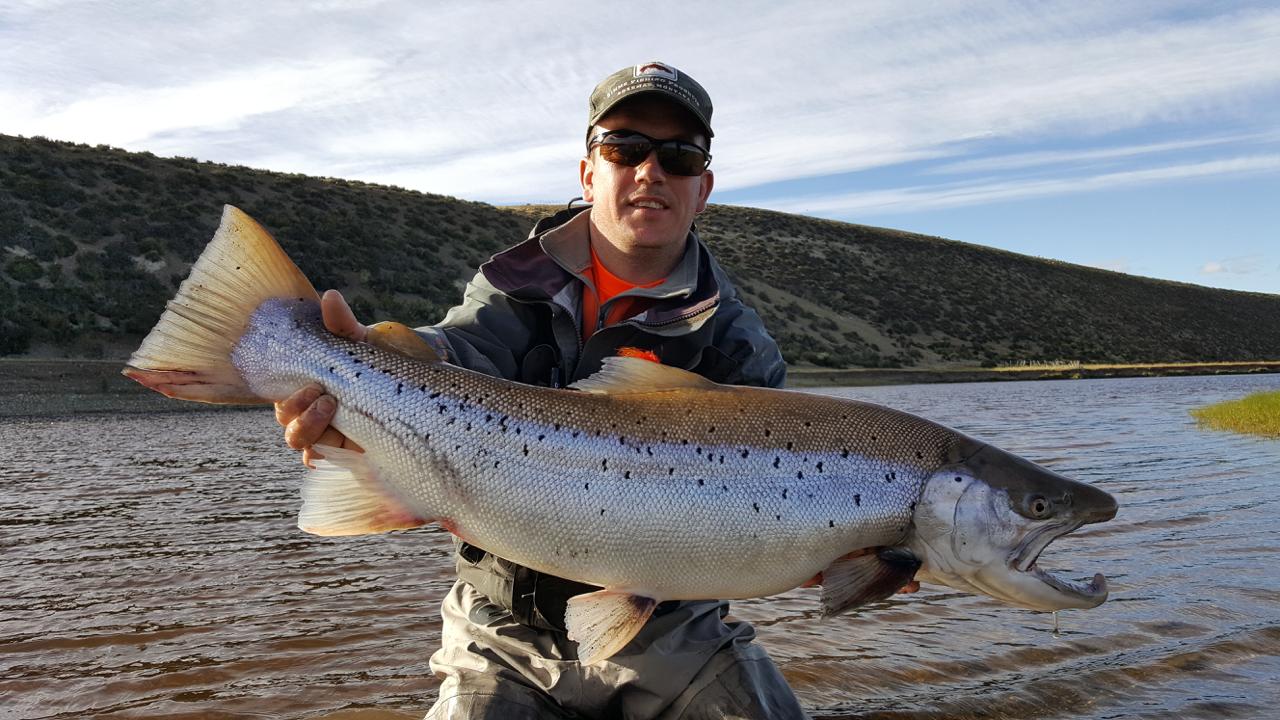
Some are small, spring-fed creeks filled with resident trout; others, like the Río Gallegos, are massive, slow-moving waters known for sea-run browns that can exceed 20 pounds.
Here are a few of the region’s iconic rivers:
- Río Gallegos (Argentina): World-famous for sea-run brown trout. Gentle gradient, technical fishing, private estancias, and deep pools.
- Río Grande (Tierra del Fuego): The legend — home of record-breaking sea-run browns and harsh, beautiful conditions.
- Limay and Malleo (Northern Patagonia): Clear freestone rivers surrounded by mountains, ideal for dry-fly fishing and floating.
- Futaleufú (Chile): Emerald waters, rainforest backdrop, and aggressive rainbow trout.
If your dream is to chase the chrome-bright trout of the South Atlantic, there’s no better river than Río Gallegos.
Its wide meanders, undercut banks, and endless pools are a challenge and a joy — every cast feels like a conversation with the wild.
4. Gearing up for Patagonia
The right gear can make the difference between frustration and fulfillment. Patagonia’s conditions can change within minutes — strong winds, cold mornings, bright afternoons — so adaptability is key.
Rod & Reel:
- 7- or 8-weight rods for sea-run browns (a two-handed Spey rod is a great advantage).
- Large-arbor reel with smooth drag and backing for long runs.
Lines:
- Weight-forward (single hand) floating line for general use.
- Sink-tip floating belly with intermediate lines for deep, windy pools.
Flies:
- Streamers: Woolly Bugger, Zonker, Egg-Sucking Leech.
- Nymphs: Prince, Hare’s Ear, Copper John.
- Classics for Río Gallegos: Sunray Shadow, EMB, Girdle Bug.
Clothing:
- Layering is essential — thermal base, fleece mid-layer, windproof shell.
- Waders with sturdy boots (felt soles are banned in some areas).
- Polarized sunglasses, buff, and waterproof gloves.
Pro tip from Karku’s guides:
“The wind is your teacher here. Don’t fight it — learn to cast with it.”
5. Where to stay
One of the best parts of a Patagonian fishing trip is where you rest between days on the water.
You can find everything from luxury lodges to rustic cabins, but the most memorable experiences come from places that connect you to the river and its people.
Karku Fly Fishing Lodge, on the banks of the Río Gallegos, embodies that spirit.
It’s small, family-run, and sustainably powered by solar energy. Instead of crowds, you’ll find quiet mornings, genuine hospitality, and access to over 40 kilometers of water with 40 named pools.
At Karku, it’s not about luxury — it’s about belonging.
After a long day, you return to a warm meal, local wine, and stories shared around the fire.
It’s that blend of adventure and intimacy that makes anglers come back year after year.
6. Travel and Logistics
Getting to Patagonia requires some planning, but it’s surprisingly straightforward:
- International flight: Fly into Buenos Aires (Ezeiza Airport).
- Domestic connection: Then take a 3-hour flight to Río Gallegos (RGL).
- Transfers: From there, Karku Fly Fishing Lodge provides private ground transportation to the property.
Documents:
- Passport valid for 6+ months.
- Printed booking confirmation and travel insurance recommended.
Money:
- Credit cards are accepted in most major towns, but bring some cash for tips and incidentals.
Connectivity:
- Wi-Fi is available in most lodges, but don’t expect city speeds — Patagonia invites you to disconnect.
7. Understanding the Weather
Patagonian weather has a personality of its own.
You might wake up to still air, then face 40 km/h winds by afternoon, only to enjoy a glowing sunset that makes you forget everything else.
Be prepared for:
- Wind: Constant companion — plan your casts accordingly.
- Temperature: 10–25°C (50–77°F) during the day, cooler at night.
- Sun: Strong UV — wear sunscreen and polarized lenses.
Every challenge the weather brings also adds to the sense of accomplishment.
There’s a reason why anglers who’ve fished Patagonia wear it like a badge of hono
8. Culture and connection
Fly fishing in Patagonia isn’t just about technique — it’s about people.
The local guides aren’t just professionals; they’re storytellers, ranchers, and guardians of a way of life deeply tied to the river.
At Karku, for instance, guides are born and raised in the region. They know every bend of the Río Gallegos, but they also know its moods — when to switch flies, when to rest the pool.
Sharing a maté (traditional Argentine tea) by the riverbank is as much a part of the experience as landing a fish.
It’s what turns a trip into a memory.
9. Conservation and responsability
The beauty of Patagonia depends on respect.
Most lodges, including Karku, follow catch-and-release practices and encourage simple hooks to minimize harm.
Sustainable tourism isn’t just a concept here — it’s a necessity.
Karku’s use of renewable energy and its commitment to low-impact operations ensure that the Río Gallegos will continue to flow wild and clean for future generations of anglers.
“We don’t own the river,” says one of the local guides. “We borrow it — for a few precious days.”
10. A place That Stays With You
When you finally stand in the water, feeling the wind on your face and the weight of your line cutting through the air, you’ll understand why anglers speak of Patagonia in reverent tones.
It’s not about the number of fish you catch. It’s about what you find in yourself — patience, humility, wonder.
The landscape doesn’t change for you; it changes you.
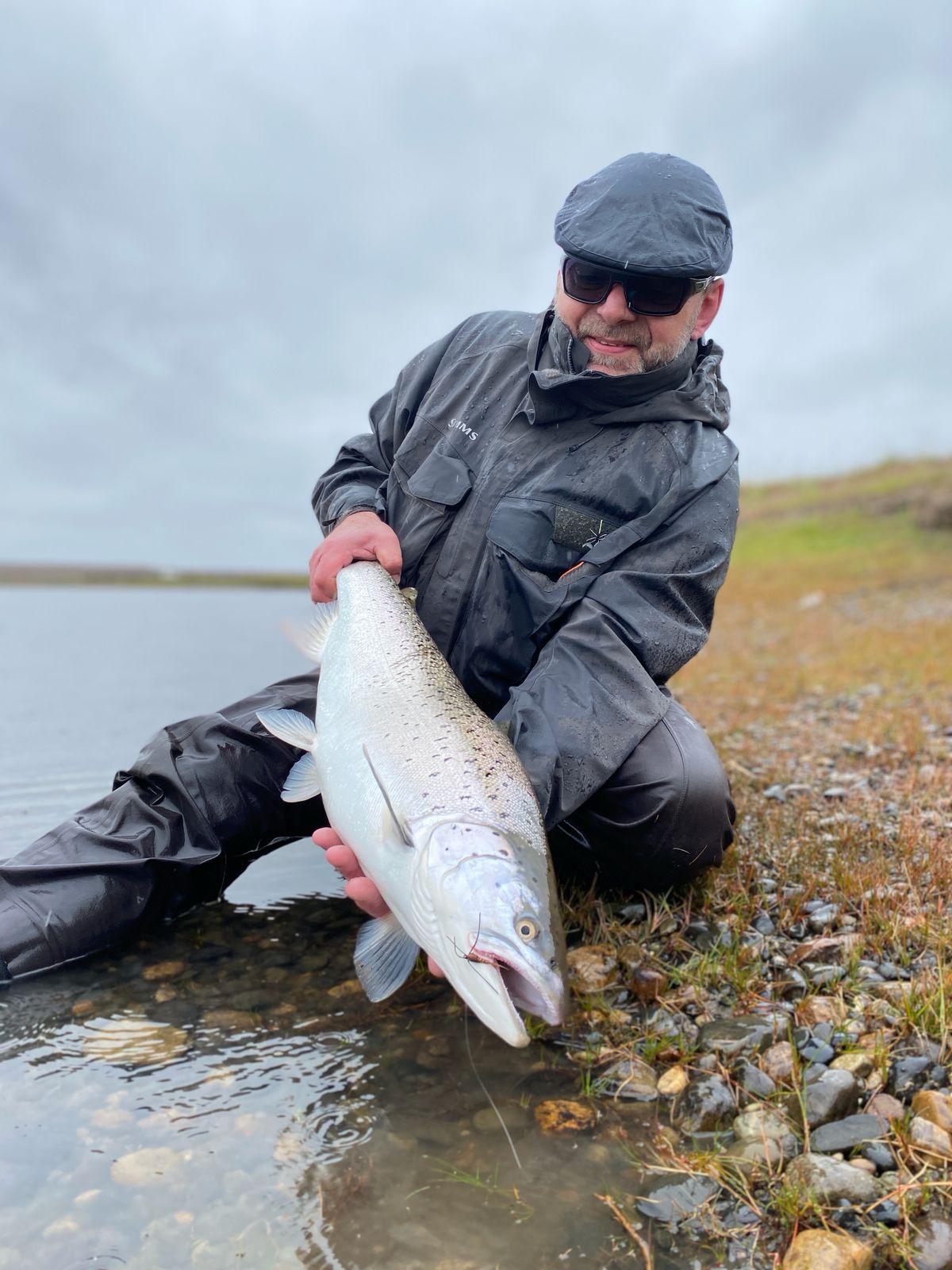
And when you release your first sea-run brown trout and watch it disappear into the stream, you realize that Patagonia has given you something you can’t measure or replace.
Why Karku Belongs on Your Map
There are many great lodges across Patagonia — but few that feel like home.
Karku Fly Fishing Lodge offers something authentic:
- Intimate groups and personalized guiding.
- Genuine connection with local culture.
- Private access to the heart of the Río Gallegos.
- Sustainability that doesn’t compromise comfort.
It’s not the biggest or the most luxurious — and that’s precisely why it feels so real.
For those seeking an honest, soulful experience of Patagonia, Karku isn’t just a choice; it’s a memory waiting to happen.
Its time for your adventure
If Patagonia has been on your mind, don’t wait.
Start planning your fly fishing trip now — pack your flies, clear your calendar, and prepare for one of the most meaningful adventures of your life.
Discover Karku Fly Fishing Lodge, where the river meets the sky,
and let Patagonia show you what fishing — and life — can truly be.