Patagonia fly fishing trips cover a surprisingly wide price range.
A guided lodge stay of roughly a week can start around USD 5,000–7,000 per angler, move into the USD 8,000–10,500 range at many established full-service operations, and reach USD 13,000–15,000 at some of Argentina’s best-known premium sea-trout lodges.
Those differences are real. Current published rates include fishing-focused programs below USD 7,000, Jurassic Lake at about USD 8,000 for a full week, established northern Patagonia lodges around USD 10,000, and premium Río Grande operations approaching USD 15,000 during sought-after weeks. Isolation Outfitters
So why can two Patagonia fishing trips differ by thousands of dollars?
Because you are rarely paying for the same experience.
The price is about much more than the room
A Patagonia fishing lodge package normally combines several things:
- accommodation
- professional guiding
- fishing access
- meals
- transportation during the week
- regional transfers
- lodge staff and logistics
In some operations, the package may also include licenses, drinks, laundry, flies, or loaner equipment.
This is why comparing two lodges only by their weekly rate can be misleading.
One may include almost everything once you arrive. Another may have a lower starting price but leave several items outside the package.
Before comparing prices, compare what each price actually buys.
Fishing access can be one of the biggest differences
For serious anglers, the water may be more important than the building.
Some Patagonia operations fish public or broadly accessible rivers. Others control access to estancia water, private beats, or sections that accommodate only a limited number of rods.
That can change the economics of the trip considerably.
Ask:
- How much water does the lodge have access to?
- Is it private, controlled, or shared?
- How many anglers fish it each week?
- Are guests rotating between different beats?
- How much fishing pressure does the water receive?
Limited access to productive water can be far more valuable to an angler than marble bathrooms or an elaborate lounge.
Guide ratio also changes the cost
Many Patagonia lodges operate with two anglers per guide.
Others offer private guiding, either as standard or as an upgrade.
A lodge supporting a small number of anglers with an experienced guide team has a very different operating structure from one capable of hosting larger groups.
When comparing packages, check whether the rate is based on:
- two anglers sharing a guide
- private guiding
- shared boats
- single or double occupancy
These details can explain a substantial part of the difference between two prices that initially seem difficult to compare.
Some lodges sell luxury. Others sell a more fishing-first experience
Patagonia has both.
At one end are highly polished properties with large rooms, sophisticated wine programs, extensive staff, premium cuisine, spa facilities, and high-end hospitality.
At the other are smaller operations where the lodge is comfortable and well run, but the emphasis remains much more strongly on fishing.
Neither approach is inherently better.
An angler who wants the lodge itself to be an important part of the vacation may happily pay more for that level of hospitality.
Someone who expects to spend most of the daylight hours on the river may prefer to invest in good water, guiding, and a smaller operation rather than amenities they will barely use.
The important question is:
Where do you want the value of your trip to be concentrated?
Location and logistics matter
Running a lodge in Patagonia can be expensive.
Food, fuel, equipment, staff, vehicles, repairs, and supplies may all need to travel considerable distances.
Some fisheries are relatively easy to reach from a regional airport. Others require long road transfers, specialized vehicles, or additional flights.
The more remote the operation, the more complex it may be to maintain a consistent standard.
Part of a lodge rate therefore reflects logistics that the guest may never see.
The species and destination can influence the market
A week fishing resident trout in northern Patagonia and a prime sea-run brown trout week in Tierra del Fuego are different products.
Demand, season length, availability of rods, fishing access, and international reputation all affect price.
This is especially visible on the Río Grande, where some premium 2026 sea-trout programs are published at approximately USD 13,000–15,000 per angler for seven nights and six fishing days. Other established Patagonia trout programs sit closer to USD 7,000–10,500. Angler Adventures
That does not mean a USD 15,000 lodge is automatically twice as good as a USD 7,500 lodge.
It means the two trips may be selling very different combinations of water, exclusivity, hospitality, demand, and service.
What should you look at besides price?
Before choosing a Patagonia lodge, compare:
Fishing access
What water will you actually fish?
Guide ratio
How many anglers share each guide?
Number of fishing days
A seven-night stay does not always mean seven full fishing days.
Accommodation
Private or shared room? Simple, premium, or luxury?
Meals and beverages
What is included?
Transfers
From which airport or meeting point?
Licenses and equipment
Included or separate?
Group size
How many anglers will be at the lodge?
Season and dates
Does the rate change during prime weeks?
Only after comparing those points does the headline price become meaningful.
A smaller lodge can offer a different kind of value
Not every angler is looking for a large luxury operation.
Some prefer fewer guests, direct communication, a more personal relationship with the team, and a trip where the fishing remains at the center of the experience.
That is where smaller lodge models can be attractive.
The value is not necessarily about being the cheapest option.
It may come from:
- more personal attention
- a quieter atmosphere
- simpler communication
- flexibility
- fishing-focused priorities
- fewer layers between the guest and the people organizing the trip
For some anglers, that is more important than adding another level of luxury.
Where Karku fits
Karku is built around a small-scale fishing experience on the Río Gallegos.
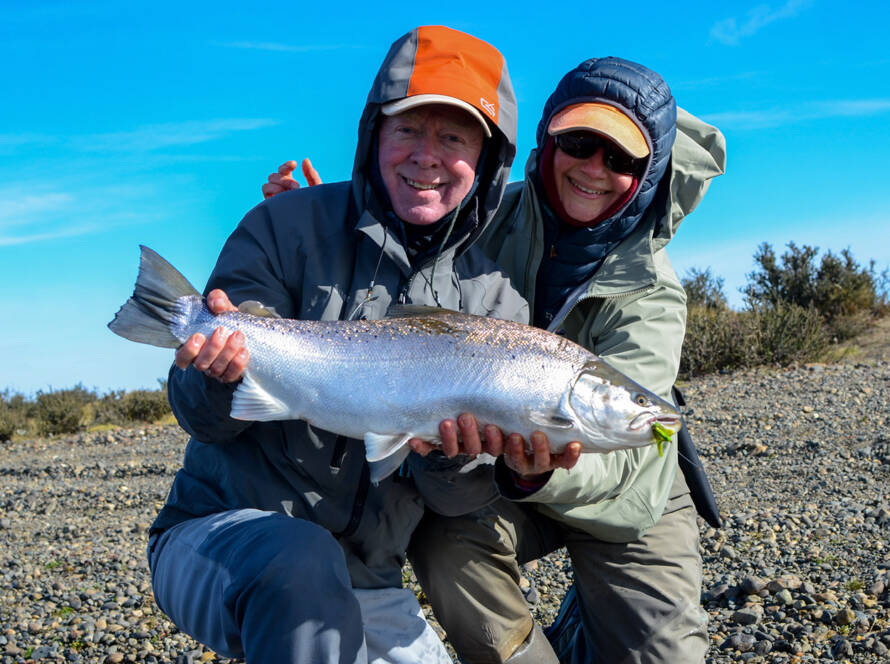
The focus is on sea-run brown trout, local knowledge, direct communication, and a more personal lodge environment rather than trying to compete through luxury for its own sake.
Because rates can vary according to dates, availability, group configuration, and the trip being planned, Karku provides current pricing directly to anglers who inquire.
That also makes it possible to discuss the trip itself before reducing the decision to a number.
Final thoughts
The cost of a Patagonia fly fishing lodge can range widely because the experiences themselves vary widely.
Around USD 5,000–7,000 can open the door to some smaller or fishing-focused lodge programs. The USD 8,000–10,500 range includes many established full-service Patagonia operations. At the upper end, highly sought-after sea-trout lodges can approach USD 15,000 for a week.
The useful question is therefore not simply:
“Which lodge is cheaper?”
It is:
“What am I getting for the money, and which parts of the experience matter most to me?”
For anglers considering sea-run brown trout on the Río Gallegos, contact Karku Fly Fishing Lodge for current availability, package details, and rates based on your dates and group.