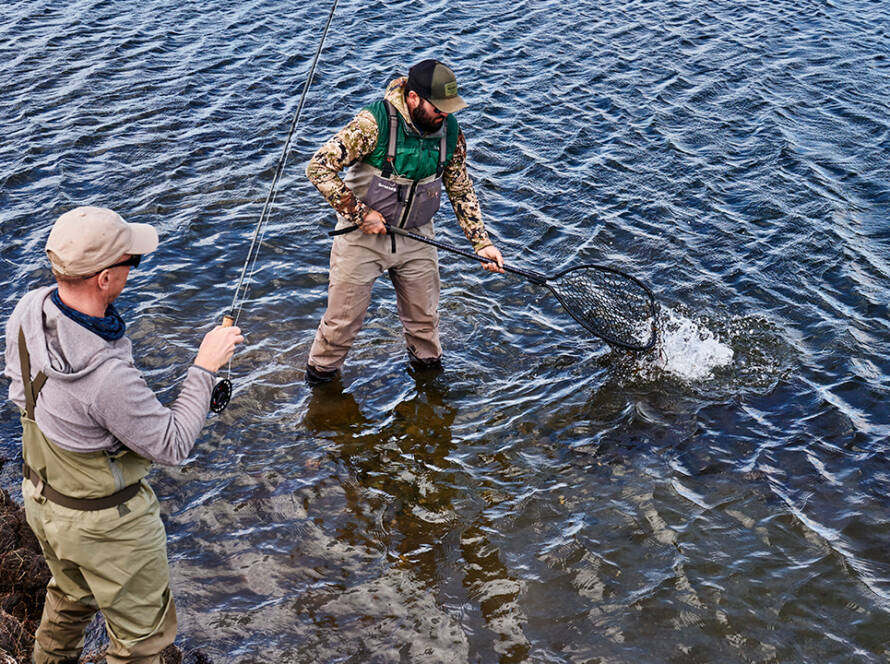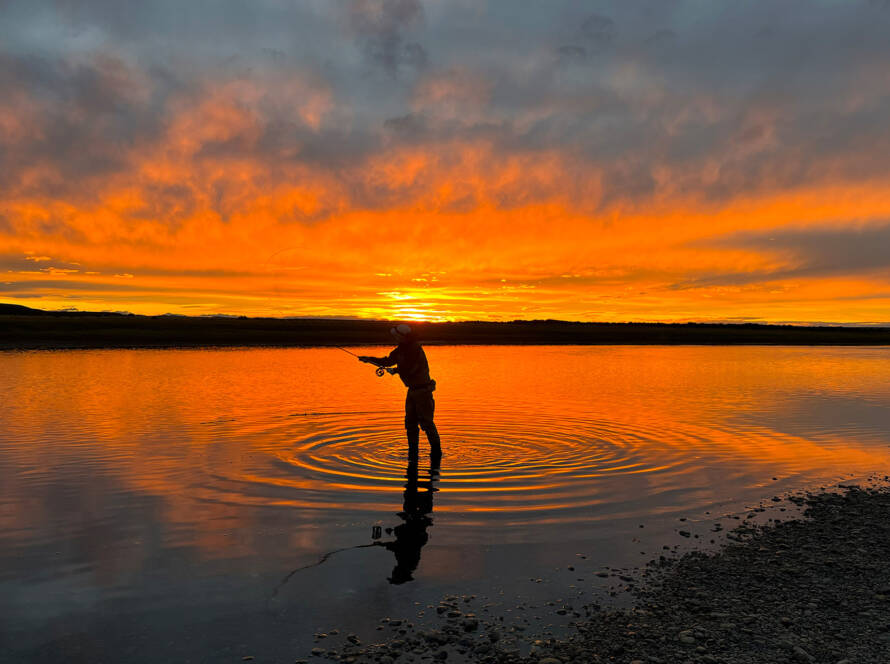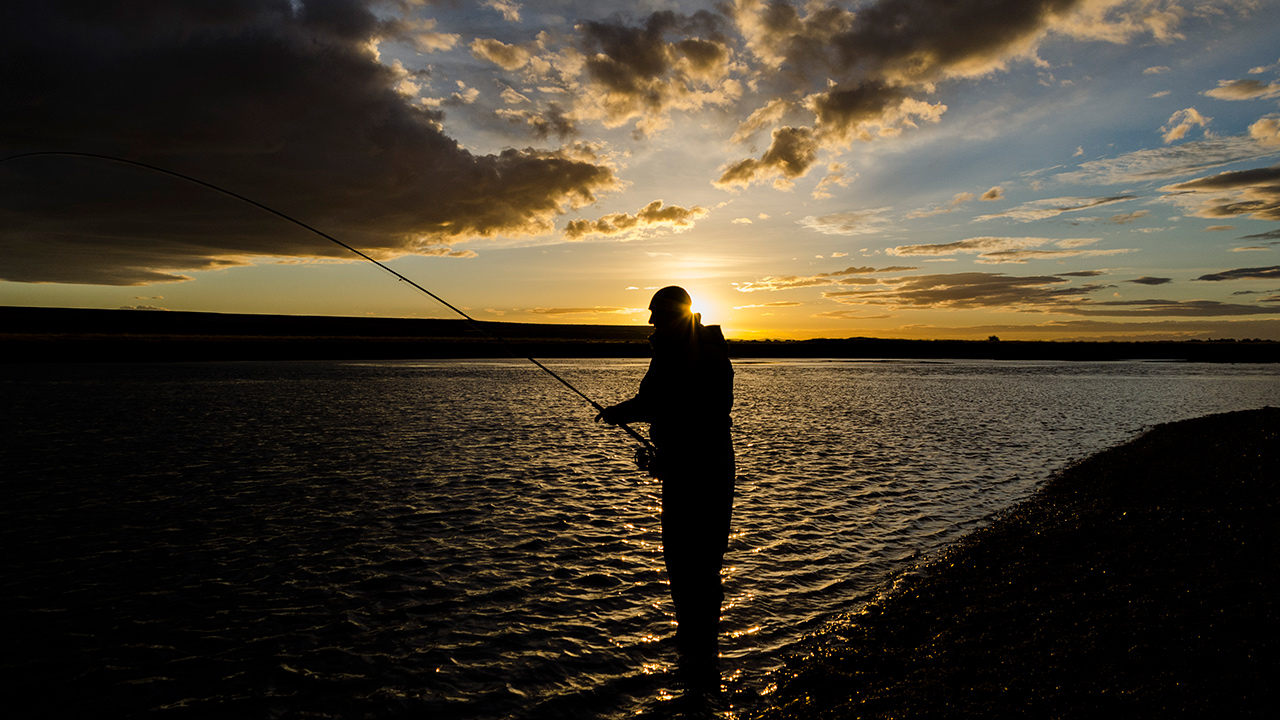
If you’ve ever searched for the “best time to fish Río Gallegos,” you’ve probably noticed how vague the answers can be. Patagonia doesn’t behave like a typical destination. Weather shifts without warning, wind rewrites the rules, and sea-run brown trout arrive in waves that don’t always follow a calendar perfectly.
And yet, patterns exist.
The Río Gallegos is one of Patagonia’s most iconic rivers for sea-run brown trout, and understanding its season month-by-month can completely change your trip — not just in terms of fish, but in terms of what kind of experience you’ll have.
This guide is built for anglers who want real clarity: what to expect each month, what the pros and cons are, and which period best matches your goals. Along the way, I’ll also explain how a lodge like Karku Fly Fishing Lodge can be a good option for anglers who want to fish the Gallegos with local support, private access, and a low-pressure approach.
Río Gallegos Season Overview
Most fly fishing on the Río Gallegos happens across late spring, summer, and early fall in the Southern Hemisphere, generally spanning:
November to April (the broader window)
December to April (the core sea-run window for most anglers)
Conditions fluctuate, but each month tends to carry a distinct “personality” in terms of:
water levels
fish freshness
fish distribution
wind patterns
angler pressure
techniques that shine
November: The Quiet Start (For the Right Angler)
November can be a transitional month. Not every season offers classic sea-run fishing yet, but it can be a fascinating time for anglers who enjoy low pressure and exploring.
What to expect
Cooler water and unstable weather
Early movement and pre-season setups
Low angling pressure
Pros
Very few anglers on the river
A peaceful Patagonia atmosphere
Early scouting feel (great for experienced anglers)
Cons
Sea-run presence may be limited depending on the year
Conditions can be unpredictable
Not ideal for first-time visitors chasing peak sea-run encounters
Best for: adventurous anglers, photographers, repeat visitors who enjoy solitude.
December: Early Season Energy Begins
December is where the Río Gallegos begins to feel “alive” in a way that makes Patagonia famous. The river starts receiving the first serious pushes of sea-run fish, and conditions can be dramatic.
What to expect
Increasing fish presence
Higher water levels
Strong currents and big-water setups
Windy days that test casting
Pros
First waves of fresh sea-run browns
Trophy potential begins early
Great streamer and swing opportunities
Cons
Water can still be high, making some zones more technical
Weather can shift quickly
Some days feel like work — but the rewards are real
Best for: anglers who want early trophies, love “fresh fish energy,” and don’t mind technical water.
January: Peak Fresh Fish and Trophy Potential
January is often considered one of the most exciting times on the Río Gallegos. Sea-run browns are present in real numbers, many are ocean-bright, and the river’s structure becomes easier to read.
What to expect
Fresh fish in prime holding water
Long daylight hours
Strong wind days mixed with calm windows
Reliable fishing rhythm
Pros
Excellent chance at large, chrome-bright sea-runs
Aggressive reaction strikes are common
Strong season identity: Patagonia at full intensity
Cons
Wind can be persistent
The river still demands adaptation and endurance
Some stretches require confident wading and casting
Best for: anglers chasing trophy fish, those who want that “Patagonia legend” feeling.
February: The Balanced Month (Best All-Around Choice)
If you want the month that most often offers the best balance between fish numbers, river condition, and overall enjoyment, February is hard to beat.
What to expect
Good mix of fresh and settled fish
More stable river clarity
Consistent daily fishing plans
Slightly calmer rhythms than January
Pros
Great combination of numbers + size potential
More predictability in tactics
Great time for anglers of mixed skill levels
Often ideal for learning the river with guides
Cons
Fish can be slightly more selective than early season
Requires more refined presentations at times
Best for: first-time visitors, anglers who want the best overall experience, couples or groups with different skill levels.
March: Technical Time (Where Skill Starts to Matter More)
March is when the Río Gallegos begins to shift into a more technical chapter. Water may lower and clear, fish are settled, and presentation becomes more important.
What to expect
More stable holding fish
Clearer water on many days
Cooler temperatures begin returning
More finesse required
Pros
Good fish numbers
Strong opportunities for technical anglers
Excellent for nymphing and precise swings
Often less physical strain than early season high water
Cons
Fish can be more cautious
Sloppy wading or heavy presentations can spook fish
Less “fresh chrome” feel (depending on year)
Best for: anglers who enjoy solving problems, refining presentations, and fishing smarter rather than harder.
April: The Late-Season Closer (Quiet, Focused, Rewarding)
April carries a special kind of Patagonia beauty. The landscape feels calmer, the air sharper, and the river moves toward the end of its seasonal story.
What to expect
Colder mornings
Lower water in many stretches
Selective fish
A quieter atmosphere
Pros
Peaceful fishing with fewer anglers
Some of the most memorable light and scenery of the season
Great for focused, purposeful fishing
Cons
Fish are often more selective
Weather can become harsher quickly
Best for: experienced anglers, repeat visitors, those who value solitude and depth over easy action.
Month-by-Month Summary (Quick Decision Guide)
| Month | Best For | Style | Difficulty |
|---|---|---|---|
| November | solitude, exploration | variable | medium-high |
| December | early trophies, fresh fish | powerful water | high |
| January | peak Patagonia energy | aggressive fish | high |
| February | best overall balance | consistent | medium |
| March | technical satisfaction | finesse | medium-high |
| April | solitude + scenery | selective fish | high |
So… What’s the Best Month to Fish Río Gallegos?
It depends on your goal:
For trophy hunters: January (and strong December/February windows)
For the best all-around experience: February
For technical anglers: March
For solitude and deep Patagonia atmosphere: April (and parts of November)
A smart approach is choosing a month based on your personality as an angler, not just the promise of big fish.
Why Timing Matters Less When the Plan Is Flexible
Here’s what most month-by-month guides don’t tell you:
Even in the “best” month, Patagonia can humble you if your plan is rigid.
Success comes from adapting daily — choosing the right water, the right presentation, and the right pace.
That’s where local knowledge matters.
At Karku Fly Fishing Lodge, the approach is built around:
small groups
low-pressure fishing
named pools and carefully managed water
daily adjustments based on river conditions
a conservation-first mindset
This flexibility makes the experience stronger no matter what month you visit.
Karku isn’t presented as the only option — but for anglers who want a well-guided, structured, and ethical way to fish the Río Gallegos, it can be a very good option.
The Río Gallegos is not a river you simply “visit.” It’s a river you learn. It has seasons like chapters, each with its own texture — power, calm, difficulty, solitude, reward.
The best time to fish it depends on what you want to feel:
the shock of a fresh sea-run strike
the calm rhythm of long glides
the satisfaction of technical precision
the silence of Patagonia at season’s edge
If you’re planning a trip and want help choosing the month that fits your goals, Karku Fly Fishing Lodge can help you explore options and make the most of the river.