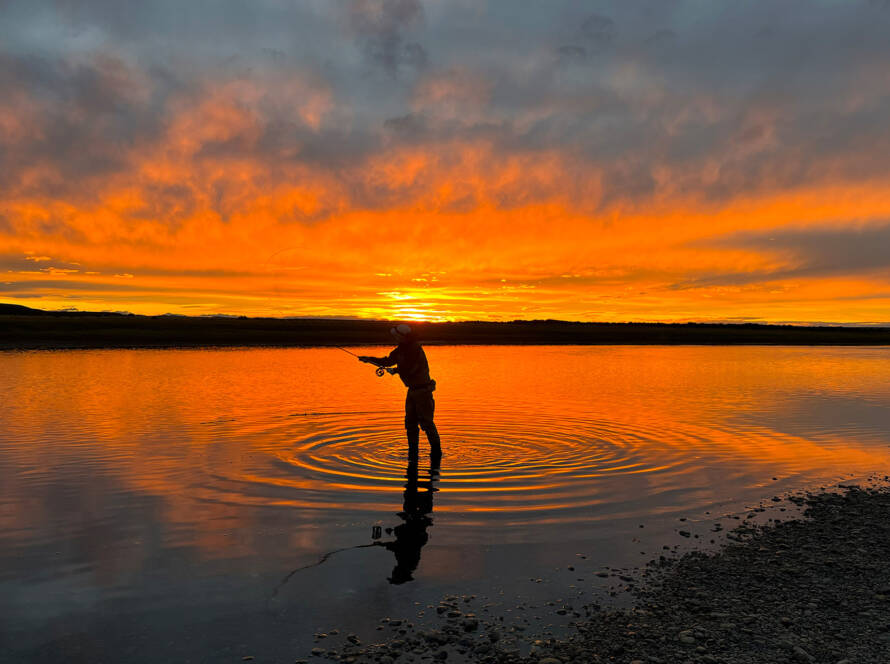
One River, Two Very Different Experiences
Few rivers in the world offer the reputation, power, and mystique of the Río Gallegos. Known globally for its legendary sea-run brown trout, this Patagonian giant attracts fly anglers from every corner of the planet. But while many anglers dream of fishing the Río Gallegos, fewer understand a critical truth:
When you fish matters just as much as where you fish.
Early season and late season on the Río Gallegos are not better or worse — they are different. Each offers unique advantages, challenges, and emotional rewards. Understanding these differences allows anglers to choose the timing that best fits their goals, expectations, and fishing style.
This guide breaks down the pros and cons of early season vs. late season fishing on the Río Gallegos, helping you decide when your Patagonia fly fishing adventure should take place — and how a lodge like Karku Fly Fishing Lodge adapts the experience to each season.
Understanding the Río Gallegos Seasonal Cycle
The Río Gallegos flows from the Rubens and Penitente, creating one of the most productive sea-run brown trout systems on Earth. These fish migrate upriver from the ocean, driven by water temperature, flow levels, daylight hours, and feeding patterns.
The season typically runs from late December through April, roughly divided into:
Early Season: Late December – January
Mid Season: February
Late Season: March – April
This article focuses on the contrast between early and late season, as these periods offer the most distinct fishing experiences.
Early Season on the Río Gallegos
(Late December – January)
What Defines Early Season Fishing?
Early season marks the first major push of fresh sea-run browns entering the river from the ocean. These fish are powerful, chrome-bright, and aggressive — often at their absolute physical peak.
Water levels are generally higher, flows are stronger, and fish behavior reflects fresh migratory energy rather than feeding routine.
✅ Pros of Early Season Fishing
1. Fresh, Ocean-Bright Sea-Run Browns
Early season fish are newly arrived from saltwater. They are:
Exceptionally strong
Bright silver with sea lice scars
Often heavier and longer than later-season fish
Hooking one of these fish is an unforgettable experience — explosive runs, deep power, and relentless energy.
2. Opportunity for True Trophy Fish
This is when anglers have the best statistical chance of encountering fish exceeding 20 pounds. While numbers may be lower, size potential is at its peak.
3. Aggressive Strikes
Fresh fish are often more willing to attack flies out of instinct or territorial reaction. Streamers, large flies, and bold presentations can produce violent takes.
4. Dramatic River Conditions
Higher water creates powerful currents, defined seams, and classic holding water. For anglers who love reading big rivers, early season is visually and technically rewarding.
Please note that as weather patterns change globally, some regions may experience lower water conditions during this time of year. This can affect river flows and fishing conditions.
⚠️ Cons of Early Season Fishing
1. More Technical Challenges
Higher flows demand:
Strong casting skills
Good mending technique
Physical endurance
This is not the easiest time for beginners, though guided experiences help mitigate difficulty.
2. Weather Can Be Unpredictable
Patagonia in early summer can deliver:
Strong winds
Rapid weather changes
Cold mornings and warm afternoons
Preparation and flexibility are essential.
3. Fewer Fish, Higher Stakes
Fish are spread out and still migrating. You may fish longer stretches between hookups — but every fish has serious potential.
Late Season on the Río Gallegos
(March – April)
What Defines Late Season Fishing?
Late season brings stabilized conditions, cooler water temperatures, and fish that have spent weeks or months in the river. These trout have settled into pools, runs, and feeding lanes.
The river becomes more technical but also more predictable.
✅ Pros of Late Season Fishing
1. Higher Numbers of Fish
Late season typically offers more consistent action. Fish are holding in known lies, allowing guides to target productive water more precisely.
2. Easier Reading of Water
Lower, clearer water makes:
Fish easier to locate
Presentations more controlled
Learning opportunities stronger
This is often ideal for anglers refining technique.
3. More Stable Weather Patterns
While Patagonia is never fully predictable, late season tends to deliver:
Fewer extreme wind days
Cooler but steadier temperatures
Comfortable fishing conditions
4. Technical, Rewarding Fishing
Late-season fish may not be as aggressive, but they are:
Intelligent
Selective
Highly rewarding to fool
This is where finesse, patience, and precision shine.
⚠️ Cons of Late Season Fishing
Slightly Smaller Average Size
While big fish are still very possible, the absolute giants are statistically more common earlier in the season.
Early vs. Late Season: Quick Comparison
| Factor | Early Season | Late Season |
|---|---|---|
| Fish Size Potential | ⭐⭐⭐⭐⭐ | ⭐⭐⭐⭐ |
| Number of Fish | ⭐⭐⭐ | ⭐⭐⭐⭐ |
| Aggressiveness | ⭐⭐⭐⭐ | ⭐⭐⭐ |
| Technical Difficulty | ⭐⭐⭐⭐ | ⭐⭐⭐ |
| Weather Stability | ⭐⭐⭐ | ⭐⭐⭐⭐ |
| Best For | Trophy hunters, experienced anglers | Technical anglers, consistency seekers |
How Karku Adapts to Each Season
At Karku Fly Fishing Lodge, the fishing experience is shaped intentionally around seasonal conditions — not forced into a single template.
Early Season:
Focus on prime migratory water
Strategic fly selection for fresh fish
Flexible daily plans based on conditions
Late Season:
Targeted pool rotation
Technical approach with refined presentations
Emphasis on reading fish behavior and water structure
With access to named pools and deep local knowledge, Karku adjusts the experience so anglers can fully enjoy whichever season they choose.
Which Season Is Right for You?
Choose early season if you:
Dream of hooking a true giant
Enjoy powerful water and aggressive fish
Have solid casting skills or want a challenge
Choose late season if you:
Value consistency and learning
Prefer technical, thoughtful fishing
Want slightly easier conditions with strong results
There is no wrong choice — only different rewards.
Final Thoughts: One River, Two Stories
The Río Gallegos is not a single experience. It evolves, breathes, and transforms across the season. Early season delivers raw power and possibility; late season offers precision and rhythm.
Understanding these differences doesn’t just improve success — it deepens appreciation.
If you’re planning a Patagonia fly fishing adventure and want guidance on choosing the right season for your goals, Karku Fly Fishing Lodge is always happy to help you explore your options.
Thinking about fishing the Río Gallegos?
Thinking about fishing the Río Gallegos?
Whether you’re drawn to the explosive promise of early season or the refined challenge of late season, discover how a stay at Karku Fly Fishing Lodge can turn timing into an unforgettable experience.
👉 Explore fishing options, ask questions, or start planning your trip with Karku.