

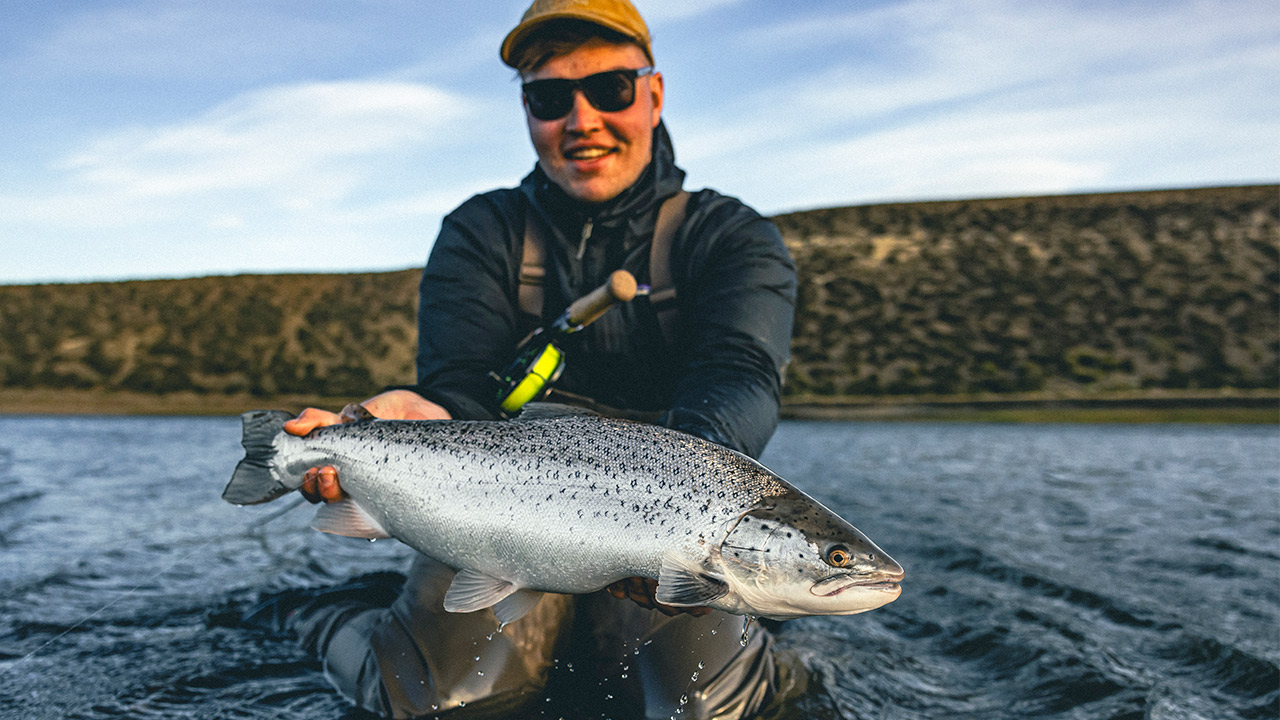
Patagonia hosts some of the most iconic trout fisheries on Earth — from the explosive sea-run browns of the Río Gallegos and Río Grande to the resident rainbows and browns of its Andean rivers.
But these ecosystems, for all their beauty, are incredibly delicate.
Low Productivity Rivers
Many Patagonian rivers (especially the steppe rivers) are low in nutrients.
Trout grow large because they migrate to the ocean — not because the rivers can sustain heavy harvest.
Remove too many spawners and the fishery collapses.
Unique Sea-Run Life Cycles
Sea-run brown trout return from the ocean with unbelievable power and size.
But their survival depends on preserving:
migratory patterns
spawning beds
post-spawn recovery
A mishandled fish can affect an entire genetic lineage.
Increasing Fishing Pressure
Patagonia used to be “undiscovered.”
Now anglers come from the U.S., Canada, Europe, Australia — drawn by the fish, the vastness, and the myth.
Catch & Release is the only way to maintain the magic.
Cultural Importance
Local guides, estancias, and small communities rely on sustainable tourism.
The health of the river is directly tied to their way of life.
Put simply:
Without responsible catch & release, Patagonia would not be the world-class fly fishing destination it is.
2. The Ethics Behind Releasing a Fish Well
Catch & Release is not just “catch, photo, release.”
It is a discipline.
A way of interacting with the river that honors the fish’s life and the ecosystem’s health.
The core principles:
1. Minimize Stress
The goal is simple:
Fight quickly. Release gently.
Long fights exhaust fish, especially sea-runs.
Using the right rod, tippet, and reel is an ethical choice, not a technical one.
2. Keep Fish Wet
Air exposure is one of the leading causes of post-release mortality.
The rule:
Less than 5 seconds above water.
Preferably none.
3. Single Hooks
Single hooks:
cause less injury
reduce handling time
make releases faster
increase survival rates
Most private waters in Patagonia — including Karku — require them.
4. Handle with Care
This is sacred.
Wet your hands
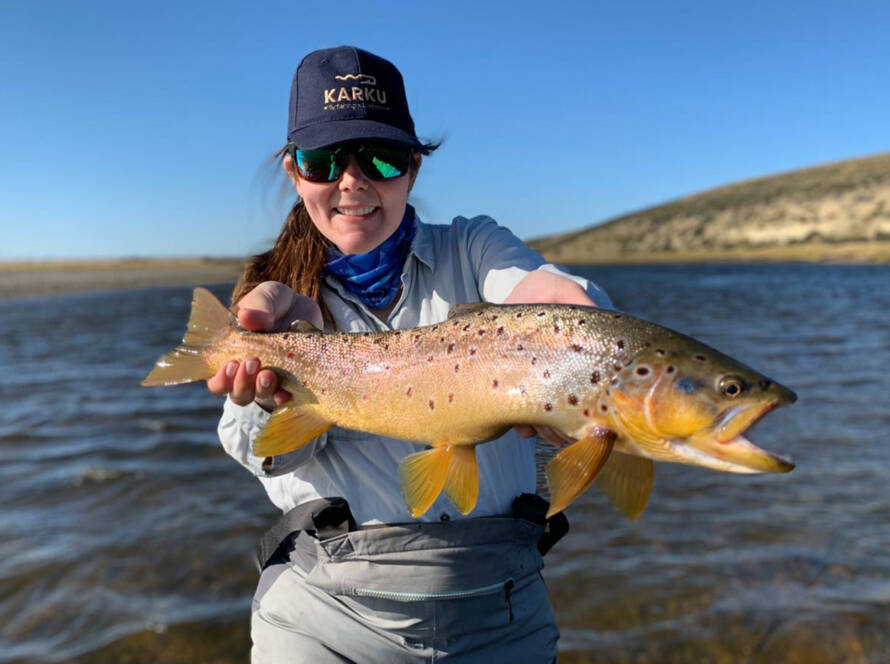
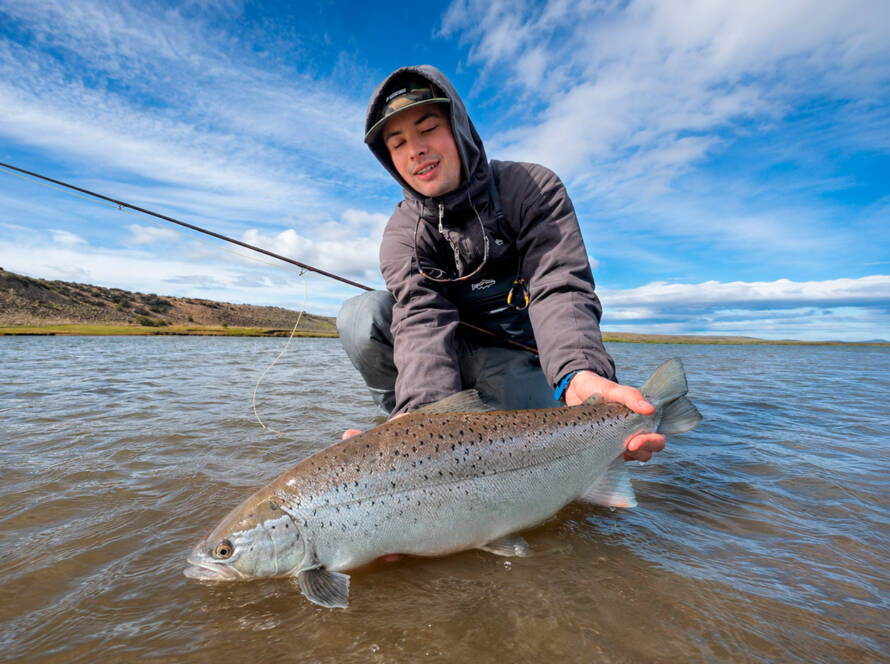
Support the fish horizontally
Never squeeze
Avoid touching the gills
Keep the fish upright until it swims away on its own
5. Respect Spawning Seasons
Avoid walking on gravel beds (redds).
Avoid disturbing fish that are pairing or digging.
These behaviors ensure future generations.
Catch & Release is not a rule.
It is a relationship with the river.
3. The Patagonia Way: Local Traditions That Shape Ethical Fishing
One of the most powerful aspects of fishing in Patagonia is learning from the guides who were born here.
Patagonian guides don’t treat fish like trophies.
They treat them like stories — part of the culture, the land, the heritage.
Mate by the River
Sharing a mate during a break is not just tradition — it’s a reminder to slow down, observe, and approach the river respectfully.
Understanding the Pools
Each pool has a name, a history, and a rhythm.
Some produce fish at sunrise, others at dusk, others on a falling barometer.
Respecting these rhythms prevents overfishing and keeps the river healthy.
Rotating Water
Instead of hammering the same pool, guides move through many.
This protects fish and keeps them unstressed — a practice rarely found in crowded fisheries.
Teaching Release as Ritual
Patagonian guides teach:
patience
precision
humility
gratitude
This cultural transmission is as important as any cast you’ll ever make.
4. The Science Behind Good Catch & Release
Catch & Release works — but only when done correctly.
Here’s what the science shows:
Handling Time
Fish handled for more than 15–20 seconds show increased mortality.
Temperature
Warm water reduces oxygen levels.
A fish released in warm conditions is more likely to die.
Hook Type
Single hooks reduce tissue damage by up to 50%.
Positioning
Fish held vertically or squeezed experience internal injury.
Recovery Time
Allowing the fish to re-oxygenate its muscles helps prevent delayed mortality.
This is not opinion — it is biology.
And Patagonia’s best lodges enforce these guidelines strictly.
5. How Catch & Release Shapes the Future of Patagonia’s Fishery
Everything done today affects:
future fish size
population density
genetic diversity
migratory strength
the health of the river
the local economy
the cultural identity of the region
Where catch & release is well-practiced, rivers thrive.
Where it isn’t, fisheries decline.
But in Patagonia, something remarkable is happening:
Sustainable practices have become part of the region’s identity.
This is why the sea-run brown trout of southern Argentina have remained strong while other global fisheries decline.
6. Where Responsible Catch & Release Truly Comes Alive: The Río Gallegos
Among all Patagonian rivers, the Río Gallegos stands out as a model of sustainable fly fishing.
Why?
It is a low-gradient river where fish tire quickly
It has vast private water sections
It holds over 40 named pools in the Karku section alone
It relies heavily on responsible angler behavior
Its sea-run browns return year after year thanks to careful management
This river proves something extraordinary:
When humans respect the river, the river gives back generously.
7. Karku Fly Fishing Lodge: A Responsible Way to Experience Patagonia
Karku is not the biggest lodge.
It does not aim to be the most luxurious.
Its power comes from something else entirely:
Private 40+ km of water
Local guides with deep generational knowledge
Solar-powered eco-friendly infrastructure
Small groups = low pressure on pools
Strict catch & release ethic
A genuine family-run atmosphere
At Karku, catch & release is not a rule imposed on guests.
It is a philosophy lived by everyone — guides, owners, anglers, and the land itself.
Fishing here feels personal.
It feels intentional.
It feels like participating in something sacred.
8. The Emotional Weight of Releasing a Patagonia Trout
There is one truth every angler eventually learns:
The moment you release a trout often feels more meaningful than the moment you catch it.
When you revive a sea-run brown:
You acknowledge its journey from river to ocean and back
You contribute to a cycle older than human memory
You protect the future of a fishery that has shaped Patagonia’s identity
You honor the silence, the wind, and the wildness that brought you here
Letting go becomes an act of gratitude —
a way of saying thank you to a fish that trusted you with its fight.
Catch & Release in Patagonia is not about regulations or trends
Patagonia hosts some of the most iconic trout fisheries on Earth — from the explosive sea-run browns of the Río Gallegos and Río Grande to the resident rainbows and browns of its Andean rivers.
But these ecosystems, for all their beauty, are incredibly delicate.
Low Productivity Rivers
Many Patagonian rivers (especially the steppe rivers) are low in nutrients.
Trout grow large because they migrate to the ocean — not because the rivers can sustain heavy harvest.
Remove too many spawners and the fishery collapses.
Unique Sea-Run Life Cycles
Sea-run brown trout return from the ocean with unbelievable power and size.
But their survival depends on preserving:
migratory patterns
spawning beds
post-spawn recovery
A mishandled fish can affect an entire genetic lineage.
Increasing Fishing Pressure
Patagonia used to be “undiscovered.”
Now anglers come from the U.S., Canada, Europe, Australia — drawn by the fish, the vastness, and the myth.
Catch & Release is the only way to maintain the magic.
Cultural Importance
Local guides, estancias, and small communities rely on sustainable tourism.
The health of the river is directly tied to their way of life.
Put simply:
Without responsible catch & release, Patagonia would not be the world-class fly fishing destination it is.
2. The Ethics Behind Releasing a Fish Well
Catch & Release is not just “catch, photo, release.”
It is a discipline.
A way of interacting with the river that honors the fish’s life and the ecosystem’s health.
The core principles:
1. Minimize Stress
The goal is simple:
Fight quickly. Release gently.
Long fights exhaust fish, especially sea-runs.
Using the right rod, tippet, and reel is an ethical choice, not a technical one.
2. Keep Fish Wet
Air exposure is one of the leading causes of post-release mortality.
The rule:
Less than 5 seconds above water.
Preferably none.
3. Single Hooks
Single hooks:
cause less injury
reduce handling time
make releases faster
increase survival rates
Most private waters in Patagonia — including Karku — require them.
4. Handle with Care
This is sacred.
Wet your hands
Support the fish horizontally
Never squeeze
Avoid touching the gills
Keep the fish upright until it swims away on its own
5. Respect Spawning Seasons
Avoid walking on gravel beds (redds).
Avoid disturbing fish that are pairing or digging.
These behaviors ensure future generations.
Catch & Release is not a rule.
It is a relationship with the river.
3. The Patagonia Way: Local Traditions That Shape Ethical Fishing
One of the most powerful aspects of fishing in Patagonia is learning from the guides who were born here.
Patagonian guides don’t treat fish like trophies.
They treat them like stories — part of the culture, the land, the heritage.
Mate by the River
Sharing a mate during a break is not just tradition — it’s a reminder to slow down, observe, and approach the river respectfully.
Understanding the Pools
Each pool has a name, a history, and a rhythm.
Some produce fish at sunrise, others at dusk, others on a falling barometer.
Respecting these rhythms prevents overfishing and keeps the river healthy.
Rotating Water
Instead of hammering the same pool, guides move through many.
This protects fish and keeps them unstressed — a practice rarely found in crowded fisheries.
Teaching Release as Ritual
Patagonian guides teach:
patience
precision
humility
gratitude
This cultural transmission is as important as any cast you’ll ever make.
4. The Science Behind Good Catch & Release
Catch & Release works — but only when done correctly.
Here’s what the science shows:
Handling Time
Fish handled for more than 15–20 seconds show increased mortality.
Temperature
Warm water reduces oxygen levels.
A fish released in warm conditions is more likely to die.
Hook Type
Single hooks reduce tissue damage by up to 50%.
Positioning
Fish held vertically or squeezed experience internal injury.
Recovery Time
Allowing the fish to re-oxygenate its muscles helps prevent delayed mortality.
This is not opinion — it is biology.
And Patagonia’s best lodges enforce these guidelines strictly.
5. How Catch & Release Shapes the Future of Patagonia’s Fishery
Everything done today affects:
future fish size
population density
genetic diversity
migratory strength
the health of the river
the local economy
the cultural identity of the region
Where catch & release is well-practiced, rivers thrive.
Where it isn’t, fisheries decline.
But in Patagonia, something remarkable is happening:
Sustainable practices have become part of the region’s identity.
This is why the sea-run brown trout of southern Argentina have remained strong while other global fisheries decline.
6. Where Responsible Catch & Release Truly Comes Alive: The Río Gallegos
Among all Patagonian rivers, the Río Gallegos stands out as a model of sustainable fly fishing.
Why?
It is a low-gradient river where fish tire quickly
It has vast private water sections
It holds over 25 named pools in the Karku section alone
It relies heavily on responsible angler behavior
Its sea-run browns return year after year thanks to careful management
This river proves something extraordinary:
When humans respect the river, the river gives back generously.
7. Karku Fly Fishing Lodge: A Responsible Way to Experience Patagonia
Karku is not the biggest lodge.
It does not aim to be the most luxurious.
Its power comes from something else entirely:
Private 40+ km of water
Local guides with deep generational knowledge
Solar-powered eco-friendly infrastructure
Small groups = low pressure on pools
Strict catch & release ethic
A genuine family-run atmosphere
At Karku, catch & release is not a rule imposed on guests.
It is a philosophy lived by everyone — guides, owners, anglers, and the land itself.
Fishing here feels personal.
It feels intentional.
It feels like participating in something sacred.
8. The Emotional Weight of Releasing a Patagonia Trout
There is one truth every angler eventually learns:
The moment you release a trout often feels more meaningful than the moment you catch it.
When you revive a sea-run brown:
You acknowledge its journey from river to ocean and back
You contribute to a cycle older than human memory
You protect the future of a fishery that has shaped Patagonia’s identity
You honor the silence, the wind, and the wildness that brought you here
Letting go becomes an act of gratitude —
a way of saying thank you to a fish that trusted you with its fight.
Catch & Release in Patagonia is not about regulations or trends.
Catch & Release in Patagonia is not about regulations or trends.
It is about respect for the river, respect for the fish, and respect for the future.
It transforms fly fishing into a form of stewardship —
a way of ensuring that the rivers remain wild, the fish remain powerful, and the experience remains unforgettable for generations.
If you want to experience this ethic not just in theory but in practice,
and if you want to learn from guides who have dedicated their lives to this river,
there is a place where the philosophy of responsible fishing is lived every day:
👉 Karku Fly Fishing Lodge
A place where conservation, culture, and connection come together on the banks of the iconic Río Gallegos.
https://karkuflyfishing.com/contact
Come to Patagonia.
Learn the rhythm of the river.
And leave it better than you found it.
Catch & Release in Patagonia is not about regulations or trends.
It is about respect for the river, respect for the fish, and respect for the future.
It transforms fly fishing into a form of stewardship —
a way of ensuring that the rivers remain wild, the fish remain powerful, and the experience remains unforgettable for generations.
If you want to experience this ethic not just in theory but in practice,
and if you want to learn from guides who have dedicated their lives to this river,
there is a place where the philosophy of responsible fishing is lived every day:
👉 Karku Fly Fishing Lodge
A place where conservation, culture, and connection come together on the banks of the iconic Río Gallegos.
https://karkuflyfishing.com/contact
Come to Patagonia.
Learn the rhythm of the river.
And leave it better than you found it.

4 Comments
Ambrose
Hey very nice blog!
Katrin
I am sure this piece of writing has touched all the internet visitors, its
really really pleasant piece of writing on building
up new web site.