

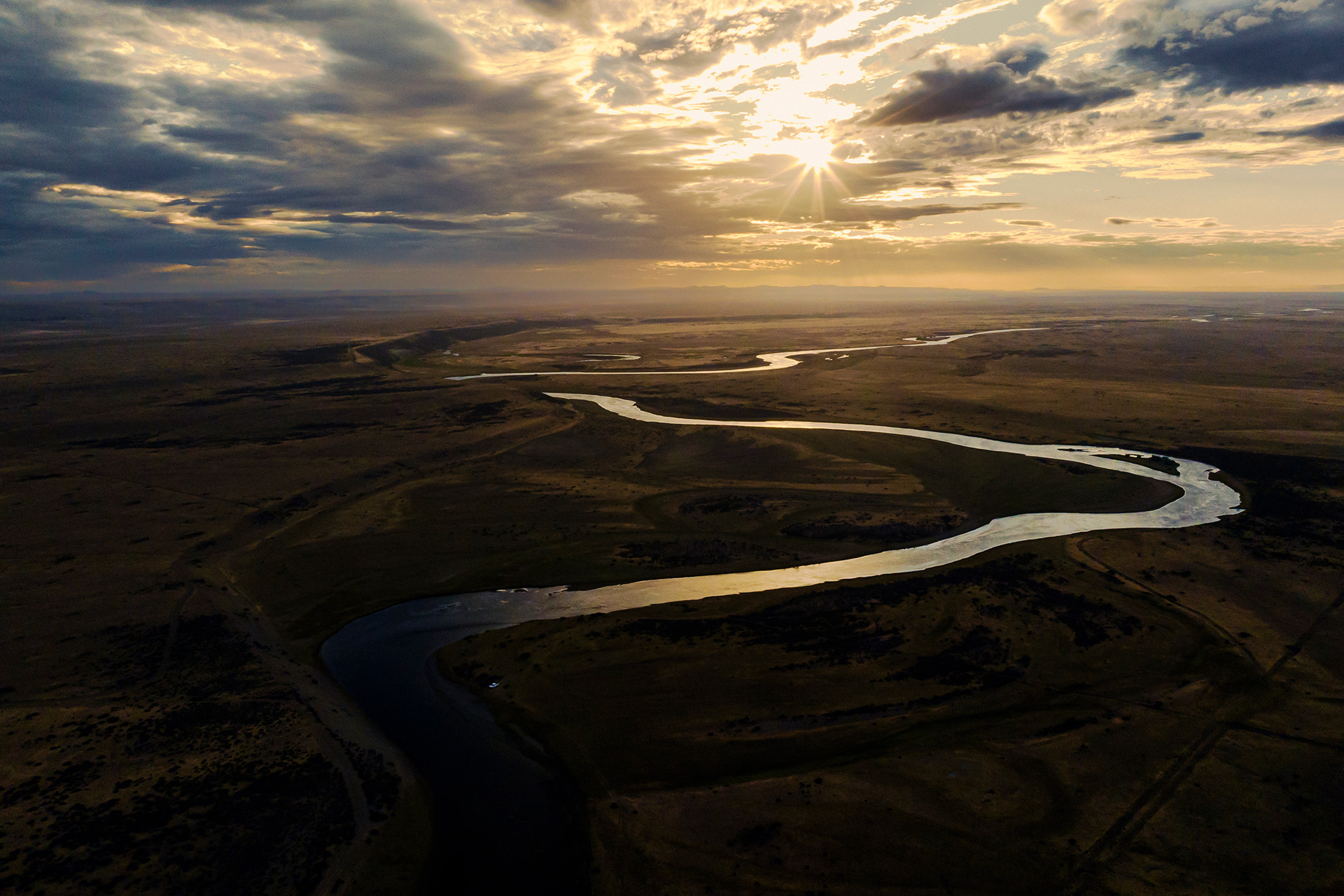
Fly fishing in Patagonia is more than a sport — it’s an art form shaped by wind, patience, and respect for nature. Among all of Patagonia’s legendary rivers, Río Gallegos stands as one of the most iconic. Known for its elusive sea-run brown trout, this river attracts anglers from across the world who dream of experiencing its magic.
But while the Río Gallegos is breathtaking, it’s also humbling. The vast Patagonian steppe, unpredictable weather, and intelligent trout can challenge even the most seasoned fly fisherman. That’s why the true secret to success lies in learning from those who know it best — the local guides who’ve spent years studying its rhythms, currents, and moods.
At Karku Fly Fishing, we don’t just guide—we share a lifetime of wisdom about how to make every cast count. Here are our best tips for mastering the Río Gallegos and connecting deeply with Patagonia’s wild soul.
1. Know the River Before You Cast
The Río Gallegos is a low-gradient river, wide and gentle, flowing more than 180 kilometers (112 miles) from the Andes to the Atlantic Ocean. Its waters meander through open plains, forming countless pools, bends, and undercut banks where trout hide.
The key to success? Observation before action.
Spend your first moments on the river studying it:
Notice where currents slow down or deepen.
Look for submerged structure or drop-offs.
Observe how the light and wind affect visibility.
Local guide Sergio, who has been fishing these waters for over two decades, puts it simply:
“The Gallegos is a river that rewards patience. Don’t rush your first cast — watch the water until it tells you where the trout are.”
2. Time Your Fishing with the Season
Understanding the seasonal changes in Río Gallegos can make all the difference.
Early Season (December – January):
The first sea-run trout arrive from the Atlantic, bright and silver, fresh from the ocean. The fishing is exciting, though the winds can be strong.Mid-Season (February – March):
The river stabilizes, water levels drop slightly, and fishing becomes consistent. Trout are aggressive and often found in shallower pools.Late Season (April):
The trout are at their peak size and color — golden, powerful, and ready for spawning. Even during this time, you can find beautifully colored fish throughout the season. However, there are always chrome and fresh trout entering the river from the sea, ensuring a lively and dynamic fishing experience. The scenery also transforms, with the Patagonian autumn painting the landscape in shades of red and gold. Knowing when to visit helps you match your techniques and expectations to the river’s natural rhythm.
Knowing when to visit helps you match your techniques and expectations to the river’s natural rhythm.
3. Choose the Right Equipment
In Patagonia, gear matters as much as skill. The environment can be harsh, with strong winds, long casts, and fish that fight hard.
Local guides at Karku recommend:
Rod: 7-8 weight , 12 to 13 feet two handed rod for long cast y 7-8 weight, 9 to 10 feet single handed rod for delicate cast when there’s no wind
Reel: Large-arbor reel with a smooth, sealed drag system.
Line: Weight-forward floating line for general use; switch to sink-tip or intermediate lines in deeper pools.
Leaders: 9-15 feet tapering to 10 to 20 lb tippet
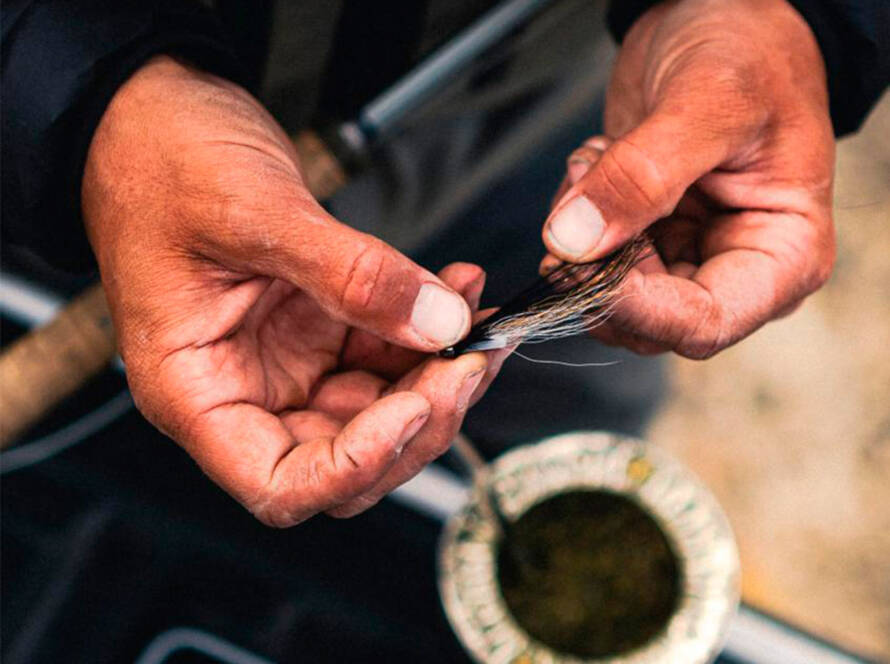
Flies: Classics like the Prince Nymph, Girdle Bug, Egg Sucking Leech, and Sunray Shadow are favorites. In low light, go big and dark; on bright days, go subtle.
Pro Tip:
“Always carry a backup rod and extra lines,” says Luisa, co-founder of Karku Lodge. “The wind can change everything — be ready to adapt.”
4. Read the Wind, Don’t Fight It
If you’ve never fished in Patagonia, you’ll quickly learn that the wind is your constant companion. It’s not the enemy — it’s part of the experience.
Instead of battling against it, learn to work with it:
Adjust your casting angle so the wind carries your line forward.
Shorten your leader slightly for better control.
Use roll casts or Belgian-style loops to keep the fly low and out of the wind.
Local anglers joke that “you’re not really fly fishing Patagonia until your hat almost blows away.” But those who adapt soon realize that the wind adds challenge — and character — to every cast.
5. Learn the Anatomy of a Patagonian Pool
Río Gallegos is famous for its named pools, each with unique behavior depending on wind direction, water level, and temperature. Local guides know them by heart.
To fish them successfully:
Start from the top: Work your fly downstream gradually.
Cast diagonally: Let your fly swing naturally across the current.
Vary your retrieve: Short strips, pauses, or slow hand-twist retrieves can trigger strikes.
Don’t overfish one spot: Sea-run trout are territorial but cautious — make a few good presentations and move on.
“Sometimes the trout are only a few meters away,” says Sergio. “The key is presentation, not distance.”
6. Adjust to Changing Light and Weather
Patagonian weather is famously unpredictable — sunshine, wind, and rain can happen within the same hour. Successful anglers stay flexible.
Bright days: Use smaller, lighter flies with natural colors.
Cloudy or windy days: Switch to darker, larger patterns that create contrast.
Evening sessions: The “magic hour” before sunset often brings the most aggressive bites.
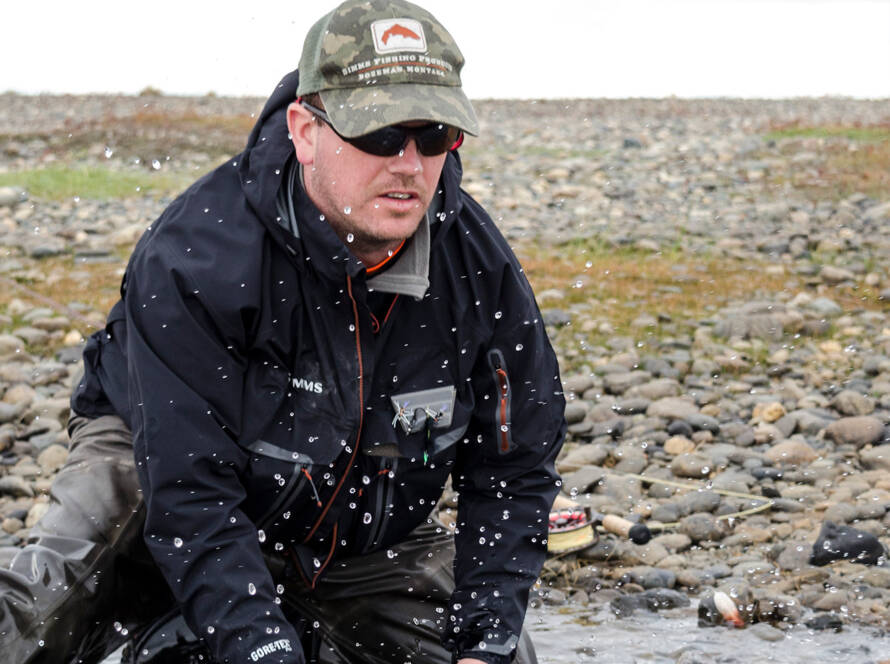
Keep a waterproof pack with spare layers and a rain jacket. Comfort helps you focus — and focus leads to more fish.
7. Respect the River and Its Rhythm
Fly fishing here isn’t about dominance — it’s about respect.
The sea-run brown trout is a creature of instinct and strength. The river is its home, not your playground.
At Karku Fly Fishing Lodge, every catch follows strict catch-and-release practices. simple hooks, gentle handling, and keeping the fish in the water during photos are part of a philosophy that honors the resource.
As Luisa often tells guests:
“The river gives you everything — peace, beauty, and challenge. The least we can do is give something back.”
8. Rest, Recharge, and Reflect
After long hours on the water, returning to the lodge feels like coming home. At Karku, evenings are filled with warmth — the smell of an Argentine asado, a glass of Malbec, and stories shared around the fire.
Fishing isn’t just about technique; it’s about connection. Each day by the river deepens that connection — with nature, with others, and with yourself.
It’s what makes Río Gallegos more than a destination. It’s a feeling that stays with you long after the plane leaves Patagonia.
Conclusion
The Río Gallegos teaches lessons that extend far beyond fishing.
It rewards patience, punishes arrogance, and celebrates those who adapt and respect it.
To fish here successfully, you need more than good gear — you need humility, awareness, and the willingness to listen to the river itself.
At Karku Fly Fishing Lodge, our local guides are more than experts — they’re storytellers, caretakers, and ambassadors of a land that still feels untouched by time.
So when you come to Patagonia, come prepared — not just to catch fish, but to live an experience that changes you.
Book Your Patagonia Adventure
If you’ve ever dreamed of casting your line in the heart of Patagonia, surrounded by silence, wind, and wild beauty — this is your moment.
Join us at Karku Fly Fishing Lodge and let our local guides take you on a journey through the legendary waters of the Río Gallegos.
🎣 Reserve your stay today and experience the magic of Patagonia, one cast at a time.
👉 Contact Karku Fly Fishing Lodge

2 Comments
Leonie
Greetings! I’ve been reading your site for a long time now and finally got the bravery to go
ahead and give you a shout out from Porter Tx! Just wanted to
mention keep up the excellent job!
David Green
Lovely, generous comments, helpful to clients and non- clients alike. Gracias!