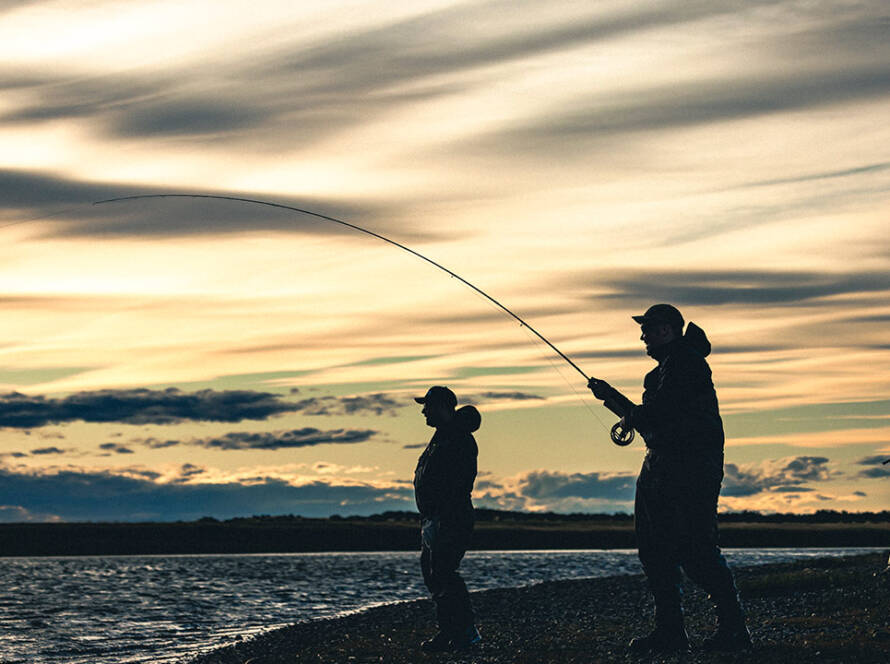
For fly anglers around the world, Patagonia is more than a destination — it’s a promise. A promise of wild rivers, endless skies, powerful winds, and fish that still behave like fish should. At the heart of that promise lies one river that consistently delivers on every expectation: the Río Gallegos.
Known for its legendary sea-run brown trout, the Río Gallegos has become one of the most respected fly fishing rivers on the planet. But fishing it successfully requires more than enthusiasm. It demands understanding — of seasons, fish behavior, water structure, and the unique rhythm of Patagonia itself.
This ultimate guide is designed to give you exactly that: a complete, grounded, and realistic overview of fly fishing the Río Gallegos — and why places like Karkú Fly Fishing Lodge have become a gateway to doing it right.
Why the Río Gallegos Is One of Patagonia’s Most Important Rivers
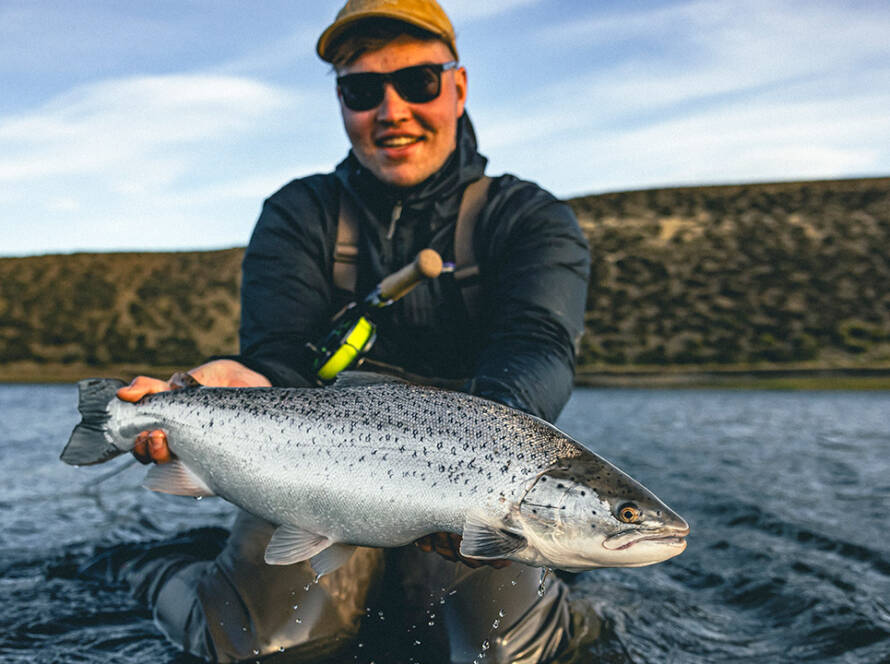
The Río Gallegos flows from Güer Aike Lake to the South Atlantic Ocean, creating a direct migratory corridor for anadromous brown trout. These fish spend part of their lives in saltwater, feeding aggressively, before returning upriver stronger, larger, and more powerful.
What sets the Gallegos apart is not just fish size, but consistency and structure.
The river offers:
A gentle gradient that creates long, fishable runs
Well-defined pools and holding water
Excellent migration access from the ocean
A mix of shallow flats and deeper channels
This balance makes the river both challenging and remarkably rewarding.
Sea-Run Brown Trout: The Icon of Río Gallegos
The true stars of the Río Gallegos are its sea-run brown trout.
These fish are:
Ocean-fed and incredibly strong
Known to exceed 15–20 pounds
Aggressive upon entering freshwater
Capable of long, blistering runs
Unlike resident trout, sea-runs behave differently. They strike flies not to feed, but out of instinct, territoriality, and reaction. Understanding this behavior is essential to success on the Gallegos.
Best Time to Fly Fish the Río Gallegos
The fishing season typically runs from late December through April, with each period offering a distinct experience.
Early Season (Late December – January)
Fresh, chrome-bright fish entering from the ocean
Higher water levels and stronger currents
Best chance for true trophy fish
More aggressive strikes
Mid Season (February)
Balanced conditions
Good mix of fresh and settled fish
Ideal for both size and consistency
Late Season (March – April)
Lower, clearer water
More technical presentations
Higher numbers of fish holding in known lies
Stable weather patterns
Each season rewards a different angling mindset — there is no wrong choice, only different strengths.
Fly Fishing Techniques That Work on the Río Gallegos
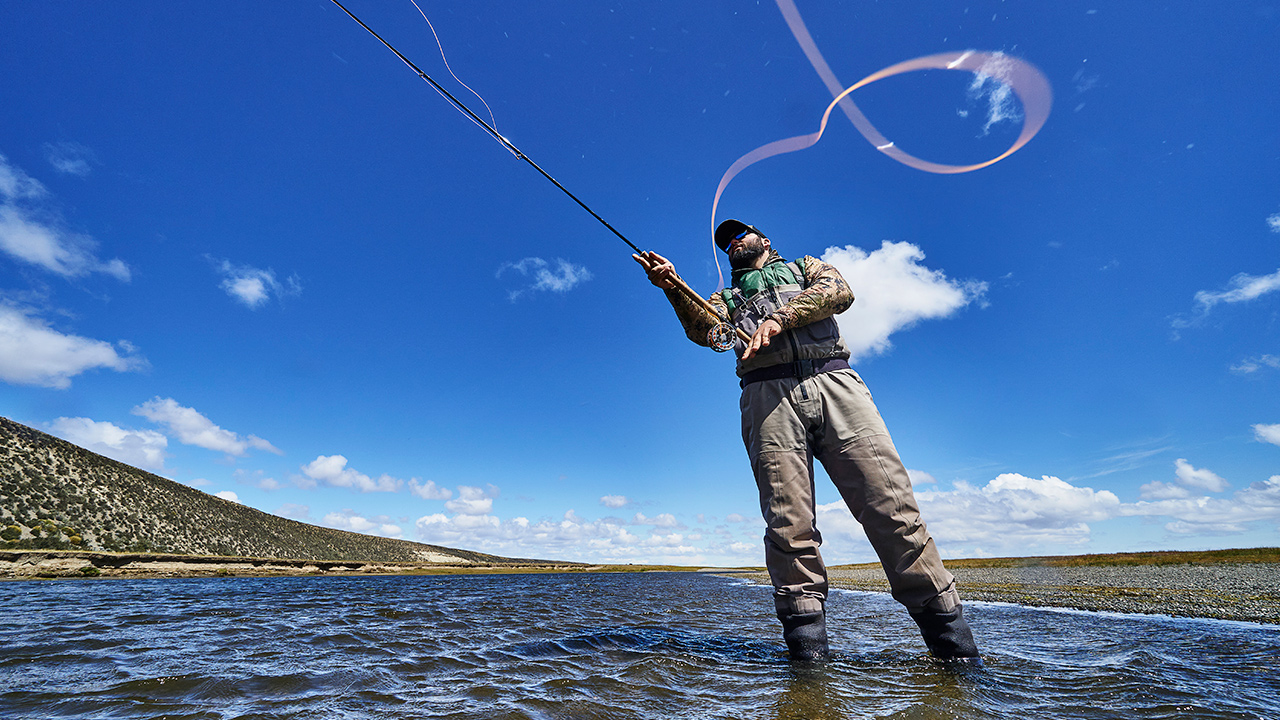
Swinging Flies
A classic and highly effective method, especially for fresh fish holding in deeper runs.
Sink tips or intermediate lines
Controlled swings across current seams
Ideal for early and mid-season
Dead-Drifting Nymphs
Highly productive when fish are holding deeper or less aggressive.
Short leaders
Heavier nymphs
Focus on seams and soft edges
Streamer Fishing
Effective during low light or when targeting reaction strikes.
Subtle movement often outperforms aggressive stripping
Best during early mornings and evenings
Success on the Gallegos depends on adapting daily, not relying on a single method.
Fly Selection: What Works Best
Some proven patterns on the Río Gallegos include:
Girdle Bug
Prince Nymph
Egg-Sucking Leech
Sunray Shadow
- Intruder-style streamers
Local conditions — water clarity, flow, light — matter more than exact patterns. This is where experienced guidance becomes invaluable.
Gear Recommendations for Patagonia Conditions
Rods
7–8 weight rods, single and double handed rod are standard
Strong backbone for wind and powerful fish
Lines
Floating line with interchangeable sink tips
Intermediate and T-8/T-11 tips are common
Leaders & Tippet
Short leaders (4–7 ft)
0X–2X fluorocarbon
Clothing
Windproof layers
Quality waders
Polarized sunglasses
Patagonia rewards preparation.
Why Local Knowledge Is Everything on the Río Gallegos
The Gallegos is not a “cast-and-hope” river. Its productivity depends on:
Knowing when fish enter specific pools
Understanding how wind affects presentation
Adjusting tactics hour by hour
Anglers fishing alone often struggle to unlock the river’s potential. Those fishing with local guides dramatically increase both success and understanding.
The Role of Karku Fly Fishing Lodge
Karku Fly Fishing Lodge operates on carefully selected stretches of the Río Gallegos, focusing on quality over quantity.
What sets Karku apart:
Access to named pools with known behavior
Low-pressure fishing philosophy
Small groups and flexible daily plans
Guides deeply familiar with seasonal fish movement
Strong emphasis on conservation and catch & release
Karku doesn’t attempt to dominate the river — it works with it.
Sustainability and Ethics on the Río Gallegos
The future of fly fishing in Patagonia depends on responsible practices.
Key principles include:
Catch & release
Barbless hooks
Minimal handling
Lodges like Karku help preserve the fishery by limiting pressure and prioritizing river health.
Planning Your Trip to the Río Gallegos
When planning a Patagonia fly fishing trip, consider:
Your experience level
Preferred fishing style
Seasonal expectations
Physical demands
A well-planned trip transforms challenge into enjoyment.
Conclusion: Why the Río Gallegos Belongs on Your List
The Río Gallegos is not just one of Patagonia’s great rivers — it is one of the world’s most complete fly fishing experiences. It offers power without chaos, challenge without exclusion, and wildness without compromise.
For anglers seeking sea-run brown trout in a landscape that still feels untouched, few rivers deliver as consistently.
If fly fishing in Patagonia has always been on your list, the Río Gallegos is where that dream becomes tangible.
👉 Explore how a stay at Karku Fly Fishing Lodge can help you experience this river with clarity, confidence, and respect.