Patagonia doesn’t feel like a place that follows the rules. The wind changes direction without warning, the light shifts like a living thing, and rivers that look calm from the bank can turn technical the moment your fly hits the water. That’s exactly why anglers fall in love with it — and also why so many people ask the same question before they book anything:
When is the Patagonia fly fishing season, and what should I expect?
The short answer is that Patagonia’s season is wide — but the right time depends on what you want to feel, what you want to fish for, and how you want your trip to unfold. There are months where everything feels raw and powerful, months where the fishing becomes consistent and balanced, and months where the river turns quiet, technical, and deeply rewarding.
This guide explains the Patagonia fly fishing season in a way that’s practical, honest, and easy to plan around — and along the way, it will also give you a sense of how a destination like Río Gallegos (home of Karku Fly Fishing Lodge) fits into the bigger Patagonia seasonal picture.
1. When Is the Patagonia Fly Fishing Season?
Patagonia spans southern Argentina and Chile, and the fly fishing season follows the Southern Hemisphere calendar. Most fisheries operate during:
November to April (the broad season)
December to April (the core season for many iconic sea-run fisheries)
Some rivers open earlier, some stay productive later, and some change personality dramatically depending on snowmelt, rainfall, and wind patterns. That’s why understanding the season is less about memorizing dates and more about learning what each period tends to offer.
2. Patagonia’s Seasons: Why “Month-by-Month” Matters
Patagonia is not one single fishery. It includes:
Andean lakes and freestone rivers (clear water, dry flies, resident trout)
Steppe rivers (wind, big open country, technical water)
Southern sea-run systems (anadromous brown trout coming from the ocean)
Each region responds differently to temperature, precipitation, and daylight. A month that’s ideal in the Andes can feel completely different in southern Patagonia.
That’s why it helps to break the season down into practical “chapters.”
3. Early Season (November–December): The Awakening
Early season is Patagonia in motion. Rivers begin to wake up, flows still carry the energy of snowmelt in some regions, and anglers who arrive early often experience:
fewer crowds
fresh fish movement
unpredictable, dramatic conditions
What early season feels like
There’s something electric about the first half of the season. The landscape looks alive. Rivers run strong. The fishery feels like it’s opening its doors slowly, revealing only parts of what it will become.
Pros
Low angler pressure
Fresh fish presence begins (especially in sea-run regions)
Excellent streamer windows
A sense of “being there before everyone else”
Cons
Water levels can be high depending on region
Conditions can be inconsistent
Requires more flexibility and adaptation
Best for: experienced anglers, those who love big water energy, and people who want solitude.
4. Peak Season (January–February): Patagonia at Full Strength
If Patagonia has a “center of gravity,” this is it. January and February deliver the most reliable combination of:
stable weather windows
long daylight hours
consistent fish activity
full-service lodge operations
In many regions, this is also when anglers experience the widest range of techniques: nymphing, streamers, dry flies, and swing fishing depending on river and species.
Pros
Best balance of conditions and fishing opportunity
Strong fish numbers and consistent action
Easier travel logistics and more predictable planning
Ideal for first-time Patagonia trips
Cons
Higher demand (bookings fill faster)
Some fisheries receive more angling pressure
Wind still exists — this is Patagonia, after all
Best for: first-time visitors, mixed-skill groups, travelers who want consistency and classic Patagonia energy.
5. Late Season (March–April): The Quiet Precision
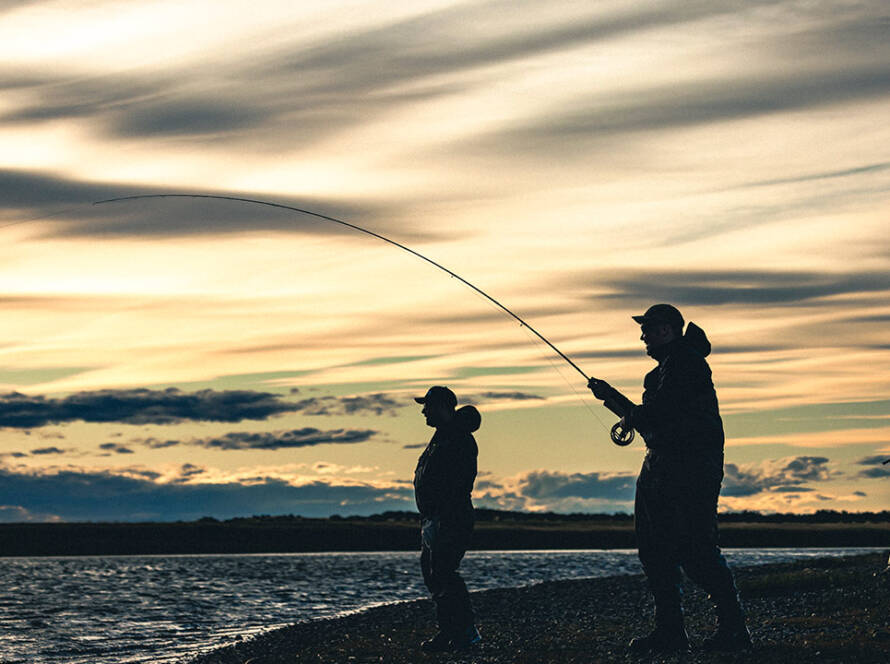
Late season is where Patagonia becomes subtle. The crowds thin. The air changes. The steppe turns golden. And many fisheries become more technical — but also more intimate.
In southern Patagonia, late season can align with fish settling into holding patterns, making certain rivers extremely rewarding for anglers who enjoy reading water carefully and refining presentation.
Pros
Beautiful light and quieter atmosphere
More technical and rewarding fishing
Less pressure on many rivers
Great for anglers who want depth over volume
Cons
Weather can turn colder quickly
Fish may become more selective
Requires patience and precision
Best for: anglers who love technical fishing, solitude, and the feeling of Patagonia “slowing down.”
6. Patagonia’s Two Main Seasonal Worlds: Andes vs Steppe vs Sea-Run
The Andes (Northern Patagonia)
Andean rivers tend to shine for:
dry fly fishing
sight fishing in clear water
resident browns and rainbows
floating and freestone river techniques
The prime window is typically December to March, depending on river systems and snowpack.
The Steppe (Southern Patagonia)
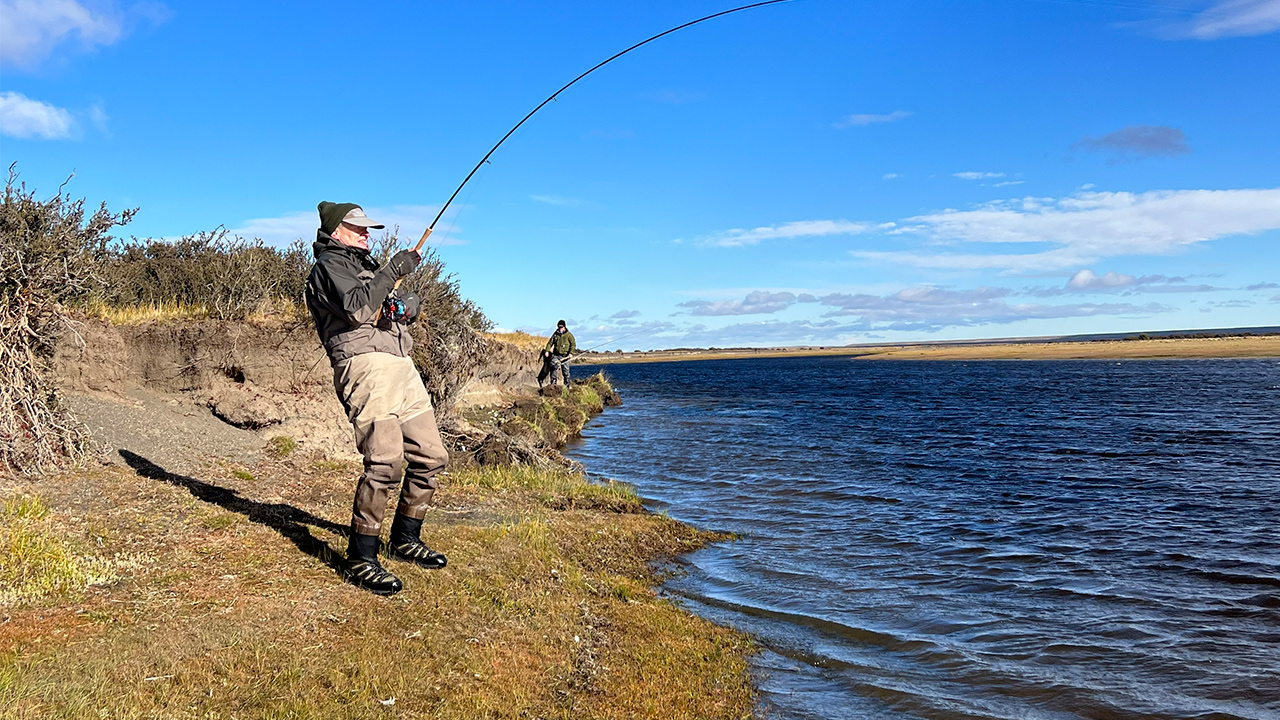
The steppe delivers:
big horizons
constant wind education
wide rivers and technical pools
a feeling of wild openness
Southern steppe rivers, including systems near Río Gallegos, typically shine December through April.
The Sea-Run Systems (Río Gallegos, etc.)
Sea-run fisheries are unique because fish behavior is defined by migration from the ocean. The season often produces:
fresh chrome fish early
consistency mid-season
technical settled fish late season
This is the world where Río Gallegos stands out.
7. Where Río Gallegos Fits Into the Patagonia Season
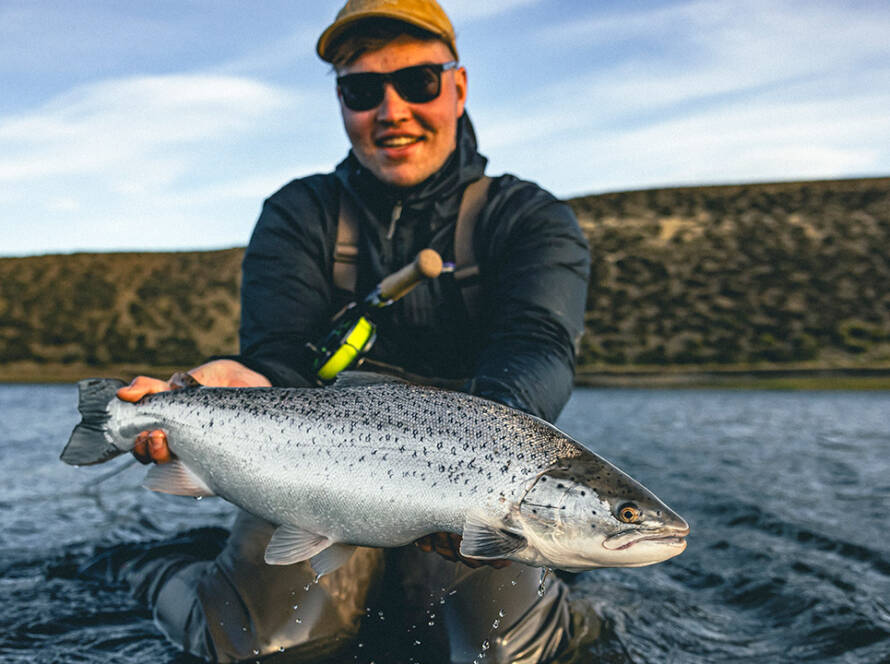
Río Gallegos is one of Patagonia’s most important sea-run brown trout rivers. While Patagonia has many fisheries, Río Gallegos offers a unique balance:
technical water without the extreme rigidity of some fisheries
strong sea-run fish presence
the ability to fish effectively across multiple seasonal windows
a consistent rhythm that rewards learning
The core window for many anglers is late December through April, but the experience changes dramatically month by month:
Early season: fresh, ocean-bright fish and powerful water
Mid-season: balanced conditions and consistent fishing plans
Late season: technical, refined presentations and quieter days
This is why lodges operating on the Gallegos can offer flexibility across the season, adjusting tactics to match water, wind, and fish behavior.
8. How to Choose the Best Month for Your Patagonia Trip
Ask yourself three questions:
1) What matters more: trophy potential or consistency?
Trophy-focused anglers often love early season
Consistency-focused anglers love mid-season
2) Do you enjoy technical fishing?
If yes, late season can be deeply satisfying
If no, mid-season is usually smoother
3) What kind of Patagonia do you want to feel?
Raw and powerful? Early season
Balanced and classic? Mid-season
Quiet and reflective? Late season
The best month isn’t universal. It’s personal.
9. A Note on Planning: What People Get Wrong
The biggest mistake many anglers make is assuming Patagonia will behave like their home fishery.
Patagonia demands:
flexibility
preparation
comfort with wind
openness to learning
The right lodge and guide team can make these variables feel exciting instead of stressful.
That’s one reason anglers explore places like Karku Fly Fishing Lodge — not because Patagonia becomes easy, but because the experience becomes structured, intentional, and calm even when conditions shift.
Patagonia’s fly fishing season isn’t one single window.
Patagonia’s fly fishing season isn’t one single window. It’s a living story that changes month by month, river by river, and angler by angler.
Early season brings power and possibility.
Peak season delivers balance and consistency.
Late season offers technical clarity and quiet beauty.
If you’re planning your trip and want help choosing the season that fits your goals — especially if you’re considering southern Patagonia and the Río Gallegos — one good step is learning what’s possible through local knowledge and well-managed water.
Discover the Río Gallegos season with Karku Fly Fishing Lodge
Contact Us