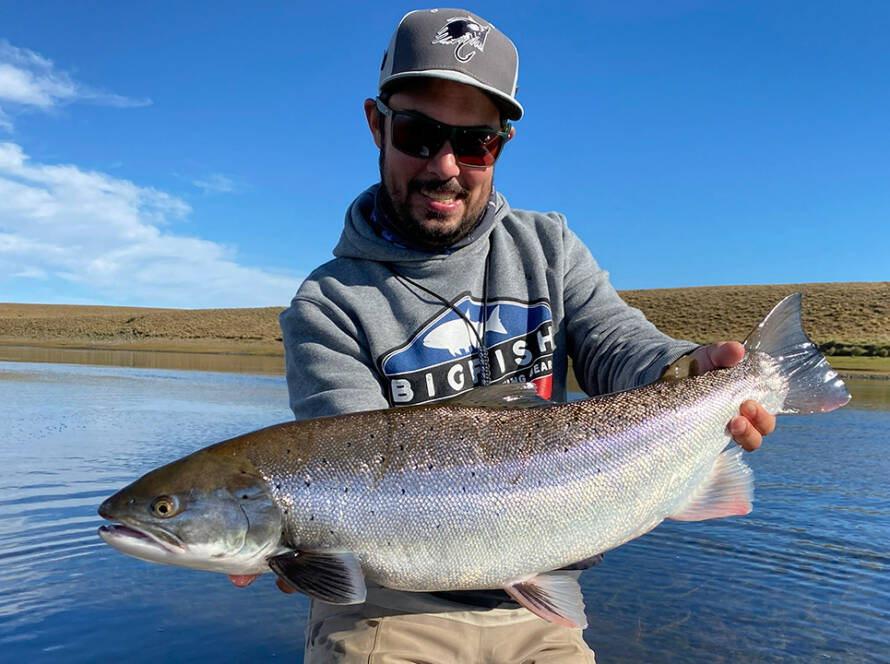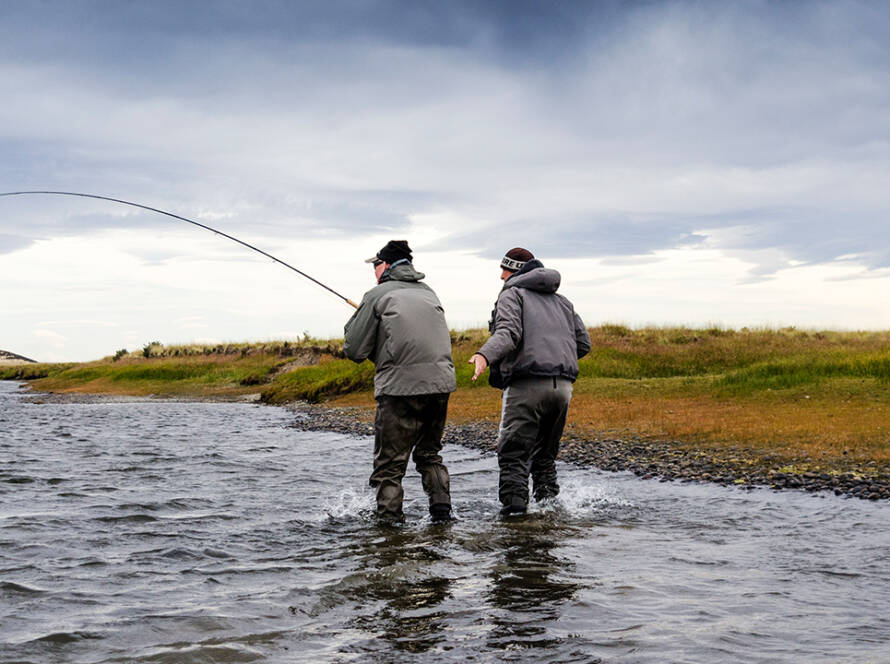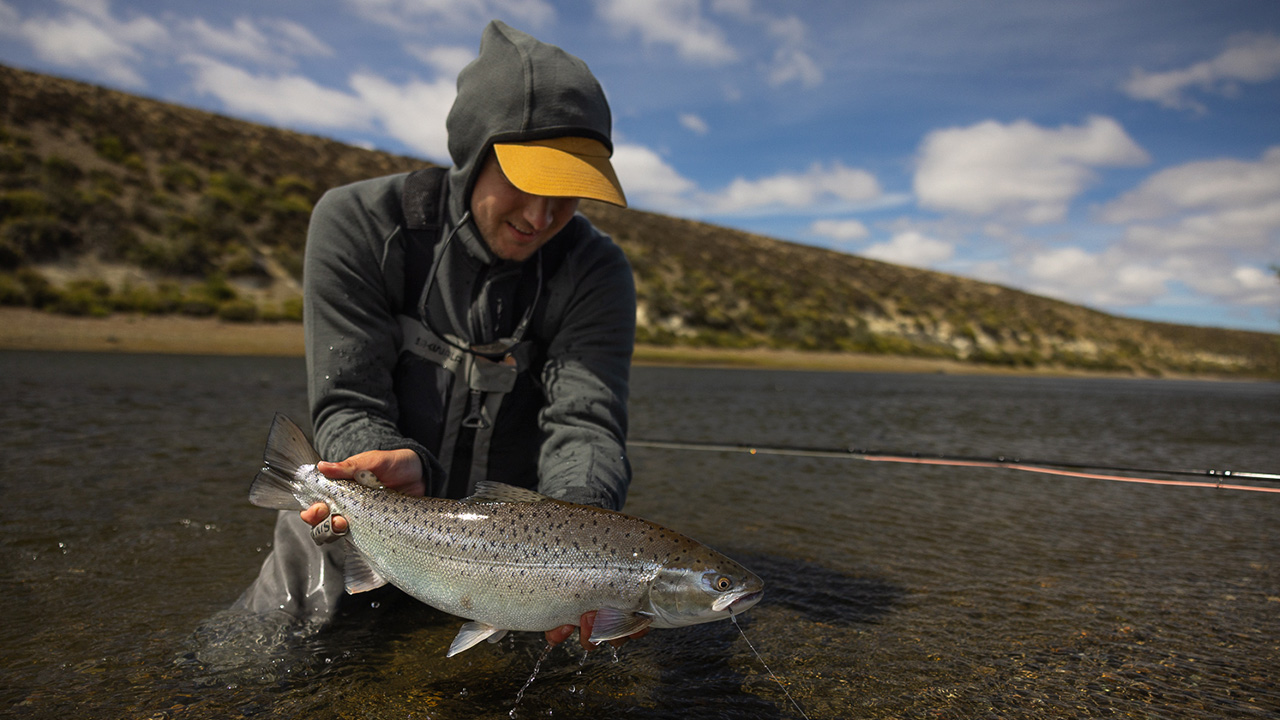
On the Río Gallegos, water is not just water. It’s a living variable that rewrites the river every day.
One week the current feels heavy and loud, pushing through bends with a kind of urgency. The next week the river drops and clears, revealing structure you didn’t know existed: gravel tongues, soft seams, undercut edges, and the subtle lanes where sea-run brown trout like to hold when they want to conserve energy.
If you’ve ever had a day where the river “looked perfect” but felt empty, or a day where everything seemed too high, too fast, too messy—only to find the most powerful fish of your life—that wasn’t luck. That was water level.
Sea-run brown trout in the Río Gallegos are shaped by migration, ocean conditioning, and instinct. But once they’re in freshwater, water level becomes one of the strongest forces controlling where they hold, how they move, and what presentations they respond to.
This guide explains how water levels affect sea-run browns in Río Gallegos—practically, tactically, and honestly—so you can fish smarter, adapt faster, and get more out of every session in Patagonia.
1) What “Water Level” Really Means in Río Gallegos
When anglers talk about “high water” or “low water,” they often mean more than the number on a gauge. On the Río Gallegos, water level influences four things immediately:
Flow speed: faster current changes where fish can rest
Clarity: suspended sediment affects visibility and aggression
Available holding water: deeper lanes open or disappear
Fish positioning: sea-run trout choose energy-efficient lies
Because the Gallegos is a low-gradient, meandering river, even moderate changes in level can reshape the best fishing water. A pool that “always holds fish” may stop producing when the level rises, not because the fish left the river, but because they shifted five meters into a softer seam or dropped into a deeper bucket.
Understanding this gives you a simple advantage: you stop fishing memory and start fishing reality.
2) High Water: When the River Looks Big and the Fish Look Invisible
High water on the Río Gallegos often happens early in the season, after rainfall, or during certain flow events. Anglers arrive, see an impressive river, and assume the fish must be everywhere. The truth is more precise:
In high water, sea-run browns prioritize stability and energy conservation.
Where sea-run browns tend to hold in high water
Look for:
Soft edges along the bank where the current slows
Inside bends where water speed drops
Back-eddies and protected pockets
Seams created by drop-offs or submerged structure
Heads of pools where oxygen is high but the fish can rest just off the main push
High water pushes fish away from “pretty” midstream lanes. Many anglers keep casting the obvious center current and wonder why nothing happens. The fish are often there—but they are tucked into places that look too shallow or too protected to hold a trophy fish.
Pros of high water
Fresh fish movement can increase
Fish may be less spooky due to reduced visibility
Larger flies and stronger swings can trigger reaction strikes
Some pools become accessible that are too shallow in low water
Cons of high water
Wading and positioning become more demanding
Precision matters more than distance
Fish can be spread out into soft-water micro-lies
You must adjust sink rate constantly
How to fish high water effectively
Presentation goals: get your fly in the zone, slower than you think, with control.
Practical tactics:
Use shorter leaders (4–7 ft) for better control
Use heavier flies or sink tips to reach depth quickly
Focus on seam fishing—not broad coverage
Swing slower and deeper; let the fly “hang” at the end of the swing
Cover less water, but cover it better
A powerful truth about high water: you don’t win by casting more. You win by placing the fly where the fish can afford to be.
3) Dropping Water: The “Turning Point” That Often Ignites the River
Some of the most productive days on Río Gallegos happen when water levels are falling—especially after a rise. This is a turning point because:
The river regains clarity
Fish settle into predictable lanes
Holding water becomes defined
Reaction behavior often increases
In dropping water, sea-run browns frequently reposition to the edges of structure—not fully in the softest water, not fully in the fastest water, but exactly where the two meet.
What to look for during a drop
Defined seams with a clean “line” between currents
Slight depressions and darker lanes in glides
Tailouts where fish stage before moving
Heads of pools where oxygen and structure combine
Best approaches in dropping water
Medium sink tips or lightly weighted flies
Nymphing lanes that were unfishable during high water
Streamers with subtle movement rather than aggressive stripping
Controlled swings with long pauses and hangs
This is often the moment when the river feels like it “turns on.” Not because fish suddenly arrive, but because the river finally becomes readable again—and your fly can reach the places where sea-run browns want to hold.
4) Low Water: Clear, Technical, and Unforgiving in a Beautiful Way
Low water can feel like Patagonia’s “precision chapter.” The river is clearer, structure is visible, and fish become more aware of their environment.
This is where many anglers either evolve—or get frustrated.
How sea-run browns behave in low water
In low water, sea-run browns are more likely to:
hold deeper or tighter to structure
slide into shade lines and undercuts
become selective about presentation
spook from heavy footsteps or sloppy casting
The fish are still strong. Still wild. Still capable of long runs. But they demand your respect.
Pros of low water
The river becomes easier to read visually
Fish holding patterns become more stable
You can target specific lanes rather than “search”
Technical anglers often thrive
Cons of low water
Fish can be highly sensitive to pressure
Wading errors cost you quickly
Lighter presentations become necessary
Poor drifts and loud casts get punished
How to fish low water effectively
Presentation goals: soft entries, controlled depth, clean drifts, minimal disturbance.
Tactics that help:
Step down to more subtle flies
Consider lighter tippet when needed (balanced with fight time)
Use natural angles and controlled swings
Fish early morning and late evening when light is softer
Move slowly; treat the river like it can hear you
Low water is not “worse.” It’s a different kind of challenge—one that often delivers the most satisfying fish because you truly earn them.
5) Clarity: The Hidden Partner of Water Level
Water level and clarity are often linked, but not always. A river can be high and still clear; it can be low and still colored after wind or rain.
Clarity affects sea-run browns in two major ways:
Visibility and confidence
Strike triggers
In colored water
Fish may strike more aggressively from reaction
Larger, darker patterns can outperform subtle flies
Depth control matters more than perfect drift
In clear water
Presentation becomes everything
Small details—leader length, fly size, angle—matter more
Fish often respond best to natural movement, not speed
A reliable rule for the Río Gallegos:
The clearer the water, the cleaner your approach must be.
The more colored the water, the more you can lean into contrast and presence.
6) Matching Your Tactics to Water Level: A Simple Decision System
When you arrive at the river, you don’t need to guess. You need a system.
If water is high and pushing hard
Fish soft edges and inside bends
Use heavier flies or sink tips
Shorten leaders for control
Focus on seams and pockets
If water is falling and clearing
Fish classic lanes and pool transitions
Mix swing and nymphing
Use medium sink tips or lightly weighted patterns
Slow down your presentation
If water is low and clear
Fish early/late light windows
Use subtle patterns and refined drifts
Move quietly and wade carefully
Consider longer leaders where needed
This system isn’t rigid—it’s simply a way to stay aligned with the river rather than fighting it.
7) Why Local Knowledge Matters Even More When Levels Change
Water levels don’t affect every section of the Río Gallegos the same way. Some pools become better with height. Others become harder to fish. Some lanes appear only during certain drops.
That’s why local knowledge is often the fastest path to consistency.
At Karku Fly Fishing Lodge, the day isn’t built around a fixed plan. It’s built around the river’s reality:
shifting into pools that fish well in high water
rotating named pools to protect the fishery
adjusting depth and presentation based on daily conditions
keeping the experience calm, intentional, and effective
In a place like Patagonia, flexibility becomes a form of skill. And guided flexibility becomes a form of confidence.
Closing Thoughts
Sea-run brown trout on the Río Gallegos are not random. Their movements and moods can feel mysterious, but they are deeply tied to the river’s physical language—especially water levels.
High water moves fish to softer edges and protected lies. Dropping water often creates the best “activation window.” Low water demands precision, humility, and a quieter approach. And throughout all of it, clarity and current decide whether your fly feels alive or invisible.
If you learn to read water level as a conversation with the river, you stop hoping for a good day. You start building one.
If you’d like help planning your trip around seasonal and water-level dynamics—and experience the Río Gallegos with private access, local guidance, and a low-pressure approach—Karku Fly Fishing Lodge is a strong option to explore.