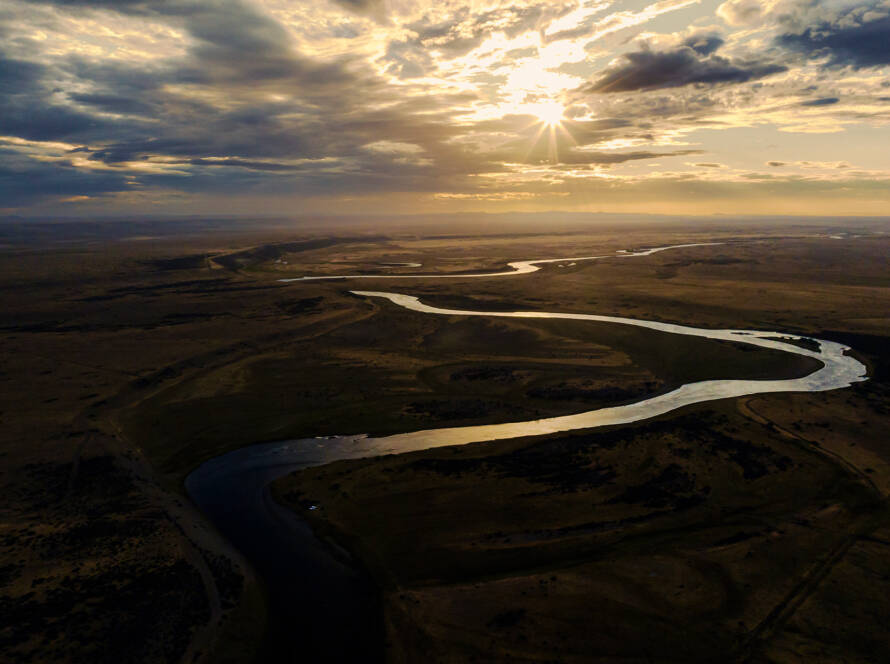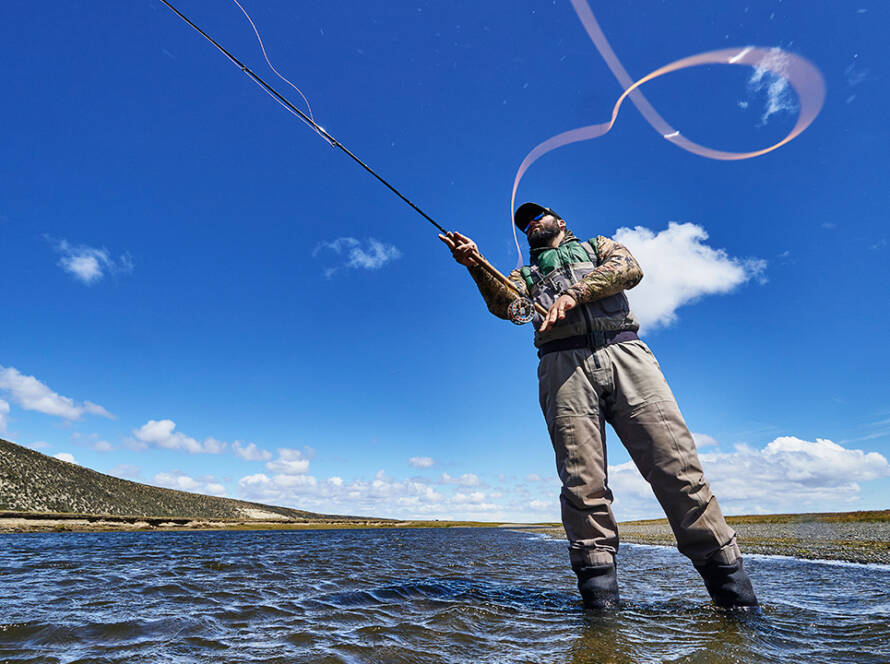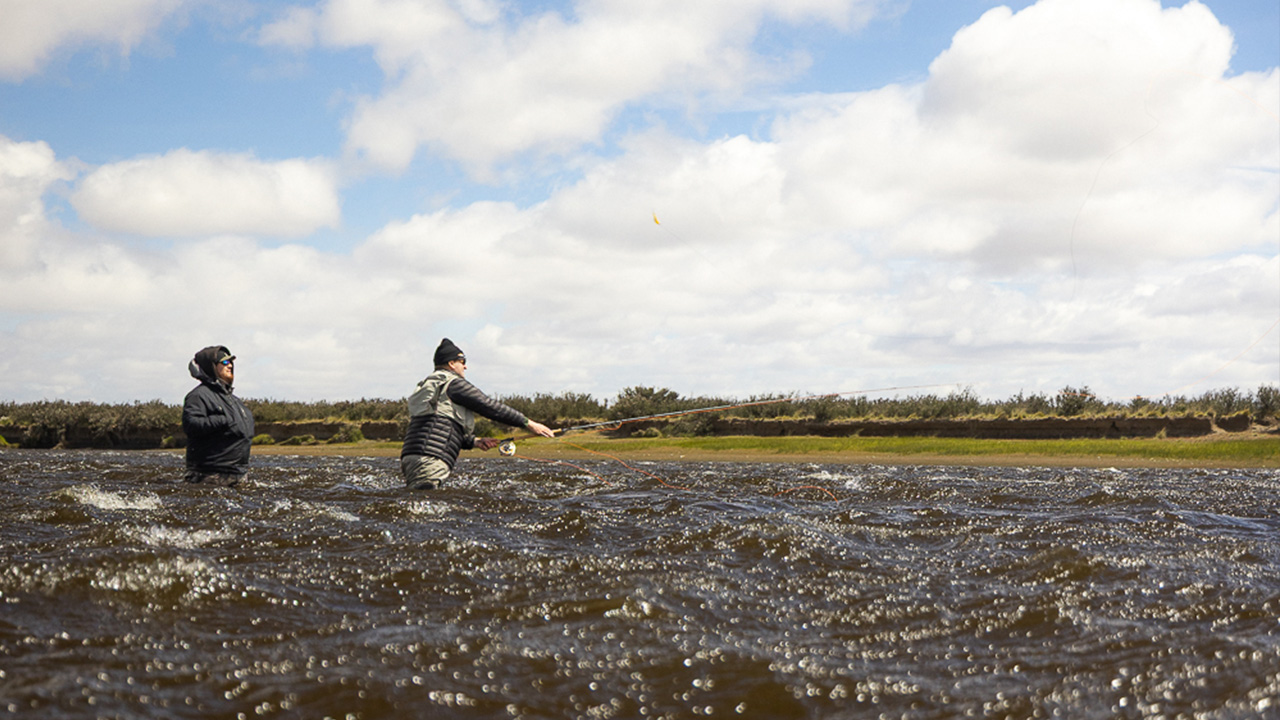
Patagonia is the kind of place that turns into a personal myth long before you ever arrive. You picture the open steppe, the endless sky, the wind that tests your casting, and the moment a sea-run brown trout takes your fly with that unmistakable force—like the river itself just grabbed the line.
Then comes the planning reality.
You start comparing options and you hit the question that divides anglers everywhere:
Should I do Patagonia DIY… or book a guided camp?
And the follow-up question that matters even more:
Is a guided Patagonia fly fishing camp actually worth the investment?
This isn’t a simple “price vs. price” decision. In Patagonia, the real cost isn’t always money. It’s time. It’s missed opportunities. It’s the difference between being in Patagonia and truly unlocking Patagonia.
This guide will help you evaluate both paths with clear pros and cons—so you can choose what fits your personality, experience level, and goals. And if you decide a guided experience is right, you’ll also understand why a place like Karku Fly Fishing Lodge can be a strong option for anglers who want authenticity, local knowledge, and a calm, low-pressure approach on the Río Gallegos.
1. What “DIY Patagonia Fly Fishing” Really Means
DIY in Patagonia can mean many things:
Renting a car and driving to public access points
Booking general accommodations and fishing independently
Hiring a guide for one day and freelancing the rest
Visiting a region with multiple rivers and exploring freely
DIY can be incredible—especially if you enjoy exploration, logistics, and the satisfaction of solving a place through your own decisions.
But Patagonia is not like most destinations. It’s remote, unpredictable, and often far more technical than it looks on Instagram.
To judge DIY honestly, you need to understand its hidden variables.
2. The Real Benefits of DIY
Freedom and exploration
DIY offers maximum flexibility. You can chase weather windows, change towns, explore multiple rivers, and follow your curiosity. For anglers who love improvisation, this can feel like the truest adventure.
Lower upfront cost (sometimes)
DIY can look cheaper on paper. You avoid lodge packages and guiding fees. If you already own gear and you’re comfortable navigating remote travel, DIY may reduce certain expenses.
The satisfaction of self-reliance
There’s a deep pride in decoding water on your own. When you catch fish DIY in Patagonia, it can feel earned in a very personal way.
Perfect for certain goals
DIY can be ideal if your priorities are:
sightseeing plus casual fishing
a road trip vibe
variety of landscapes and waters
fishing is one part of a larger travel experience
3. The Hidden Costs of DIY in Patagonia
This is where most anglers are surprised.
Time loss is real
In Patagonia, you can lose entire fishing days by:
driving long distances between access points
arriving to water that is unfishable due to wind or level
spending hours searching for productive water
trying patterns and techniques that aren’t aligned with the river’s current mood
DIY rewards patience, but it can also tax your trip with uncertainty.
Access is not equal
Some of the best water in Patagonia is controlled through private land (estancias). Public access can be excellent in some regions, but in others you may find:
limited entry points
long walks to reach water
crowded areas during peak travel months
less rested fish
If your goal includes sea-run brown trout, access becomes even more important.
Local knowledge is hard to replace
Patagonian rivers change daily. Wind direction and speed, water clarity, temperature shifts, and subtle migration pulses can radically alter outcomes. Without local insight, you may fish good-looking water that simply isn’t “on” yet.
Gear and conditions can overwhelm the plan
Patagonian wind is famous for a reason. Even strong casters can struggle when:
gusts are crosswind
line control becomes difficult
presentations lose efficiency
fatigue sets in
DIY success often depends on adaptability and experience in tough conditions.
The risk factor
Remote travel comes with risk:
weather delays
road conditions
limited services in rural areas
medical distance
navigation challenges
None of this is meant to scare you—only to make the decision real.
4. What “Guided Patagonia Camp” Actually Provides
A guided Patagonia camp isn’t just “someone shows you where to cast.” In a well-run operation, you’re investing in an entire system designed to remove friction and maximize meaningful time on the water.
A quality guided camp typically includes:
daily strategy based on conditions
access to rested water
experienced local guides
seasonal knowledge and tactical adjustments
meals, warmth, rest, and reliable logistics
safety, structure, and reduced travel stress
And most importantly: you’re paying to convert your limited days in Patagonia into high-quality experience.
5. The Real Benefits of Going Guided
You fish more, guess less
Guides reduce wasted time dramatically. You spend less energy searching and more energy fishing the best water for that day, in that season, in that wind.
You learn faster
Patagonia is an education. A good guide accelerates that learning curve by teaching:
how to read seams and holding water
how sea-run browns behave in freshwater
how to adjust sink rate and fly choice
how to use the wind rather than fight it
how to fish pools with timing and intention
Even one week guided can sharpen your skills for life.
Better access and better water rotation
Many camps have controlled or private access that allows:
rotating pools to reduce pressure
fishing water that stays healthier through the season
avoiding crowds
maintaining fish behavior closer to “wild and honest”
Comfort supports performance
It’s easy to underestimate how much comfort matters. Warm meals, dry gear, and good sleep increase your focus. Patagonia asks a lot physically; when your base camp takes care of recovery, you fish better.
Safety and calm structure
Patagonia can be intense. A good camp creates calm through planning, local knowledge, and predictable logistics—allowing your mind to settle into the river.
6. The Downsides of Going Guided (Be Honest Here)
Higher upfront cost
Guided camps cost more. It’s not a secret. The question is whether the value matches your goals.
Less spontaneous exploration
Guided trips are structured. Even flexible lodges have schedules, meals, and logistics. If you thrive on uncertainty and constant movement, you may feel constrained.
The experience depends on the operation
Not all guiding is equal. The best camps feel personal and thoughtful. Poor guiding can feel rushed or generic. Choosing a camp isn’t just choosing a location—it’s choosing philosophy.
7. Who Should DIY and Who Should Go Guided?
DIY may be best if you:
have strong travel confidence and time flexibility
enjoy exploration and solving puzzles independently
have experience in wind, big water, and technical fishing
are traveling for a broader Patagonia experience, with fishing as one element
can accept variability in results
Guided may be best if you:
have limited vacation days and want high-quality fishing time
want to target sea-run brown trout with the highest efficiency
value learning and skill development
want access to better water rotation and less pressure
prefer a calmer logistics experience
want the trip to feel intentional rather than improvised
8. How Anglers in USA and Europe Often Decide
This part matters because Patagonia is a global destination, and different markets view value differently.
USA / Canada mindset
Many North American anglers are familiar with guided systems (Montana, Alaska, BC). They often see guides as:
a shortcut to local insight
a way to maximize limited time
a form of education
They also tend to value:
clear trip structure
transparency in what’s included
consistent daily fishing opportunities
European mindset
European anglers often come with:
strong technical background (UK, Scandinavia, Germany)
deep respect for tradition and conservation
interest in the story and culture of the place
They typically value:
authenticity
low-pressure fishing
ethical practices
small groups
a sense of belonging to a place
A lodge that combines local culture, conservation, and meaningful guiding tends to resonate strongly with European guests.
9. So… Is a Patagonia Fly Fishing Camp Worth the Investment?
Here’s the honest answer:
A guided camp is worth it when it helps you trade money for something more valuable:
time, clarity, access, learning, and a deeper experience.
If Patagonia is a once-in-a-lifetime dream trip—or if you’re traveling to target a specific fishery like sea-run browns on a river such as Río Gallegos—the difference a guide makes can be enormous.
DIY can still be beautiful and rewarding, but guided is often the path that converts the “Patagonia dream” into consistent, memorable reality—especially if your days are limited.
10. Why Karku Can Be a Strong Guided Option for Río Gallegos
If you’re leaning toward guided, it helps to choose a camp that aligns with Patagonia’s nature rather than fighting it.
Karku Fly Fishing Lodge is built around a few principles that many anglers value:
Local knowledge on Río Gallegos
Small-group, low-pressure approach
Exclusive access and named pools that allow water rotation
Sustainability and ethical fishing culture
A grounded, authentic lodge atmosphere that feels like Patagonia, not a showroom
Karku is not positioned as the only choice in Patagonia. It’s simply a good choice for anglers who want a clear, calm, and meaningful way to experience Río Gallegos—guided by people who live the river.
The decision that matters most
DIY vs guided isn’t really about money. It’s about what you want Patagonia to become in your memory.
Some anglers want the road-trip adventure and the satisfaction of discovery.
Others want the full river experience, supported by local knowledge, rested water, and a camp rhythm that protects both the fishery and the angler’s energy.
Both paths are valid.
The right one is the one that aligns with your goals, your personality, and your limited time on Earth.
A strong next step
If you’re considering Patagonia and want help deciding what type of trip makes the most sense—DIY, fully guided, or a hybrid—reach out and ask questions.
Karku Fly Fishing Lodge is happy to help you explore the Río Gallegos season, trip structure, and what a guided week can look like in real life.