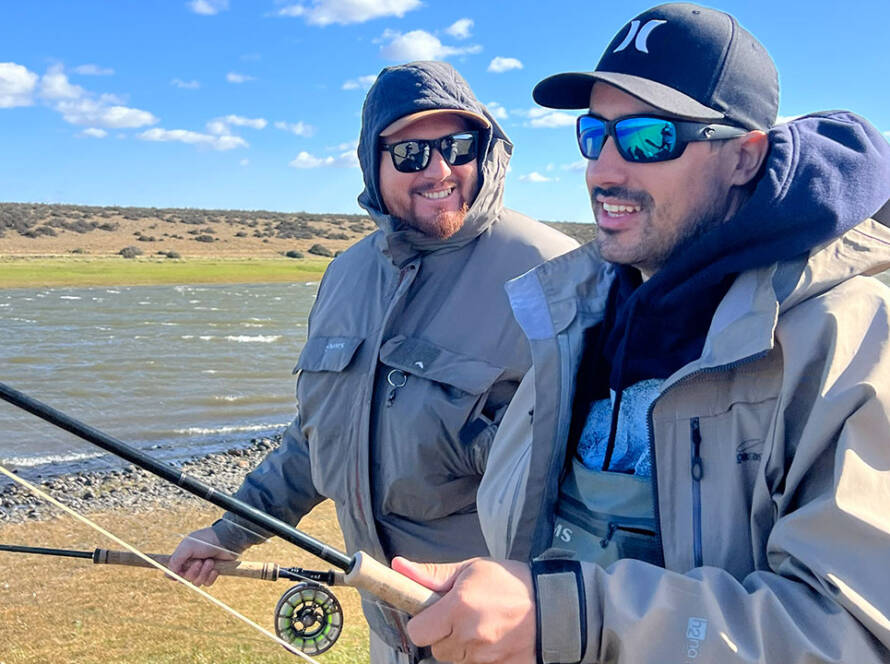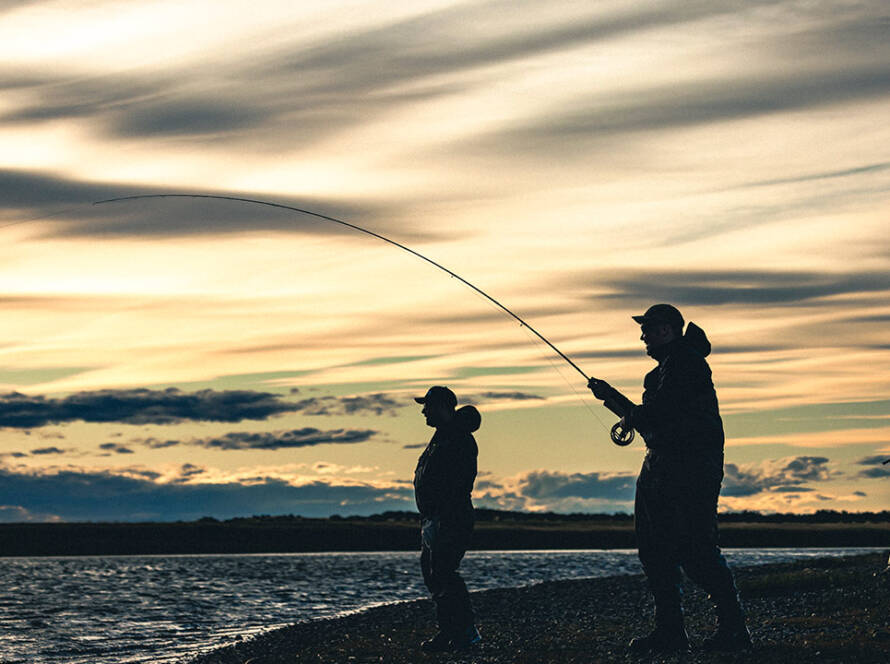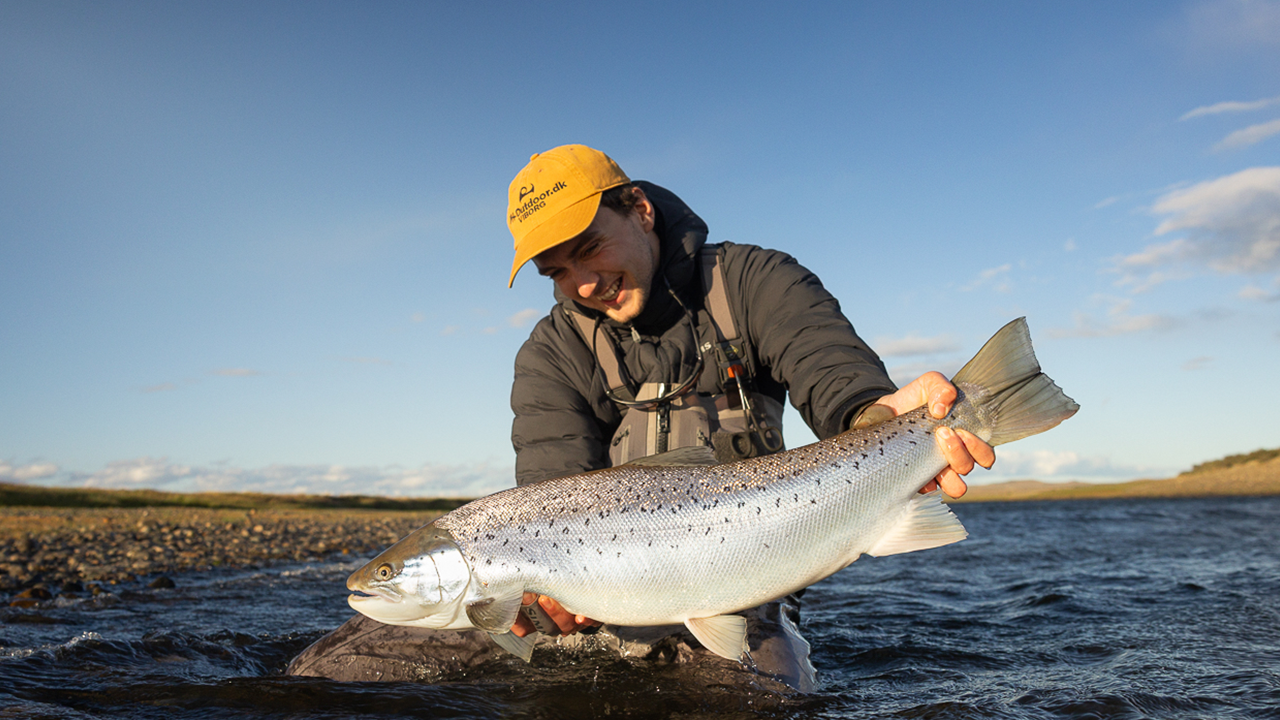
There are rivers you visit because they are famous.
And there are rivers you visit because, somewhere deep inside, you suspect they may change the way you think about fishing.
The Río Gallegos belongs to the second kind.
For serious fly anglers, this river is not just another destination in Patagonia. It is one of the great sea-run brown trout systems in the world, known for strong migratory fish, technical water, changing conditions, and the kind of sessions that stay in your body long after the trip is over. It is a river that rewards observation, discipline, timing, and humility. It can be generous. It can be brutal. It can make one perfect grab feel more valuable than an easy day elsewhere.
That is why a real Río Gallegos fly fishing playbook cannot be built on fantasy.
It has to be built on truth.
You do not come here expecting a casual, lazy version of fly fishing. You come here ready to read the wind, cover water, adjust your angle, refine your swing, and stay mentally present. You come knowing that the fish are real, the environment is honest, and the best moments are usually earned.
This playbook is designed to help you understand what matters most before you ever step into the river.
Understand what makes Río Gallegos special
The Río Gallegos is inseparable from sea-run brown trout.
These fish are the reason so many anglers dream of coming here. They are ocean-fed, powerful, aggressive in the right moments, and capable of producing unforgettable fights. The river is known for its productive seasonal windows, its legendary pools, and the way changing conditions can reshape a day in a matter of hours. This is not generic trout fishing in pretty scenery. This is a system with identity.
The first rule of the playbook is simple:
Respect the river for what it is.
Do not approach it as if one pattern, one cast, or one expectation should control the whole experience. The Río Gallegos asks for flexibility. It asks you to pay attention. It asks you to notice water speed, holding lies, wind pressure, light, and rhythm. Anglers who try to force the river often leave frustrated. Anglers who learn to listen usually find much more than fish.
Fish the season, not just the calendar
One of the most common mistakes visitors make is assuming that every week of the season fishes the same way.
It does not.
Patagonia’s fishing season generally runs from November into mid-April or May, and Río Gallegos fits into that broader rhythm with its own particular windows. Sea-run fish typically begin entering the system around late December or early January, and the fishery develops through the season with different advantages depending on timing. January and February are widely seen as prime months, while later-season periods can offer strong consistency and excellent numbers.
That means your second rule is this:
Match your expectations to the moment of the season.
Early windows may carry freshness, movement, and the magic of possibility. Mid-season often delivers classic conditions and strong fish presence. Later weeks can reward anglers who value consistency, maturity in the system, and a different tempo to the river. There is no single perfect week for every personality. The right timing depends on what kind of experience you want.
The playbook mindset is not “When is the only good time?”
It is “What kind of fishing am I coming here for?”
Bring gear that helps you adapt
A fantasy angler packs for ideal conditions.
A serious angler packs for the Río Gallegos.
That means thinking in terms of range, not comfort. The river can bring strong wind, cold starts, bright afternoons, and conditions that demand practical decisions. Current guidance for Patagonia sea-run brown trout trips commonly points anglers toward 7- or 8-weight rods, large-arbor reels with smooth drag and enough backing, and the advantage of adaptable line systems, with two-handed setups often helping in wind and coverage situations.
But the most important gear rule is not about owning everything.
It is about removing excuses.
If the wind comes up, your setup should still let you fish. If a pool asks for control and reach, your setup should support that. If fish move and your confidence drops, your gear should not be the weak link in your day.
A practical Río Gallegos kit should help you do four things well:
maintain control, cover water, stay comfortable, and keep fishing effectively when conditions become less forgiving.
That is what matters here.
Learn to think in pools, not just casts
The Río Gallegos is not a river to be fished lazily.
It is a river to be worked.
One of the defining features of the experience is the importance of named pools, structure, and coverage. Karku itself emphasizes access to more than 40 named pools along the river, each with different personality and demands. That tells you something essential: success here comes from reading water and understanding how different pieces of the river behave.
This is where many anglers either grow or unravel.
They become too attached to one cast, one step, one assumption. But Río Gallegos often rewards the angler who understands sequence. Where should you begin in the run? How fast should you move? How much should you show the fish before changing angle or depth? When should you stay patient, and when should you keep covering?
Your playbook should always include this mindset:
Fish the whole pool with intention.
Do not rush because you are impatient.
Do not freeze because you are hopeful.
Move with logic.
That is often where confidence begins.
Make peace with the wind
No serious Río Gallegos playbook can ignore the wind.
Patagonia is famous for it, and the river experience is shaped by it. The wind is not a detail. It is often a central character. Experienced anglers and guides repeatedly describe the need to adapt technique, presentation, and mentality to these conditions rather than resenting them.
This is one of the great emotional tests of the river.
Some anglers spend too much energy fighting reality. They want the river to behave like the one they fish at home. They want the cast to feel easy. They want conditions to flatter them. Patagonia offers no such promise.
So the playbook rule is this:
Do not negotiate with the wind. Work with it.
That may mean adjusting casting angles.
It may mean simplifying.
It may mean trusting a guide’s instruction even when your instincts resist it.
It may mean letting go of vanity and embracing function.
The anglers who fish best here are often not the prettiest casters in every moment. They are the most adaptable.
Stop chasing perfection and start chasing rhythm
The Río Gallegos can humble technically strong anglers because it exposes a hidden weakness: impatience.
When people dream of sea-run browns, they often imagine the climax. The grab. The run. The chrome flash. What they do not always imagine is the rhythm required to earn that moment. This river has a tempo. It rewards anglers who settle into it mentally and physically. Karku’s own guide-based material emphasizes patience, awareness, and humility as central to fishing the river well.
That means your playbook should include a psychological rule:
Do not measure the day too early.
A quiet morning can become a great afternoon.
A missed fish can become the lesson that sets up the next one.
A difficult session can still be part of a successful trip.
You are not here to dominate the river. You are here to enter its rhythm.
That shift changes everything.
Use local knowledge like the advantage it is
One of the biggest differences between simply being on the Río Gallegos and truly unlocking it is guidance.
Local guides do more than point at water. They shorten the distance between your assumptions and the river’s reality. They know how different stretches behave, how fish move through seasonal windows, how weather changes affect decisions, and how to help anglers adjust without losing confidence. Karku positions local guides as one of its key strengths, alongside intimate access and small-group fishing pressure.
This matters even for experienced anglers.
In fact, it may matter more.
Experience can make people sharper, but it can also make them stubborn. The best travelers arrive with skill and still leave room for instruction. They let the place teach them. They let local knowledge save time, reduce noise, and refine the way they approach each session.
A good playbook never confuses independence with wisdom.
Sometimes the smartest thing you can do is trust the people who know the river in their bones.
Build the trip around the full experience
A great Río Gallegos trip is not just about the minutes when your line comes tight.
It is about the full architecture of the experience: the rhythm of the day, the quality of rest, the food, the atmosphere, the access, the pressure on the water, the logistics, the feeling of arriving ready instead of scattered. That is one reason why serious anglers often weigh guided lodges and camps carefully. The real value is not just convenience. It is clarity, learning, access, and the ability to spend your time on what matters most.
This is where Karku becomes more than a name in Patagonia.
Karku stands for the kind of Río Gallegos experience many anglers are actually seeking: meaningful access, named pools, a smaller-scale atmosphere, local guidance, and a lodge rhythm built around serious fishing rather than noise or excess. Its own positioning emphasizes more than 40 named pools, extensive private access, small groups, and a family-run, low-impact approach.
That matters because this river deserves more than random planning.
It deserves a setting that helps the fishing become what it should be.
The ultimate rule: come ready to be changed
The best Río Gallegos anglers do not arrive asking only, “How many fish will I catch?”
They also ask, “What kind of experience am I walking into?”
That is the real heart of the playbook.
Come prepared.
Come adaptable.
Come ready to fish hard.
Come ready to be patient.
Come ready to let the river humble you a little.
Come ready to earn the moments that matter.
Because that is what gives the Río Gallegos its power.
It is not just a place where sea-run brown trout live.
It is a place where fly fishermen remember why they started chasing this feeling in the first place.
Final thoughts
The ultimate Río Gallegos fly fishing playbook is not complicated.
Respect the season.
Bring adaptable gear.
Fish each pool with intention.
Work with the wind.
Trust rhythm more than ego.
Use local knowledge.
Build the trip around the full experience, not just the fantasy of the fish.
And if you want to experience the Río Gallegos in a way that feels focused, authentic, and deeply connected to the river, Karku belongs in that conversation.
Because the right lodge does not distract from the fishing.
It sharpens it.
It helps turn a great river into a complete Patagonia memory.
If you are planning your Río Gallegos adventure and want more than scenery and guesswork, explore Karku Fly Fishing Lodge and discover the kind of experience serious anglers travel this far south to find.